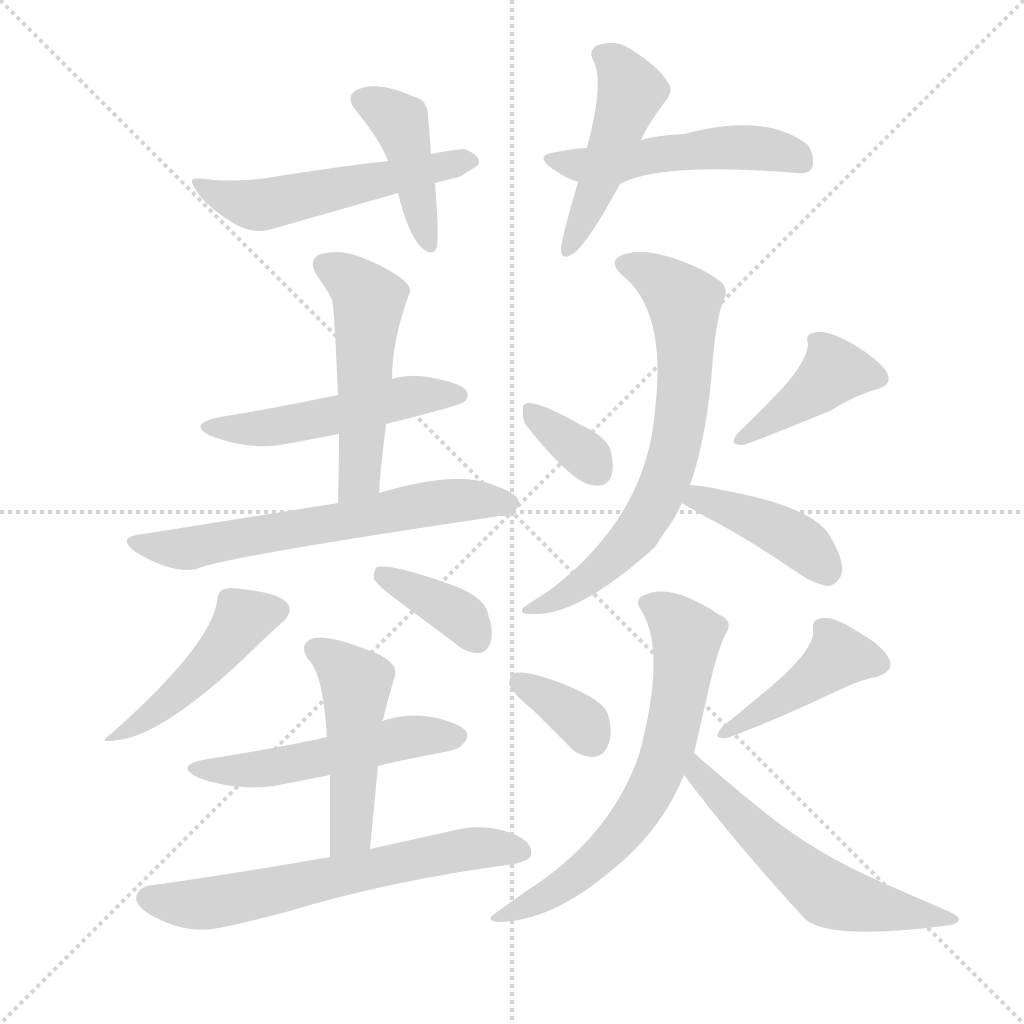
Pronounced shán (rising tone), as indicated by the fanqie combination of "xú" and "yán" in the "Tángyùn" (Tang Rhymes). The "Yùpiān" (Jade Dictionary) explains it as a type of vegetable. The "Qímínyàoshù" (Essential Arts for the Common People) records: "Shí cài looks like cōng quán cài."
Furthermore, the "Lèipiān" (Classified Dictionary) records: In the Wǔyuán region, a type of leek is called "shí."
Furthermore, the "Jíyùn" (Collected Rhymes) indicates pronunciation through the fanqie combination of "cí" and "yán," pronounced qián (rising tone), and refers to the name of a type of grass. The "Mòzhuāngmànlù" (Record of Ink Village) states: In the Sichuan and Hubei region, there is a poisonous herb that grows in clusters in the wild. Locals call it "shí má." Its branches and leaves, upon contact with human skin, cause sores and blisters that gradually fester and are slow to heal. Bai Juyi's poem reads: "A hurricane makes the thousand li black, shí grass remains green through all four seasons."
Commentary: The original pronunciation indicated in the "Mòzhuāngmànlù" is "làn." The "Zhèngzìtōng" (Comprehensive Dictionary of Characters) mistakenly transcribed "làn" as "zàn" when quoting it, thus asserting that pronouncing "shí" as "zàn" is a vulgar pronunciation and should be read as "làn." This assertion is subjective speculation without basis.