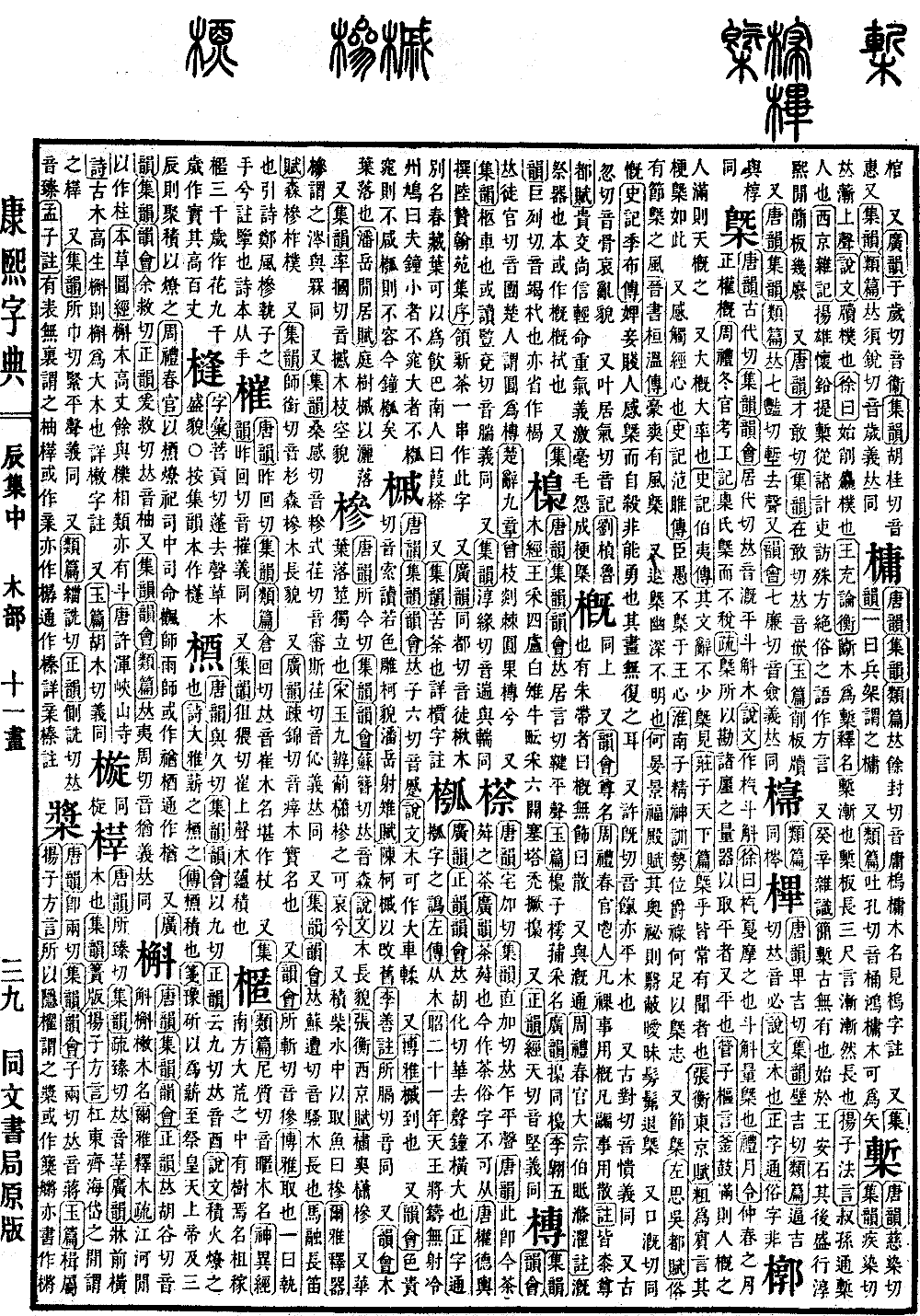
Chen Collection, Middle Volume. Radical: Wood (mù). Kangxi stroke count: 15. Page 547, Entry 06.
Pronounced ran (rising tone). According to the Explaining Graphs and Analyzing Characters (Shuowen Jiezi), it refers to a raw wooden tablet. Xu Shen notes it is the initial stage of scraping away the rough exterior. In the Balanced Discourses (Lunheng) by Wang Chong, it is written: to cut wood into a tablet. The Explanation of Names (Shiming) states: A tablet is so named because it is gradually lengthened; these tablets are three feet long, meaning they are gradually extended. In the Model Sayings (Fayan) by Yang Xiong, it is written: Shusun Tong was a maker of tablets. The Miscellaneous Records of the Western Capital (Xijing Zaji) records: Yang Xiong carried lead and tablets, followed the auditing officials, inquired about regional and distinct customs, and composed the Dialect Dictionary (Fangyan).
Also pronounced kan (falling tone). According to the Guixin Miscellaneous Notes (Guixin Zashi), tablets did not exist in antiquity; they originated with Wang Anshi, subsequently became prevalent, and during the Chunxi period, wooden printing blocks were nearly abandoned.
Also pronounced kan (rising tone). According to the Jade Chapters (Yupian), it means to scrape a wooden board or tablet.
Also pronounced qian (falling tone). Pronounced qian. The meaning is the same.