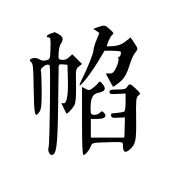
Zi Collection, Page Position: Upper
Radical: Cloth (jīn)
Page 123, Entry 05
The Guangyun and Zhengyun pronounce this as qia. The Jiyun and Yunhui pronounce this as qia. The pronunciation is the same as the word for proper or suitable. The Yupian defines it as a hat, a type of silk headcloth. It is the same as the character pronounced qia. The Book of Jin (Jinshu), Records on Carriages and Clothing, states: According to Han dynasty ritual, on the day of the beginning of autumn, when hunting, one wore a light yellow headcloth; during the reign of Emperor Ai, this was changed to plain white.
Note: Emperor Wu of Wei once cut silk to make this headcloth, originally using it for military decoration; it was not an official state ceremonial garment. Xu Yuan says: The headcloth originally had no splits. When Xun Wenruo was wearing the headcloth and walking, it snagged on a tree branch and formed a split. People thought it looked good, so it was not changed thereafter. It is now commonly used as attire for celebrations and funerals. It is also recorded: In the ninth year of the Xianhe era, it was stipulated that the eight ministers of the Secretariat, their assistants, and secretaries, as well as the attendants of the three departments, were permitted to use white headcloths and low-hanging carriage curtains on their carriages when entering or exiting through the side gates. Additionally, officials on duty at the two palaces wore black gauze headcloths. Thus, it appears that scholars of that time often wore these headcloths when at leisure.