Xu Collection, Lower Volume
Radical: Page (yè)
Pronounced: po
Kangxi strokes: 14
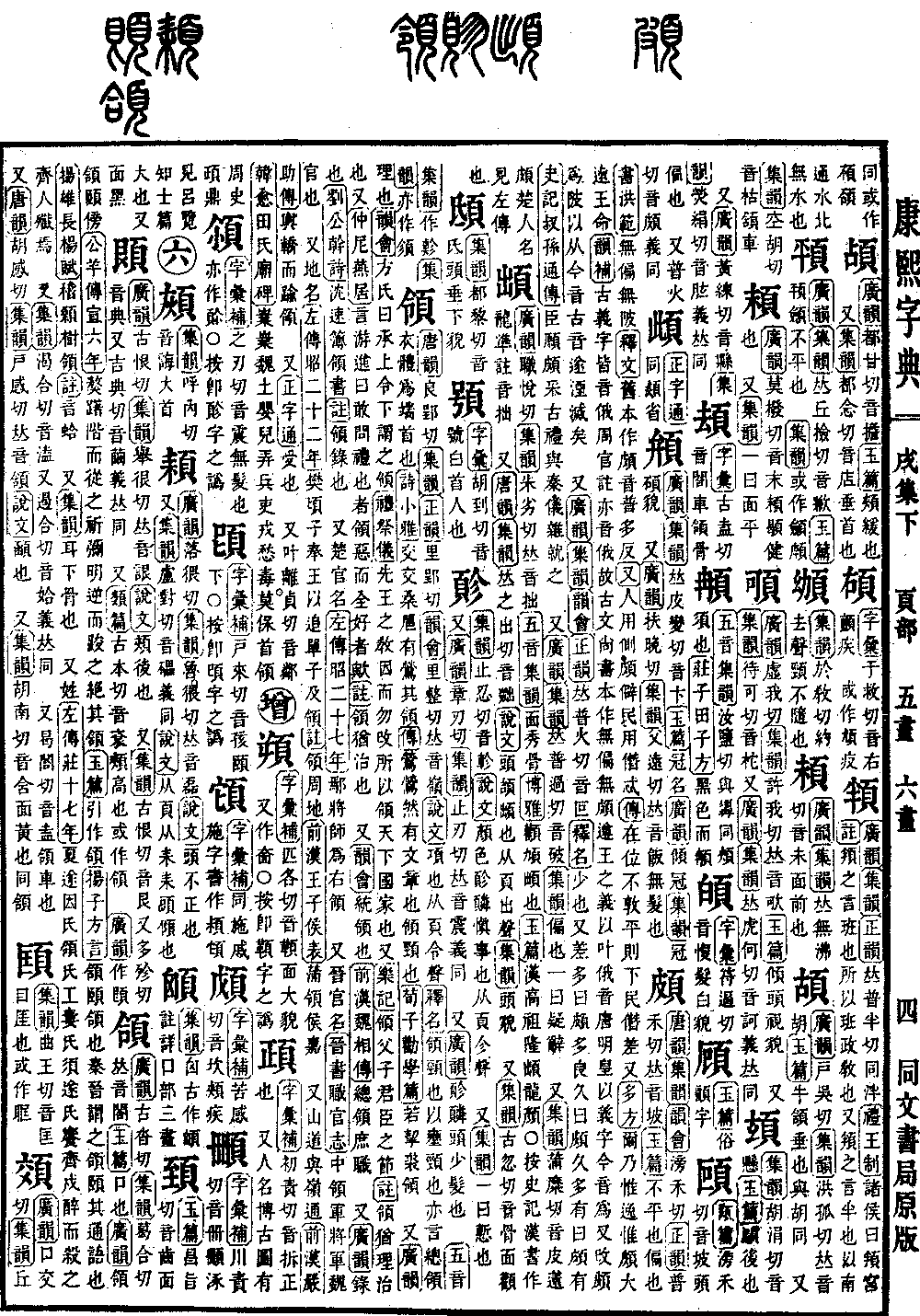
Page 1402, Entry 18
Tang Rhyme (Tangyun), Collection Rhyme (Jiyun), and Rhyme Meeting (Yunhui) cite it as pang he qie; Correct Rhyme (Zhengyun) cites it as pu he qie. Pronounced po.
Jade Chapter (Yupian): Not level, partial.
Classic of History (Shijing), Great Plan (Hongfan): No partiality, no leaning.
Explication of Texts (Shiwen): The original text was written as po, pronounced pu duo fan.
Also: People use side, partial, and perverse paths, and the people become deceptive and error-prone.
Commentary: If those in positions of power are not honest and fair, the common people will become deceptive and deviate.
Also in Many Regions (Duofang): You are indulgent and partial, keeping far from the king's mandate.
Rhyme Supplement (Yunbu): In ancient times, the character yi was pronounced e, and in the annotations to the Rites of Zhou (Zhouguan), it is also pronounced e. Therefore, in the ancient text of the Classic of History (Shijing), it was written as no partiality and no leaning, following the meaning of the king, to rhyme with the sound e. Emperor Ming of Tang, because the modern pronunciation of the character yi was you, changed po to pi to follow the modern sound, and the ancient sound was subsequently lost.
Also pronounced po (rising tone).
Broad Elegant Dictionary (Boya): A little bit.
Also, when the difference is large, it is called po duo (quite a lot); for a long time, it is called po jiu (quite a while); having much is called po you (having quite a bit).
Records of the Grand Historian (Shiji), Biography of Shusun Tong: I wish to select some ancient rituals and mix them with the etiquette of the Qin to complete them.
Also pronounced po (falling tone).
Collection Rhyme (Jiyun): Partial. One meaning is a word of doubt.
Also pronounced pi. Wei Po is a name of a person from the State of Chu, appearing in the Zuo Commentary (Zuozhuan).
Textual Research: In Rhyme Supplement (Yunbu), Emperor Ming of Tang changed the character cha to you based on the modern sound; however, after examining the meaning of the text, cha should be you. In Explanations of Names (Shiming), it is defined as a little bit. We note that this statement originates from the Broad Elegant Dictionary (Boya), and we have corrected the citation from Explanations of Names (Shiming) to the Broad Elegant Dictionary (Boya).