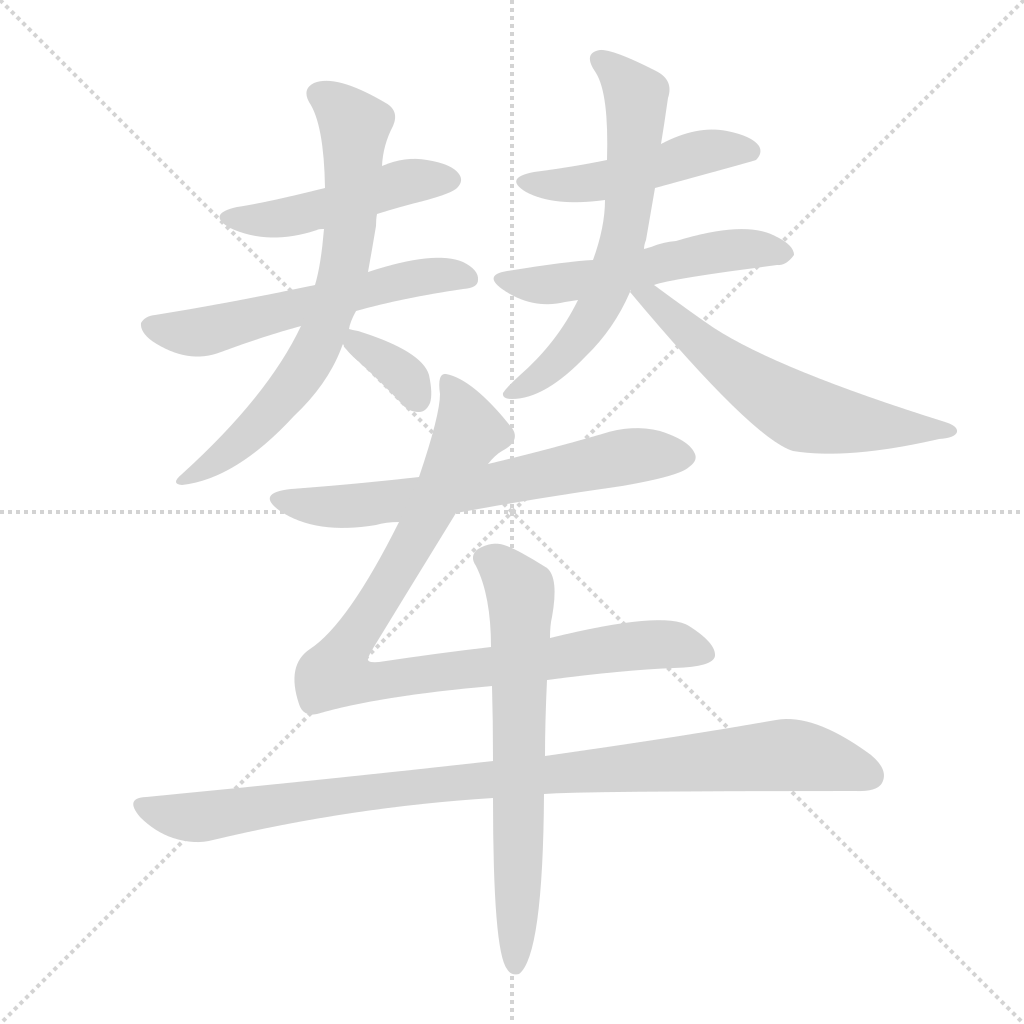
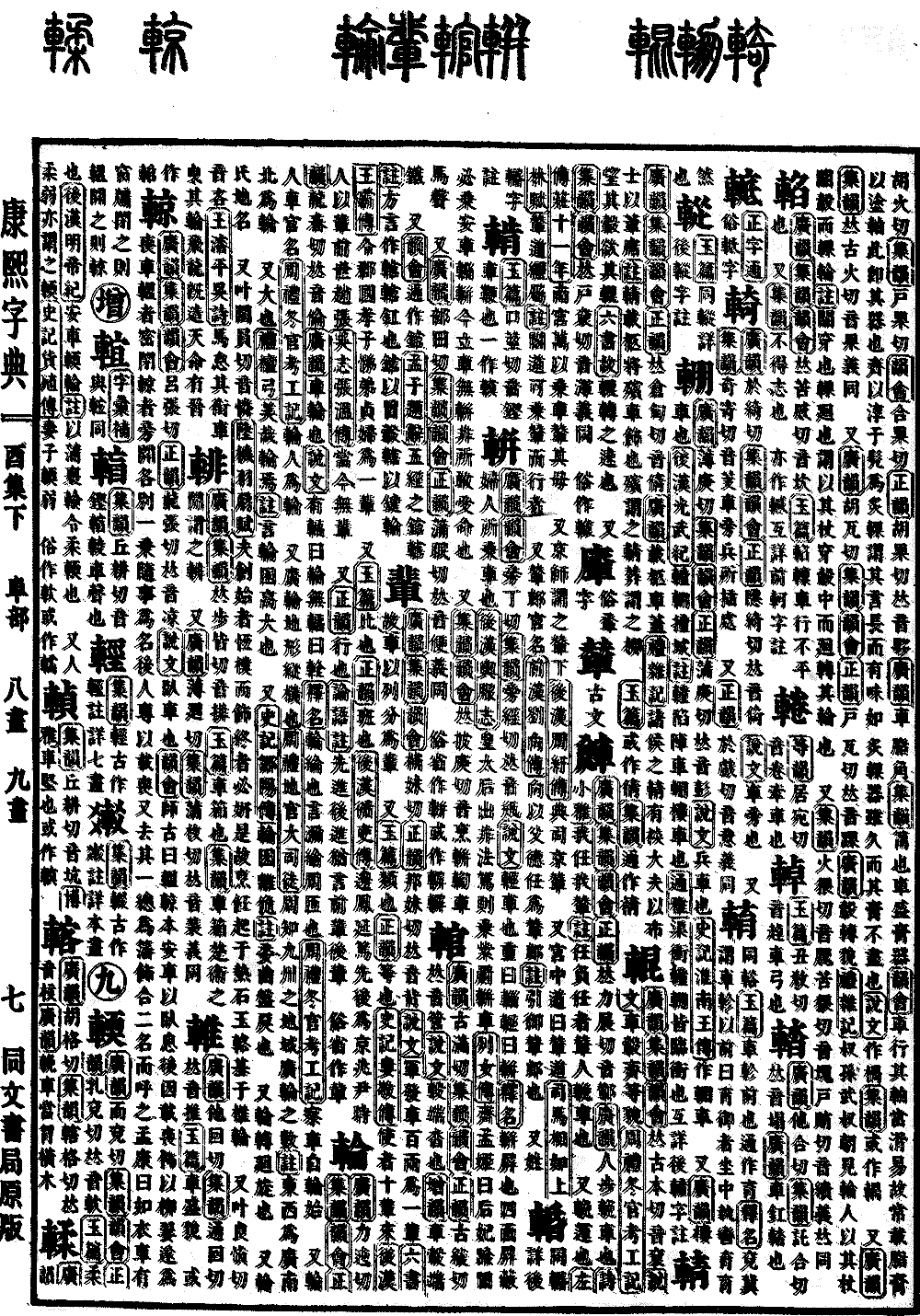
You Collection, Lower Volume
Radical: Carriage (chē)
Kangxi stroke count: 15
Page 1245, Entry 01
In ancient texts, according to Extensive Dictionary of Sounds (Guangyun), Collected Rhymes (Jiyun), Dictionary of Rhymes (Yunhui), and Orthodox Rhymes (Zhengyun), it is pronounced lian (falling tone).
Extensive Dictionary of Sounds (Guangyun): A vehicle pulled by people.
Book of Odes (Shijing), Lesser Odes: I carry my carriage. Commentary: Ren refers to a person carrying a load. Nian refers to a carriage pulled by a person.
Also, to transport by pulling.
Zuo Tradition (Zuozhuan), 12th Year of Duke Zhuang: Nangong Wan used a chariot to transport his mother.
Also, the capital city is referred to as under the carriage (nianxia).
History of the Later Han (Hou Hanshu), Biography of Zhou Yu: Overseer of the capital city.
Also, the pathways within the palace are called carriage paths (niandao).
Sima Xiangru, Rhapsody on the Shanglin Park: The carriage paths wind continuously. Commentary: Elevated walkways wide enough for carriages to travel upon.
Also, carriage attendant (nianlang), a title of office.
History of the Former Han (Qian Hanshu), Biography of Liu Xiang: Xiang was recommended by his father Liu De to serve as a carriage attendant. Commentary: An official in charge of driving the imperial carriage.
Also, a surname.
Textual verification: Zuo Tradition (Zuozhuan), 11th Year of Duke Zhuang, mentions Nangong Wan using a carriage to transport his mother. According to the original text, this has been corrected from the 11th year to the 12th year.