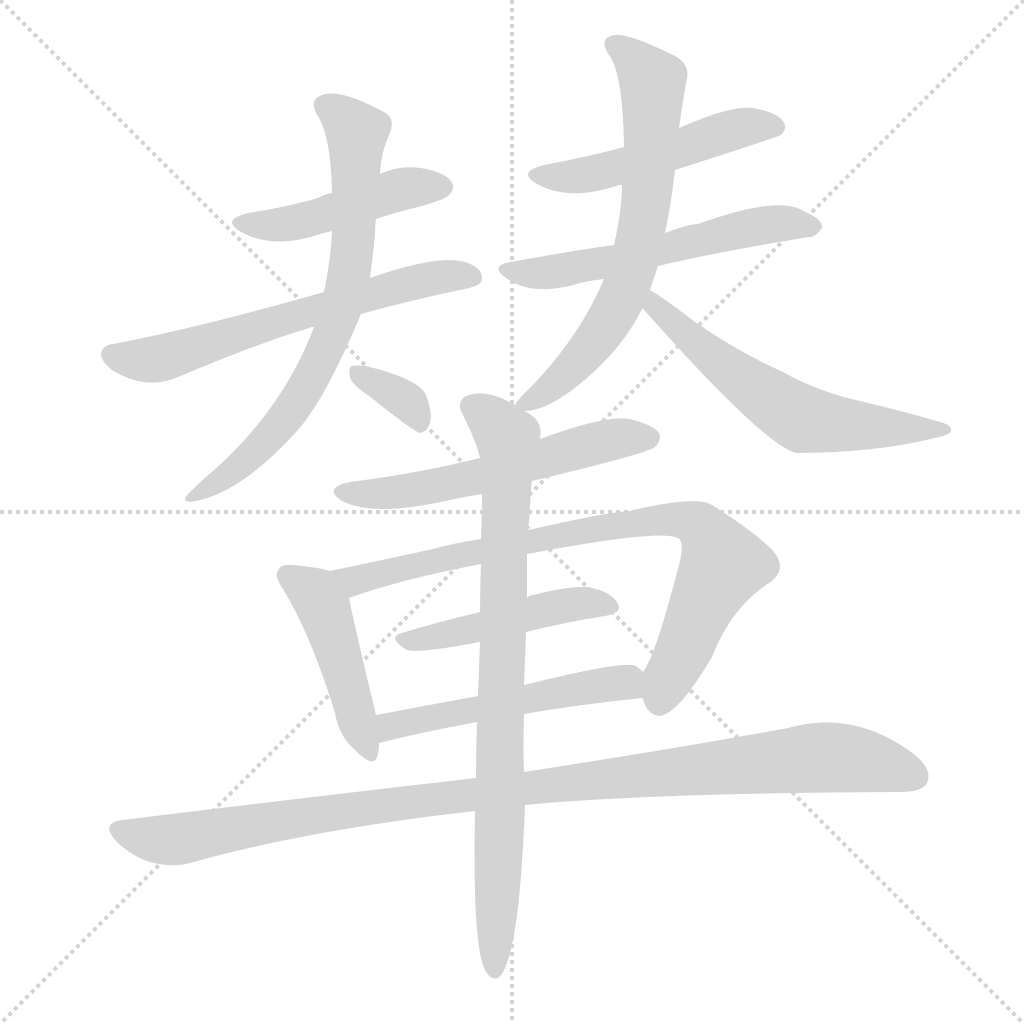
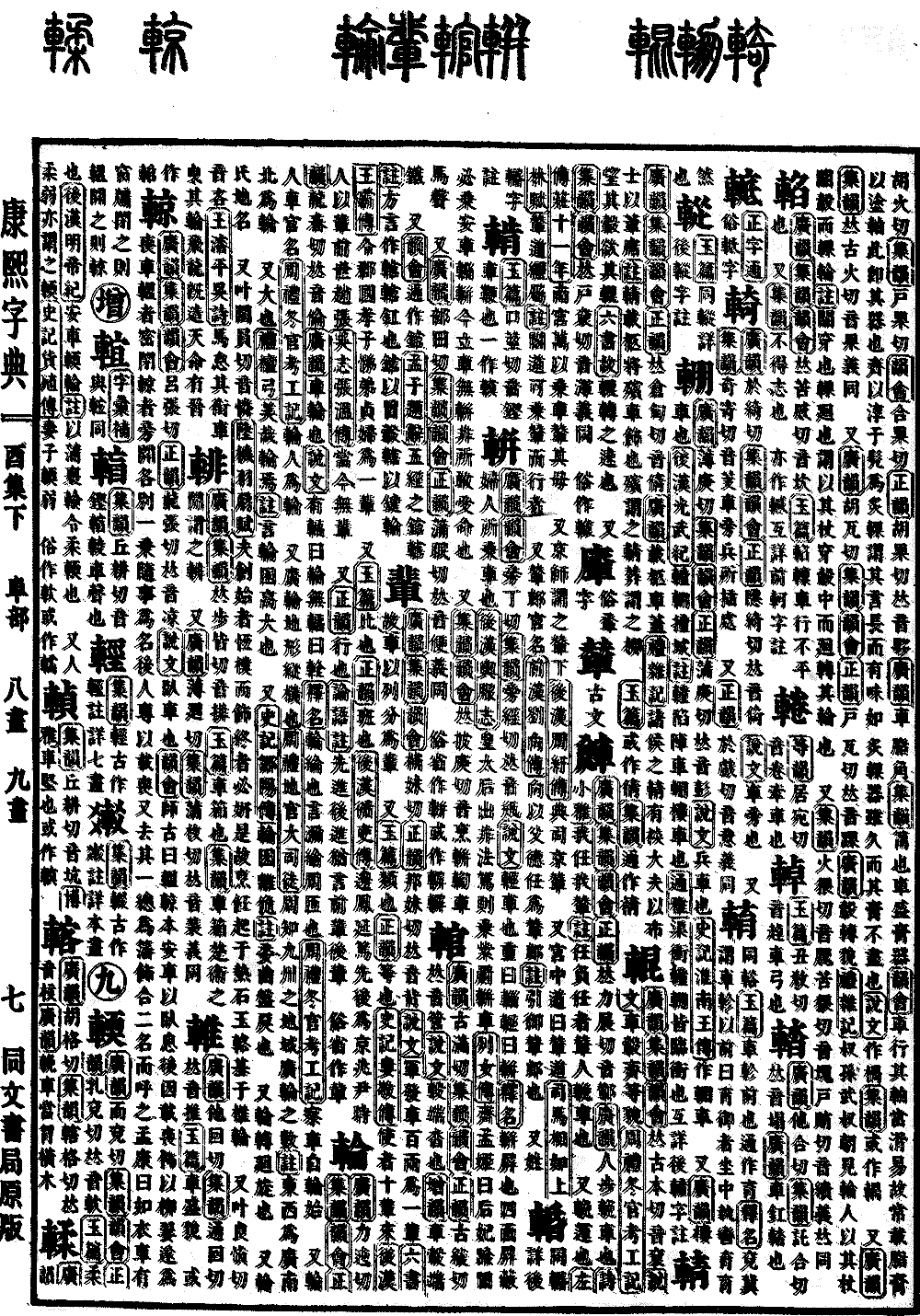
You Collection, Lower Volume
Radical: Carriage (chē)
Kangxi strokes: 15
Page 1245, Entry 13
Classical citations:
Broad Rhymes (Guangyun), Collection of Rhymes (Jiyun), Rhyme Meetings (Yunhui), and Correct Rhymes (Zhengyun) state: Pronounced lian (falling tone); the pronunciation is identical to lian (rising tone).
Broad Rhymes (Guangyun) explains: A vehicle pulled by human labor.
Book of Odes (Shijing), Lesser Odes (Xiaoya): Contains the line, "I carry my load, I pull my cart." The commentary explains: "Load" refers to someone carrying goods on their back; "cart" refers to a vehicle pulled by human labor.
It also refers to transporting goods by cart.
Zuo Commentary (Zuozhuan), Twelfth Year of Duke Zhuang: Records that Nangong Wan used a chariot to transport his mother.
It also refers to the capital city, known as "under the cart."
Book of the Later Han (Hou Hanshu), Biography of Zhou Yu: Contains the record, "in charge of the capital carts."
It also refers to paths within the palace, known as "cart paths."
Sima Xiangru, Rhapsody on the Shanglin Park (Shanglin Fu): Describes "cart paths winding and connected." The commentary explains: This refers to elevated walkways that allow for vehicle passage.
It also refers to "Cart Aide" (nianlang), a title of office.
Book of the Former Han (Qian Hanshu), Biography of Liu Xiang: Records that Liu Xiang was appointed as a Cart Aide due to the status of his father, Liu De. The commentary explains: This refers to the court official responsible for guiding the imperial carriage.
It also refers to the surname Nian.
Textual research:
Zuo Commentary (Zuozhuan), Eleventh Year of Duke Zhuang: Originally erroneously recorded as "Nangong Wan used a chariot to replace his mother"; now corrected to the Twelfth Year based on the original text.