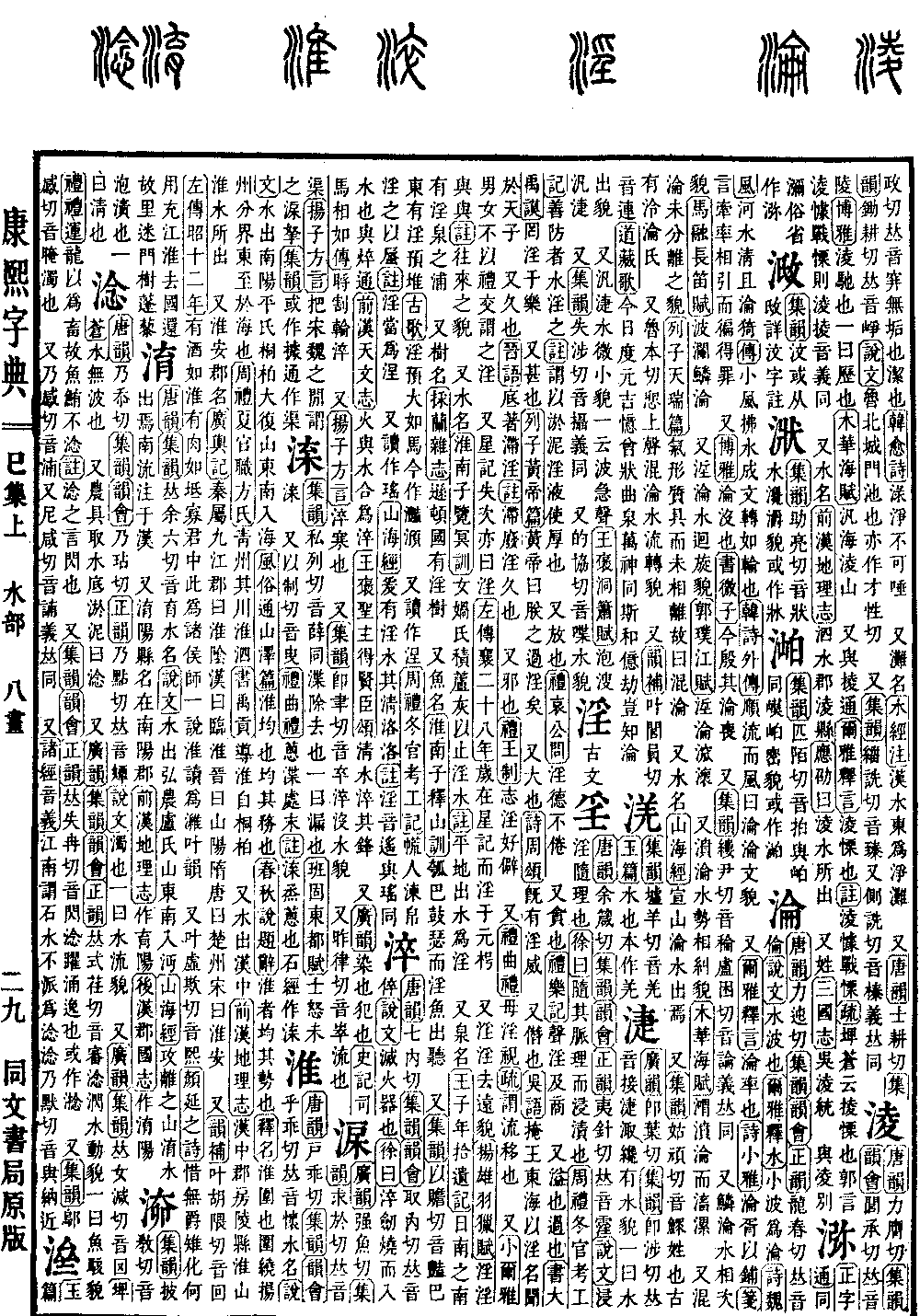
Si Collection, Upper Volume
Radical: Water (shuǐ)
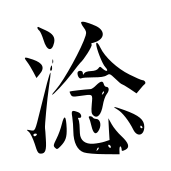
Entry: Nian
Kangxi strokes: 12
Page 631, Entry 17
Pronounced nian (third tone).
According to the Explanation of Graphs and Analysis of Characters (Shuowen Jiezi), it refers to water that is muddy. Another source suggests it refers to the appearance of flowing water.
Also, pronounced jian (third tone).
According to the Pi Cang, it refers to the surface of water that is calm and without waves. It also refers to a type of agricultural tool; dredging mud from the bottom of the water is called nian.
Also, pronounced shen (third tone).
Nian refers to the appearance of water waves rippling. Another source suggests it refers to the appearance of fish being startled. In the Book of Rites (Liji), within the section on the Conveyance of Rites (Liyun), it states that when dragons are reared, large fish such as sturgeon will not be startled and scatter. The commentary notes that nian means to be startled or move suddenly.
Also, pronounced shan (third tone).
Nian-yue describes water surging and rushing forth. Sometimes written in a variant form.
Also, pronounced an (third tone).
It means muddy.
Also, pronounced nan (third tone).
Also, pronounced nan (second tone).
The meaning is the same as above, referring to being muddy.
Also, according to the Meaning and Pronunciation of the Various Classics (Zhujing Yinyi), in the Jiangnan region, standing water trapped between rocks is called nian. Pronounced na (fourth tone), with a sound close to that of the word na.