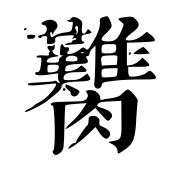
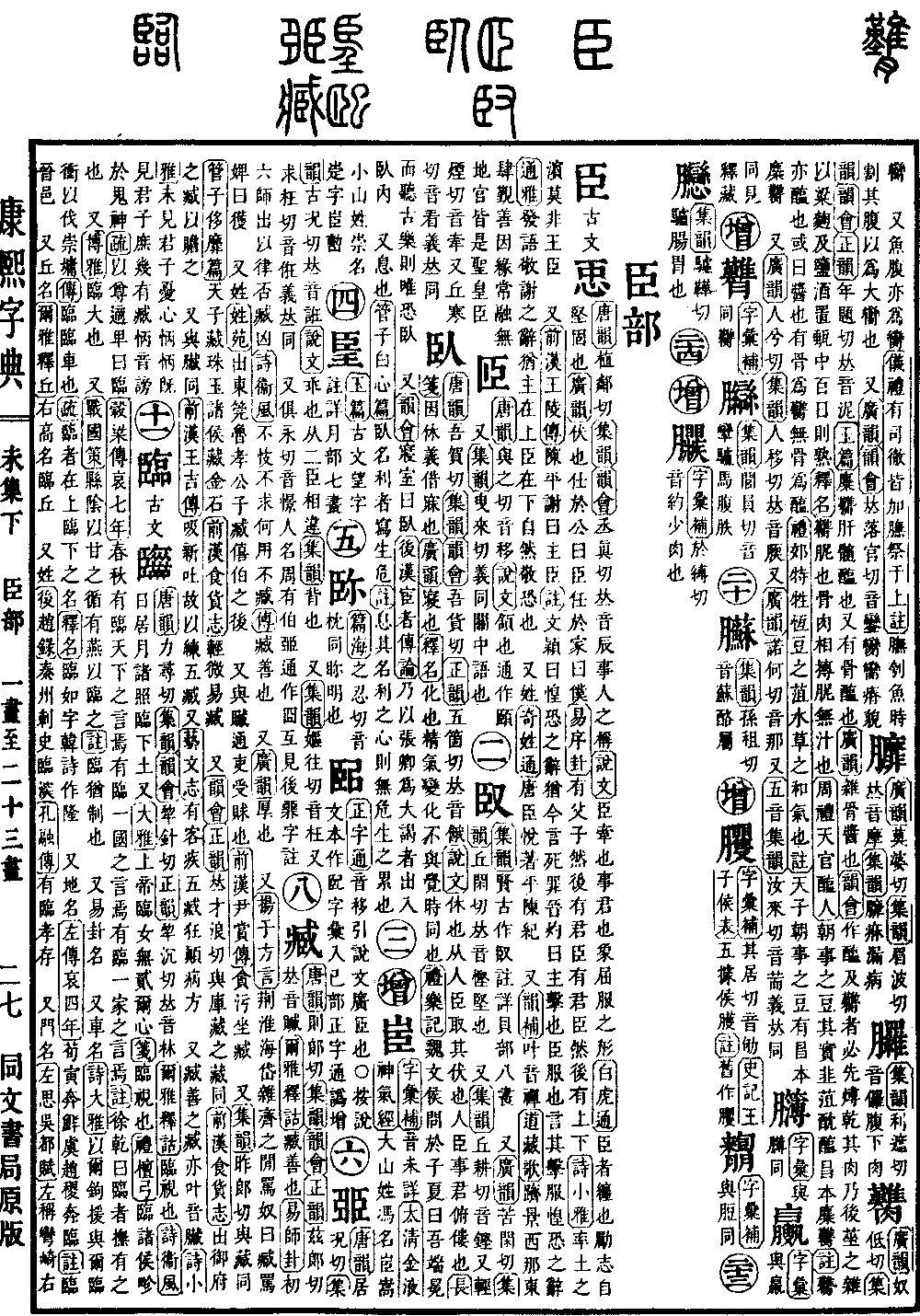
Wei Collection, Lower Volume
Radical: Meat (ròu)
Kangxi stroke count: 25
Page 999, Entry 03
Pronounced ni.
According to the Extensive Dictionary of Sounds and Meanings (Guangyun), it refers to a mixture of liver, marrow, and minced meat. It also refers to minced meat containing bone. The Extensive Dictionary of Sounds and Meanings defines it as a paste made from mixed bones. The Rhyme Compilation (Yunhui) states that when preparing minced meat or this substance, one must first dry the meat, then chop it, mix it with sorghum yeast, salt, and wine, and place it in a jar for one hundred days to ferment.
The Explanation of Names (Shiming) states: This substance is dense, where bone and meat are bound together, and there is no juice.
According to the Rites of Zhou (Zhouli), Book of Heaven (Tianguan), in the section on the officials responsible for minced meat preparations: In the offerings for the morning ceremony, the vessels contain pickled leeks and spiced minced meat, as well as plantain roots and minced elk meat. The commentary states: This substance is also a type of minced meat, or some say a type of sauce. Minced meat with bone is called this substance, while that without bone is called minced meat. The Rites of the Great Suburban Sacrifice (Jiaotesheng) states: The pickles in the emperor's morning sacrificial vessels represent the harmonious energy of water plants. Commentary notes: The emperor's morning sacrificial vessels contain plantain roots and minced elk meat.
Also pronounced ruan.
Also pronounced na.
Also pronounced er. The meaning is the same.