Wu Collection, Middle Volume
Radical: Eye (mù)
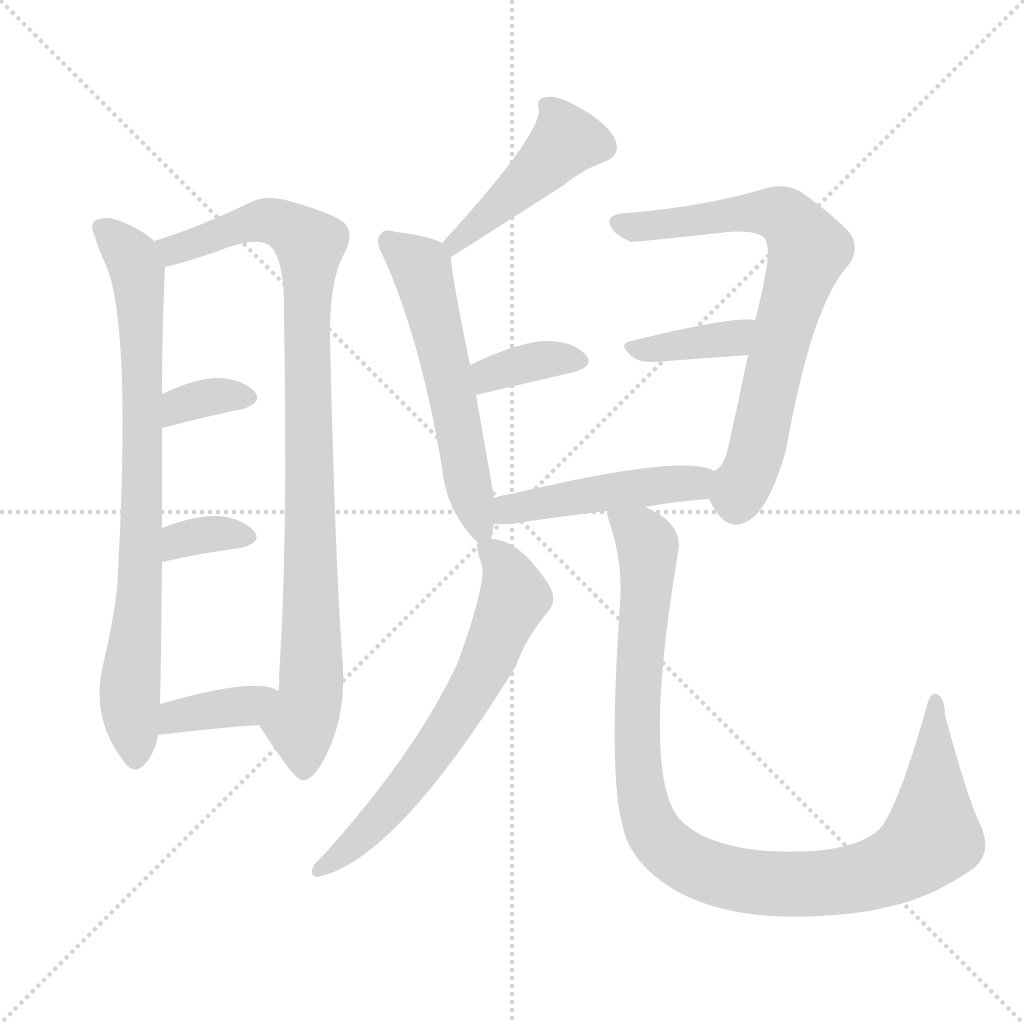
睨
Kangxi strokes: 13
Page 811, Entry 08
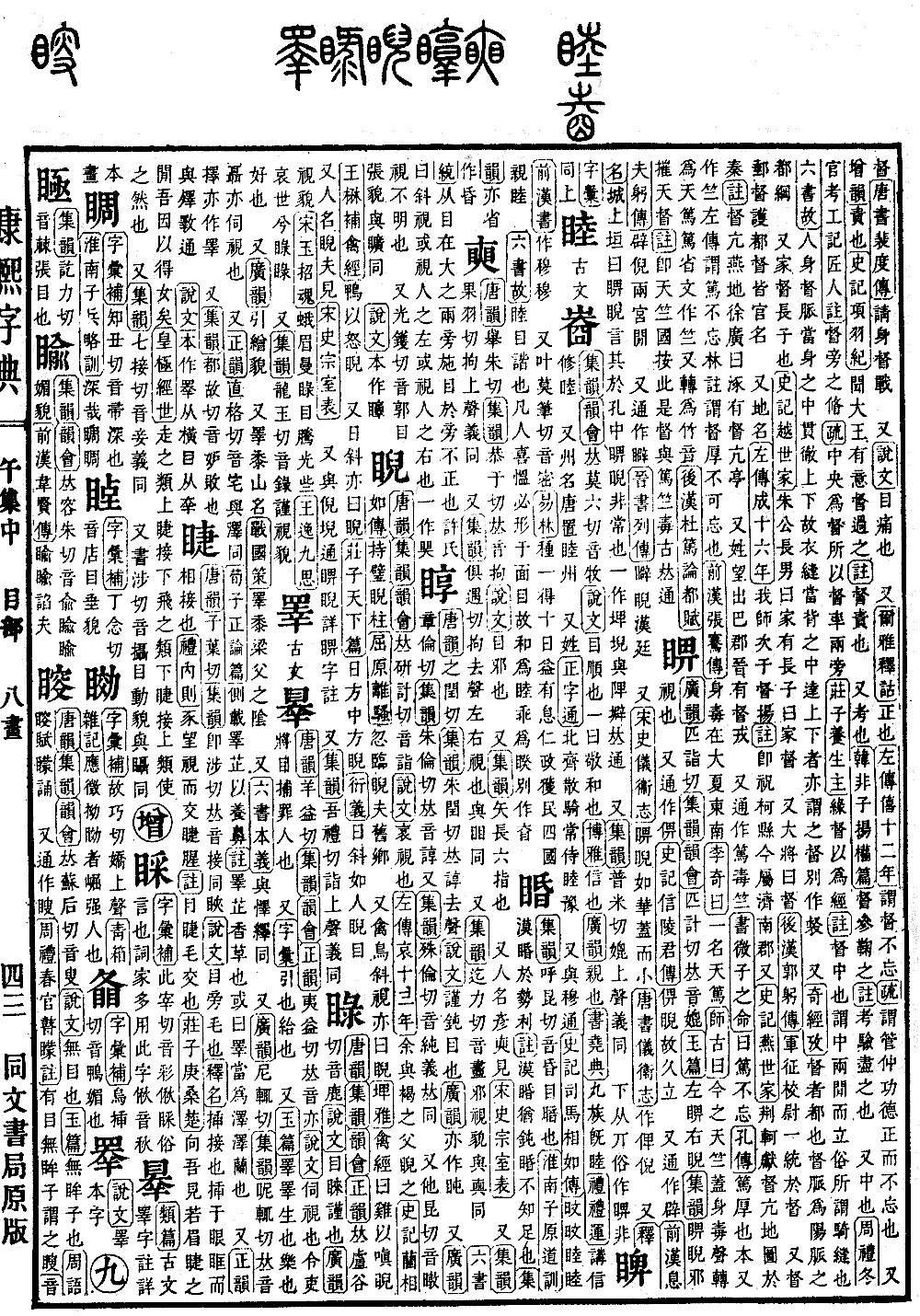
Tang Rhymes (Tangyun), Collection Rhymes (Jiyun), and Rhyme Assembly (Yunhui) define it as pronounced yi (falling tone).
Discussing and Explaining Characters (Shuowen): To look sideways.
Left Commentary (Zuo Zhuan), Thirteenth Year of Duke Ai: I and the father of the commoner looked sideways at it.
Records of the Grand Historian (Shiji), Biography of Lin Xiangru: Holding the jade disk, he looked sideways at the pillar.
Qu Yuan, Encountering Sorrow (Lisao): Suddenly I look sideways toward my old homeland.
Also, when birds look sideways, it is called ni.
Expanded Elegantia (Piya): The Classic of Birds (Qin Jing) says: The chicken stares sideways.
Wang Mao, Supplement to the Classic of Birds: The duck glares sideways.
Also, when the sun is slanting, it is called ni.
Zhuangzi, Under Heaven chapter: The sun is at its zenith and then begins to slant.
Extended Meanings (Yanyi): The sun slanting is like a person squinting their eyes.
Also, a person's name, Nifu. See History of Song (Songshi), Table of the Imperial Clan.
Also interchangeable with ni (ni) and ni (ni). For the term pi-ni, see the note under the character pi.
Also, according to Collection Rhymes (Jiyun), pronounced yi (rising tone). The meaning is the same.