Mao Collection, Upper Volume
Radical: Heart (xīn)
Kangxi stroke count: 12
Page 389, Entry 29
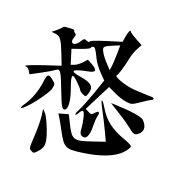
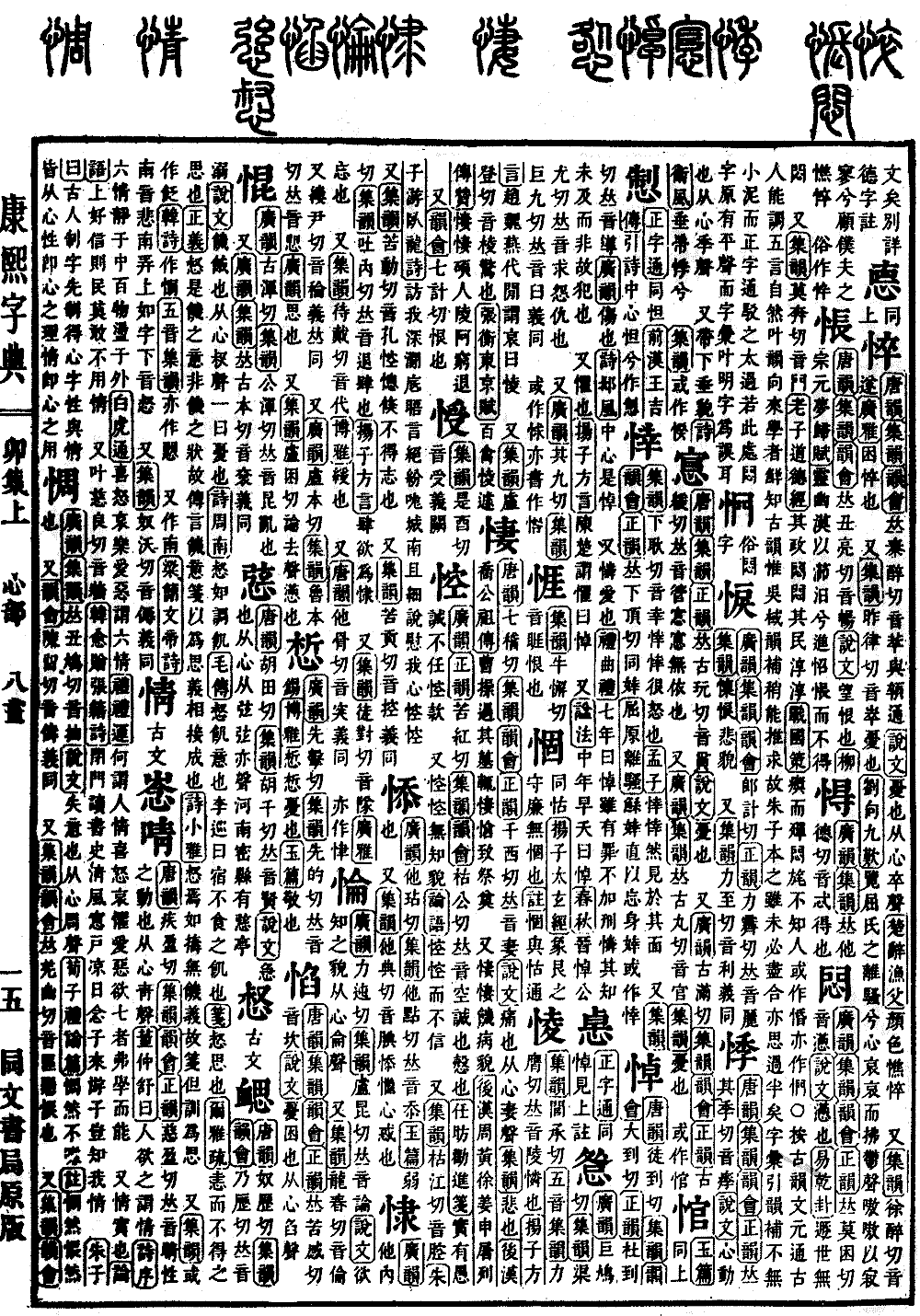
Tang Rhymes (Tangyun) states it is pronounced ni (falling tone). Collected Rhymes (Jiyun) and Collection of Rhymes (Yunhui) state it is pronounced nai (falling tone). The pronunciation is similar to ni. Explanation and Analysis of Characters (Shuowen Jiezi) defines it as the state of being hungry. The character structure consists of the Heart radical, with shu serving as the phonetic component. Another interpretation defines it as sorrow. The Book of Odes (Shijing), specifically in the Zhou South section, contains the phrase, "As hungry as if starving." Mao Commentary (Maozhuan) notes: This refers to the sensation of hunger. Li Xun explains further: This is the feeling of hunger after a long period without food. Zheng Xuan Commentary (Zhengxuan Jianzhu) suggests: It means to long for someone. The Subcommentary to the Erya (Eryashu) defines it as a longing born of resentment and unfulfillment. The Correct Meaning (Zhengyi) adds: It refers to the sensation of hunger rather than the state of hunger itself, which is why the Mao Commentary refers to it as the intent of hunger and the Zheng Xuan Commentary interprets it as longing; these two meanings are interconnected. The Book of Odes (Shijing), specifically in the Lesser Odes (Xiaoya) section, contains the phrase, "With an anxious heart as if being pounded." This usage lacks the connotation of hunger, which is why the Zheng Xuan Commentary interprets it solely as longing.
Additionally, Collected Rhymes (Jiyun) records that this character is sometimes written in a variant form. In the Han Poetry (Hanshi), it is written as nu. The Five Sounds Collected Rhymes (Wuyin Jiyun) also records a variant form. It is also written as nan. Emperor Yuan of Liang's poetry (Liangwendishi) contains the line, "Nan sounds are sad, nan melodies." The first nan is read with its original pronunciation, while the second nan is pronounced the same as ni.
Furthermore, Collected Rhymes (Jiyun) records another pronunciation as nu (entering tone), with a sound similar to nu. The meaning is the same.