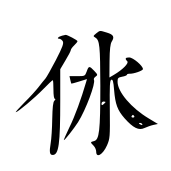
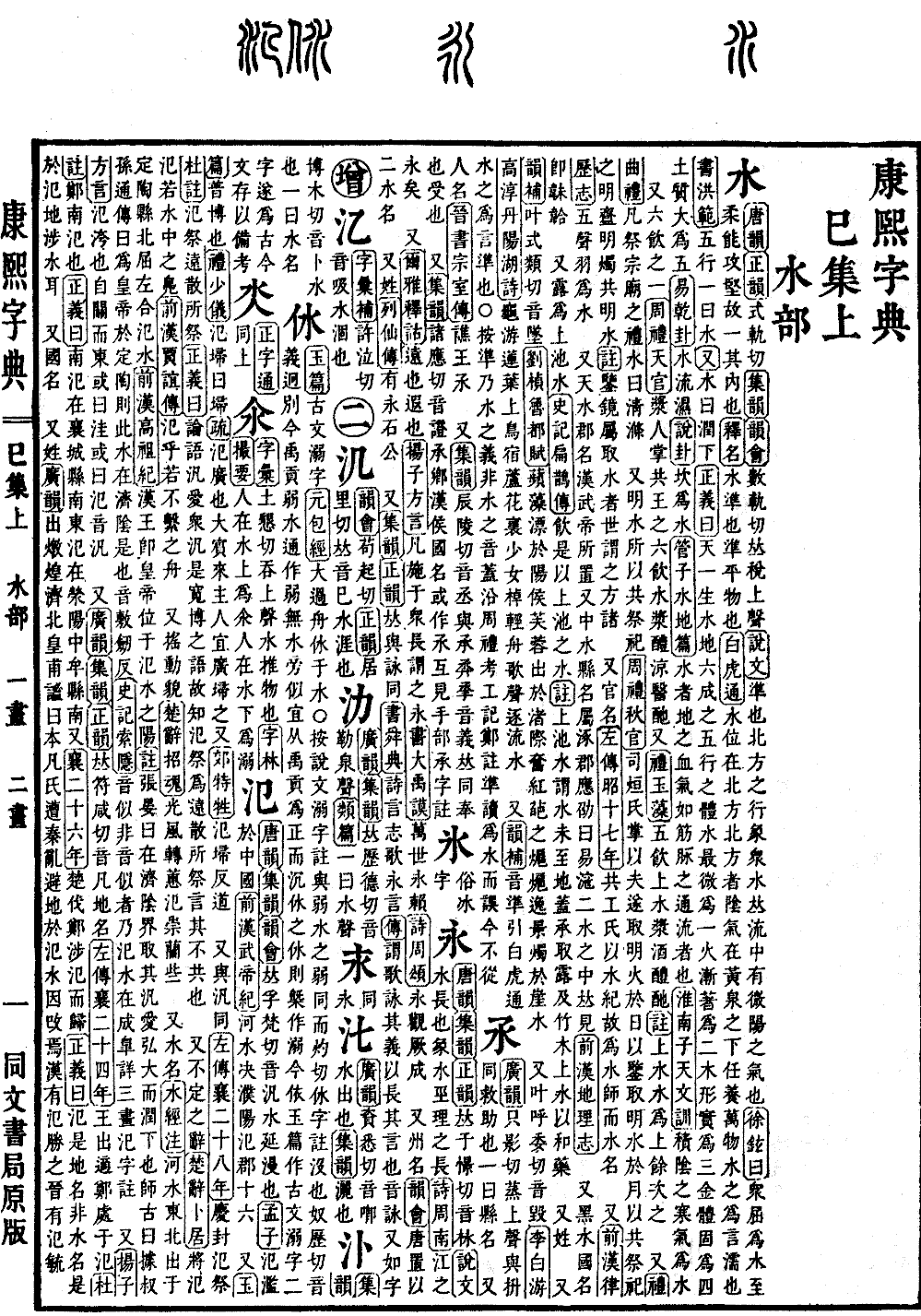
The "Yùpiān" (玉篇) records this as the ancient form of the character "nì" (溺). The "Yuánbāo Jīng" (元包经) states: the hexagram of "Dàguò" (大过) depicts a boat sinking in water.
Annotation: The explanation of the character "nì" (溺) in "Shuōwén Jiězì" (说文解字) is the same as the character "ruò" (弱) in "Ruòshuǐ" (弱水), pronounced "ér zhuó qiē". The explanation of the character "miè" (㲻) means to sink, pronounced "nú lì qiē", with completely different pronunciation and meaning. Currently, the "Ruòshuǐ" (弱水) in "Yǔgòng" (禹贡) is written as "ruò" (弱) without the water radical, and it seems the writing in "Yǔgòng" should be taken as the standard. The character "miè" (溺), meaning to sink, is universally written as "nì" (溺). Now, following the "Yùpiān" (玉篇), it is taken as the ancient form of "nì" (溺), thus establishing a relationship between ancient and modern characters for these two words, recorded for reference.