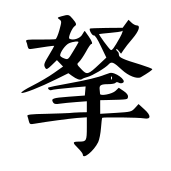
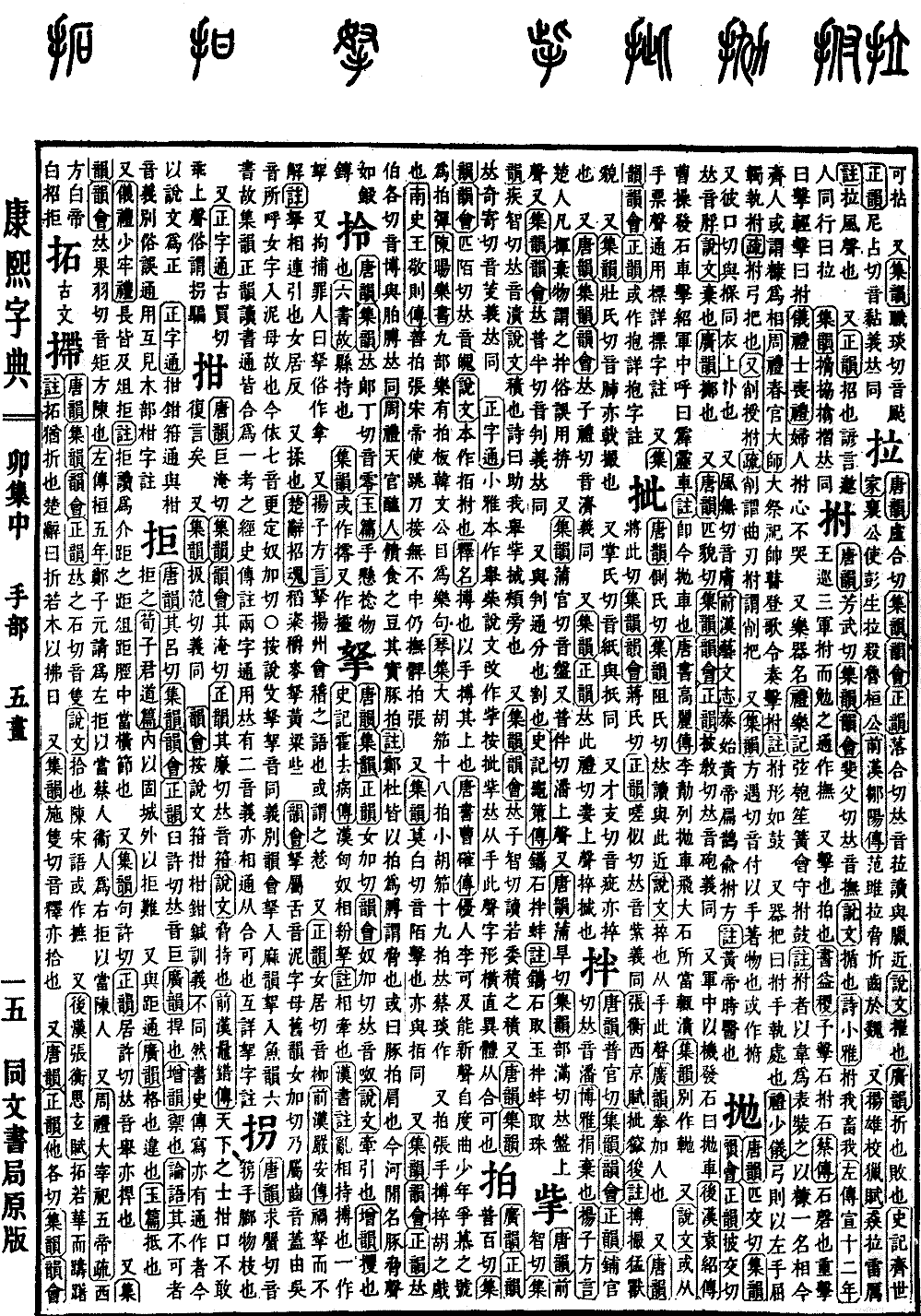
Mao Collection, Middle Volume. Radical: Hand (shǒu). Kangxi strokes: 9. Page 425, Entry 09.
Tang Rhymes (Tangyun), Collected Rhymes (Jiyun), and Correct Rhymes (Zhengyun) state the pronunciation is na (rising tone). Rhyme Meeting (Yunhui) states the pronunciation is na. Both pronunciations are the same as the character for clamor. Explanation in Explaining Graphs and Analyzing Characters (Shuowen Jiezi) defines it as to pull or lead. Increased Rhymes (Zengyun) defines it as to grab or seize. Records of the Grand Historian (Shiji), Biography of Huo Qubing, records: The Han dynasty and the Xiongnu were in mutual conflict. The commentary explains this as pulling at one another. The Commentary to the Book of Han (Hanshu) explains it as wrestling in chaos. Also written in a variant form (na). It also refers to the arrest of criminals, called na. A common variant is written as na. Additionally, the Dialect (Fangyan) by Yang Xiong records: Na is a regional dialect of the Yangzhou and Kuaiji areas; some places call it re.
According to Correct Rhymes (Zhengyun), the pronunciation is ju (rising tone), the same as the character for rags. The Book of the Former Han (Qian Hanshu), Biography of Yan An, records: Calamities and turmoil were linked together and could not be resolved. The commentary explains that na here means to be mutually entangled, with the pronunciation ju (rising tone). Another definition is to knead or rub. The Songs of Chu (Chuci), Summoning the Soul, records: Mixing rice, millet, and early-ripening wheat with yellow sorghum.
Rhyme Meeting (Yunhui) states that na belongs to the lingual sounds and is categorized under the initial n. The old rhyme books provided the pronunciation na (rising tone) but categorized it under dental sounds; this is likely because the Wu dialect classification placed the initial n within the lingual category. It has now been reclassified based on the seven sounds as na. According to Explaining Graphs and Analyzing Characters (Shuowen Jiezi), na and the variant na are pronounced the same but differ in meaning. Rhyme Meeting (Yunhui) categorizes na under the ma rhyme group and the variant na under the yu rhyme group. Six Writings Treasury (Liushu Gu), Collected Rhymes (Jiyun), Correct Rhymes (Zhengyun), and Mastery of Reading (Dushu Tong) all consolidate the two characters into one. Examining the classics and historical commentaries, the two characters are used interchangeably, have two pronunciations, and share meanings; treating them as merged is acceptable. See the detailed notes under the character variant na.