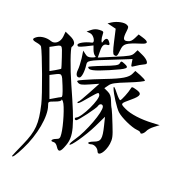
Zi Collection, Page Position: Upper, Radical: Mouth (kǒu), Page 3, Entry 01
Pronounced móng (falling tone). Also pronounced méng (rising tone).
From "Guangyun" and "Zhengyun": pronounced mō hóng (falling tone). From "Jiyun" and "Yunhui": pronounced mó péng (falling tone). Pronunciation is the same as "méng".
"Guangyun" explains it as the appearance of being large.
"Jiyun" quotes "Fangyan": In the Qin and Jin regions, anything describing the appearance of being large is called "méng". Another explanation is the meaning of plumpness.
Also, from "Guangyun": pronounced mō kǒng (falling tone). From "Jiyun": pronounced mǔ zǒng (falling tone). Pronunciation is the same as "mǐng". The meaning is the same.
Also, from "Jiyun": pronounced mǔ xiàng (falling tone). Pronunciation is []. The meaning is plump muscles.