Mao Collection, Upper Volume
Radical: Heart (xīn)
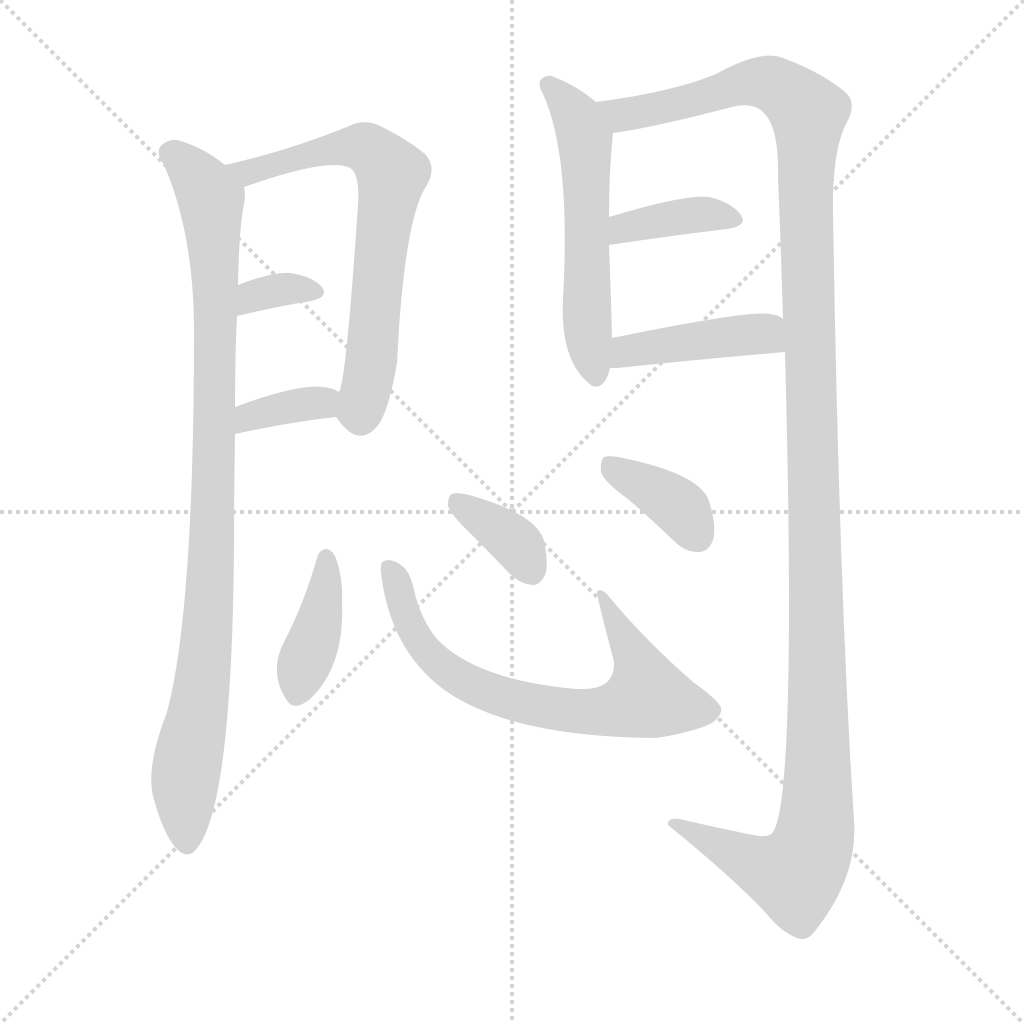
闷
Kangxi strokes: 12
Page 389, Entry 05
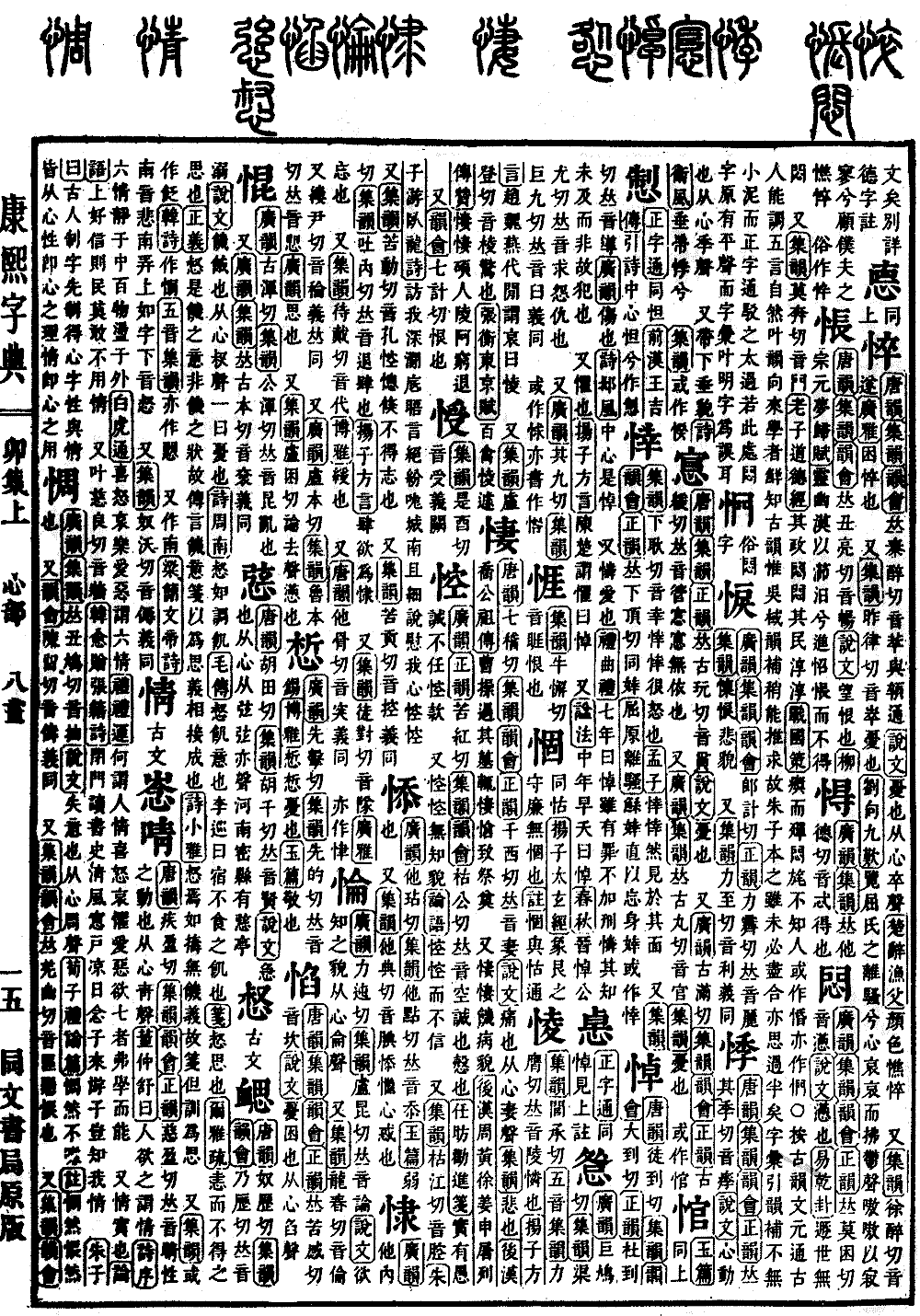
Guangyun (Guangyun), Jiyun (Jiyun), Yunhui (Yunhui), Zhengyun (Zhengyun): Pronounced men (falling tone).
Shuowen (Shuowen): Means repressed or stifled.
Book of Changes (Yijing), Qian Hexagram: To withdraw from the world without feeling stifled.
Also Jiyun (Jiyun): Pronounced men (level tone).
Tao Te Ching (Daodejing): Its government is quiet and non-intrusive (menmen), its people are simple and honest.
Strategies of the Warring States (Zhan Guo Ce): Suffering and exhausted, in a daze (men), unable to recognize people.
Sometimes written in a variant form (hun). Also written in a variant form.
Note: In ancient rhyming, the endings for -en and -un are interchangeable. The ancients were able to harmonize five-character lines and naturally rhyme them. Scholars in the past rarely understood ancient rhyming; only Wu Yu, in his Supplement to Rhymes (Yunbu), was able to investigate it to some extent, and thus Master Zhu relied upon him. Although it may not be entirely correct, it is more than halfway there. The Dictionary of Characters (Zihui) cited the Supplement to Rhymes but was slightly too pedantic, while the Corrected Dictionary (Zhengzitong) refuted it too harshly. If this character "men" originally had a level tone entry, the Dictionary of Characters attempting to rhyme it with the character "ming" is incorrect.