Wu Collection, Lower Volume
Radical: Spirit (shì)
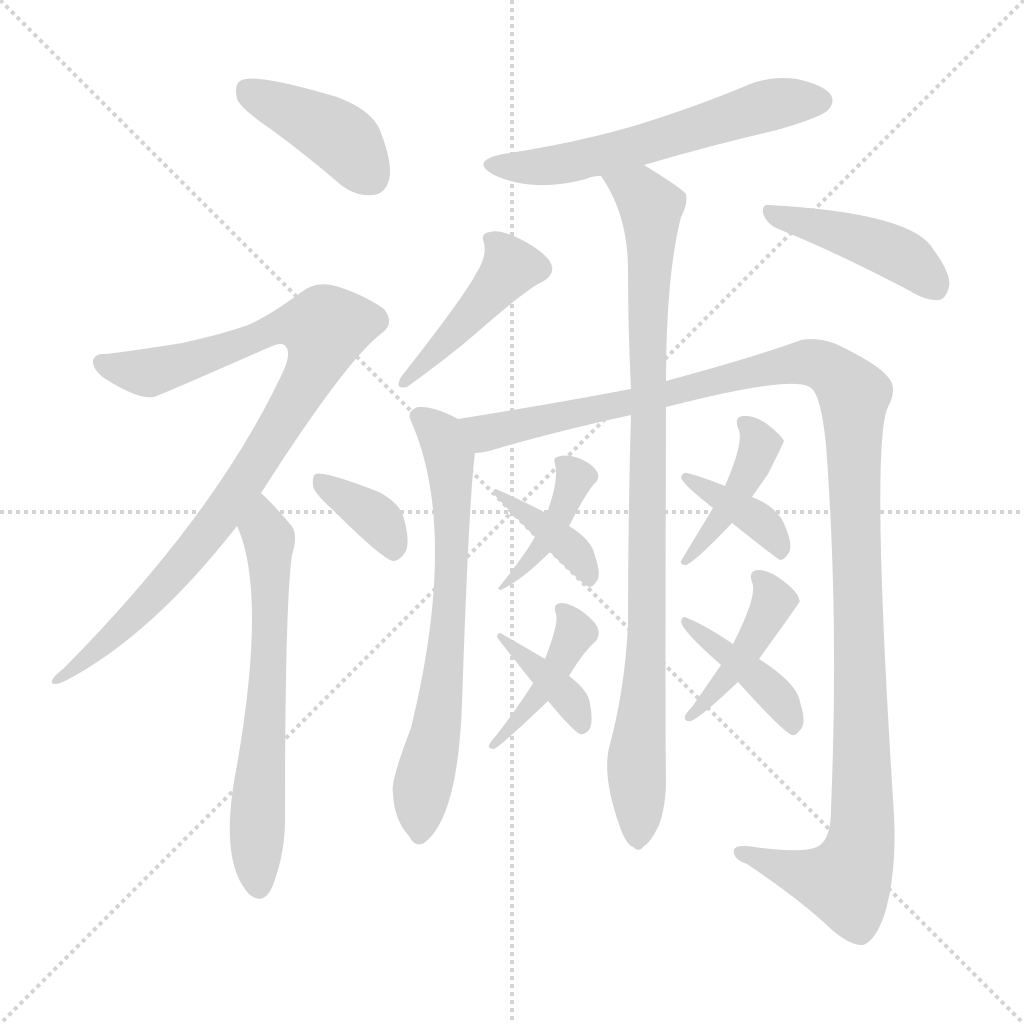
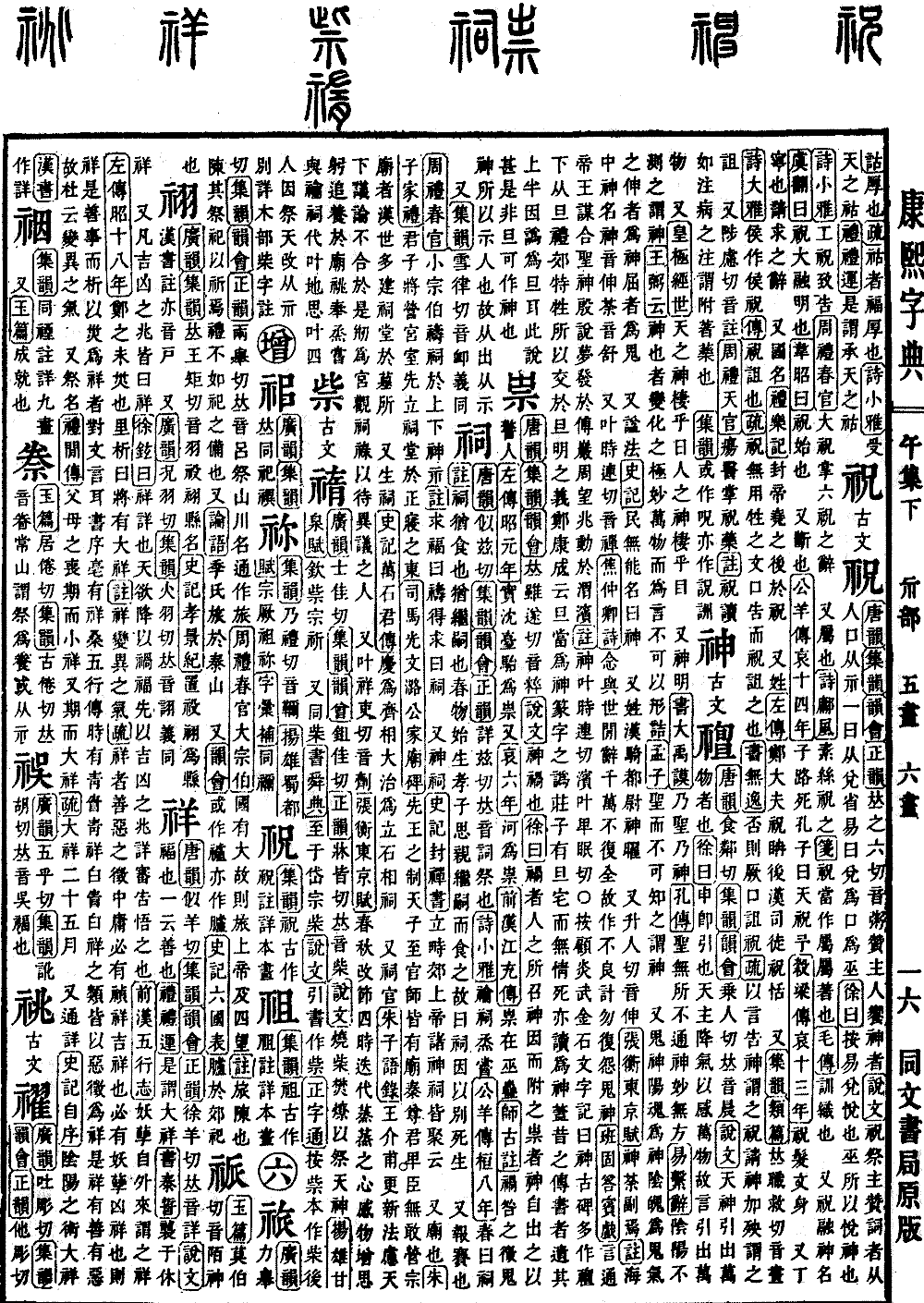
禰
Kangxi strokes: 19
Page 842, Entry 06
Pronounced mi (rising tone).
Shuowen Jiezi (Dictionary of Explanations and Analysis of Characters): A temple for one's own ancestor.
Zengyun (Expanded Rhymes): A father's temple is called mi.
Gongyang Zhuan (Gongyang Commentary on the Spring and Autumn Annals), notes on the first year of Duke Yin, autumn, seventh month: While alive, one is called father; when dead, one is called kao; upon entering the temple, one is called mi.
Sub-commentary: The character mi is composed of the radical for spirit with the element er, suggesting that although one enters the temple as a divine spirit, one remains the closest to the self, hence the term mi.
Also, a portable ancestral tablet is called mi.
Book of Rites (Liji), Wen Wang Shizi: When in the army, keep watch at the public mi.
Note: The public mi is a portable ancestral tablet; when traveling, one brings the ancestral tablet and refers to it as mi to signify that one is near it while away.
Also, a place name.
Book of Odes (Shijing), Beifeng: Drinking a farewell feast at Ni.
Also, a surname. Wei dynasty: Mi Heng.
Note: In the Gongyang Zhuan, the note and sub-commentary treat the character for public mi as standard; there is no need to follow the scholar Hao and read it as tiao. The Dictionary of Characters (Zihui) incorrectly relies on this to place it in the xiao rhyme category.