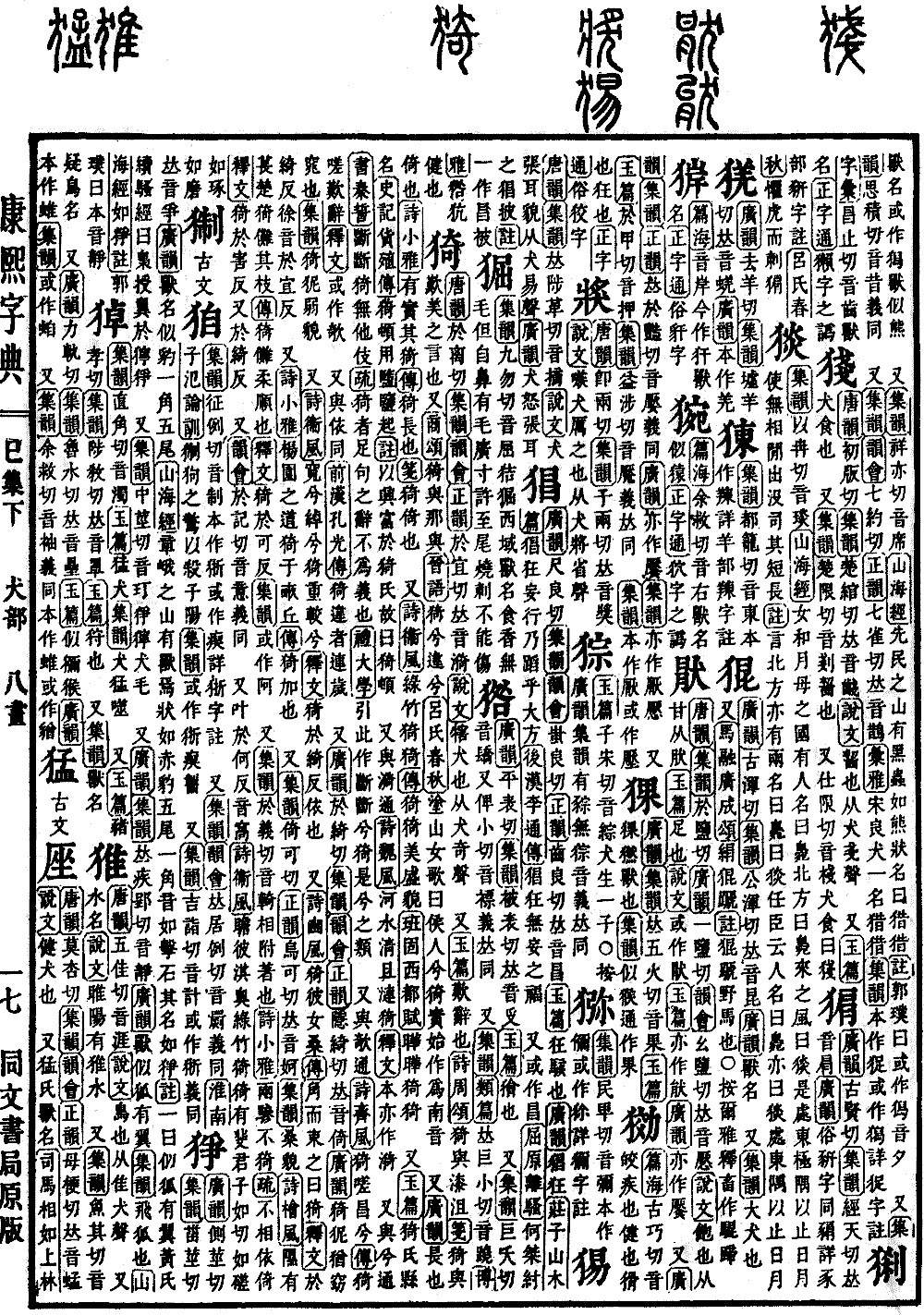
Si Collection, Lower Volume
Radical: Dog (quǎn)
12 strokes
Page 713, Entry 26
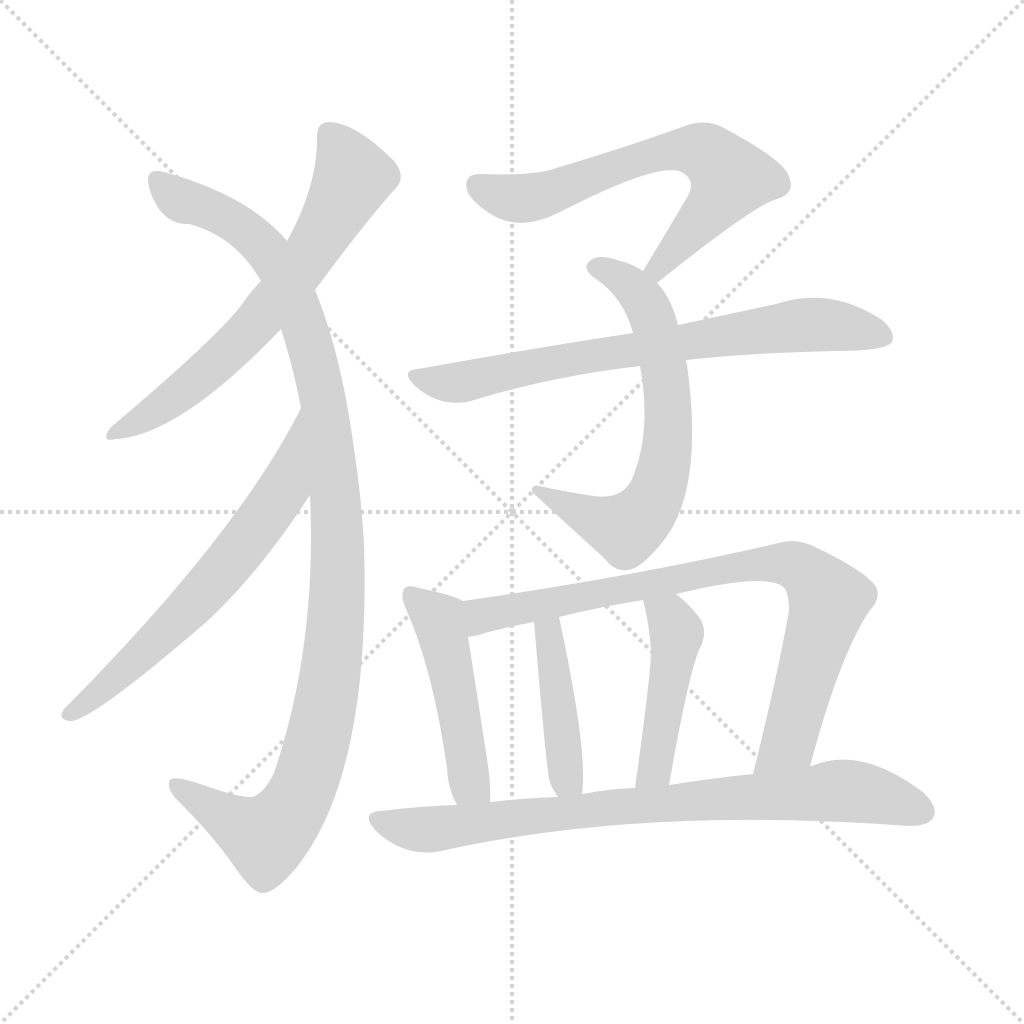
Archaic script.
According to Tang Rhymes (Tangyun), pronounced měng. According to Collected Rhymes (Jiyun), Rhyme Compilation (Yunhui), and Correct Rhymes (Zhengyun), pronounced měng.
According to Explaining Graphs and Analyzing Characters (Shuowen), a strong dog.
Also a type of beast.
In the Rhapsody on the Shanglin Park (Shanglin fu) by Sima Xiangru: The mengshi beast. The commentary by Guo Pu states: In present-day Shu, there is a beast resembling a bear but with short, lustrous hair, known as mengshi.
Also according to Jade Chapters (Yupian), strong.
According to Broad Rhymes (Guangyun), brave and fierce.
From the Book of Rites (Liji), record of the suburban sacrifice: The skins of tigers and leopards demonstrate submission to ferocity.
Also according to Jade Chapters (Yupian), stern.
From the Zuo Commentary (Zuozhuan), twentieth year of Duke Zhao: Only those who possess virtue can subdue the people with leniency; for others, nothing is better than severity.
Also according to Jade Chapters (Yupian), evil or harmful.
From the Book of Rites (Liji), record of Tan Gong: Harsh governance is fiercer than a tiger.
Also, Humeng County, subordinate to Xihe Commandery. Mengling County, subordinate to Cangwu Commandery. Both are listed in the History of the Former Han (Qianhan), treatise on geography.
Also a mountain name. From the Huainan Masters (Huainanzi), treatise on topography: The Ru River flows out of Meng Mountain.
Also a surname. According to Broad Rhymes (Guangyun), descendants of Meng Huo, an official of the state of Jin mentioned in the Zuo Commentary (Zuozhuan).