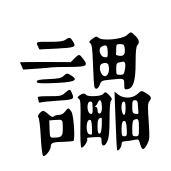
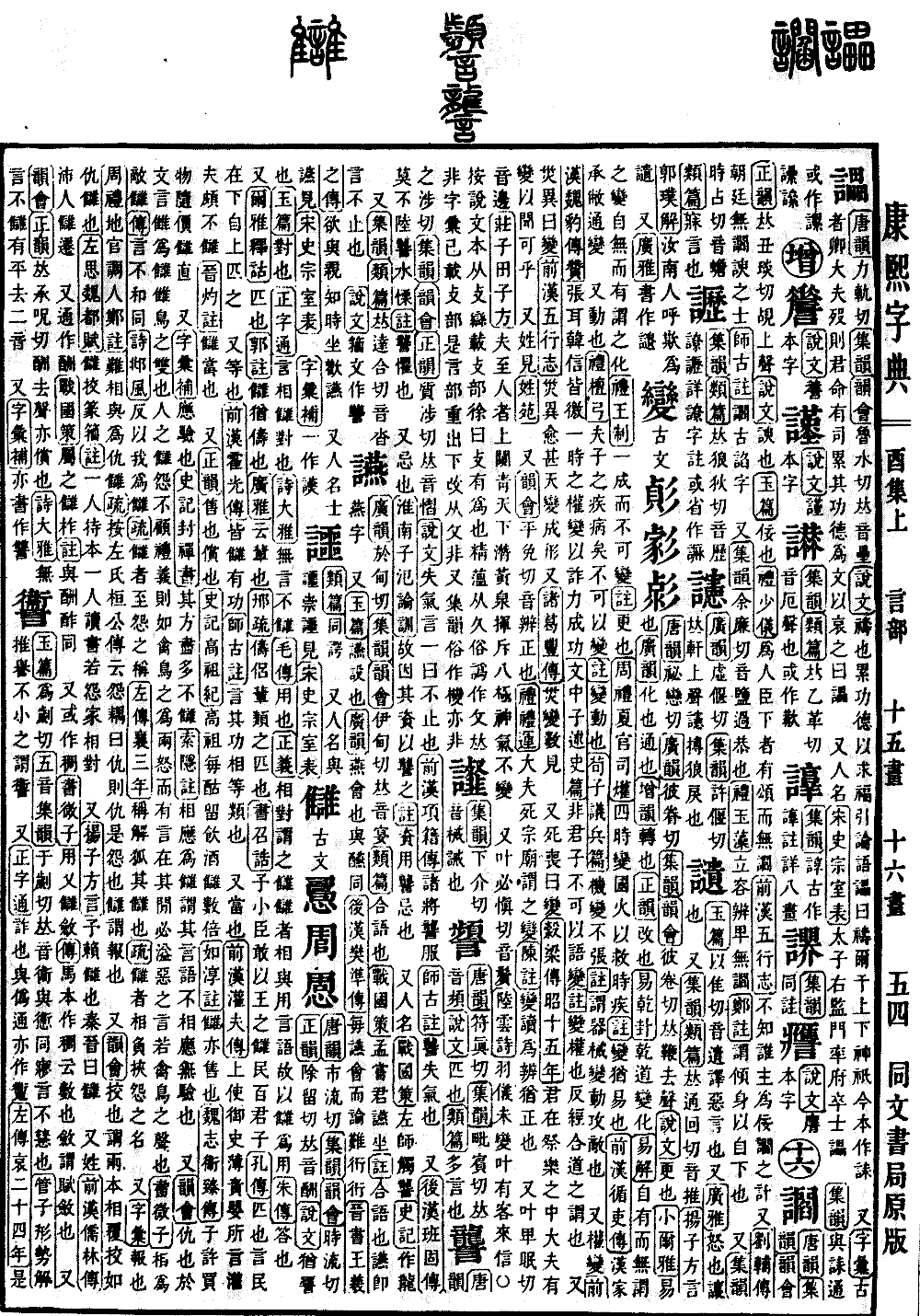
You Collection, Upper Volume
Radical: Speech (yán)
Lei
Kangxi strokes: 22
Page 1186, Entry 01
According to Tang Rhymes (Tangyun), pronounced lei (falling rising tone); according to Collected Rhymes (Jiyun) and Rhyme Anthology (Yunhui), pronounced lei (falling rising tone).
According to Explaining Graphs and Analyzing Characters (Shuowen), it means to pray. It involves accumulating merit and virtue to seek good fortune. It cites the Analects (Lunyu), where the prayer states: I have prayed for you to the gods above and below. In modern editions, this is written as lei (eulogy).
Also, according to Collection of Characters (Zihui), in ancient times, when a high official died, the ruler would command the relevant authorities to assemble their merits and virtues and compose a text to mourn them; this was called lei.
Also used in personal names. According to History of Song (Songshi), Table of the Imperial Clan, there was a soldier named Lei in the Office of the Right Guard of the Crown Prince.
According to Collected Rhymes (Jiyun), it is interchangeable with lei (eulogy). It is sometimes written in a variant form.