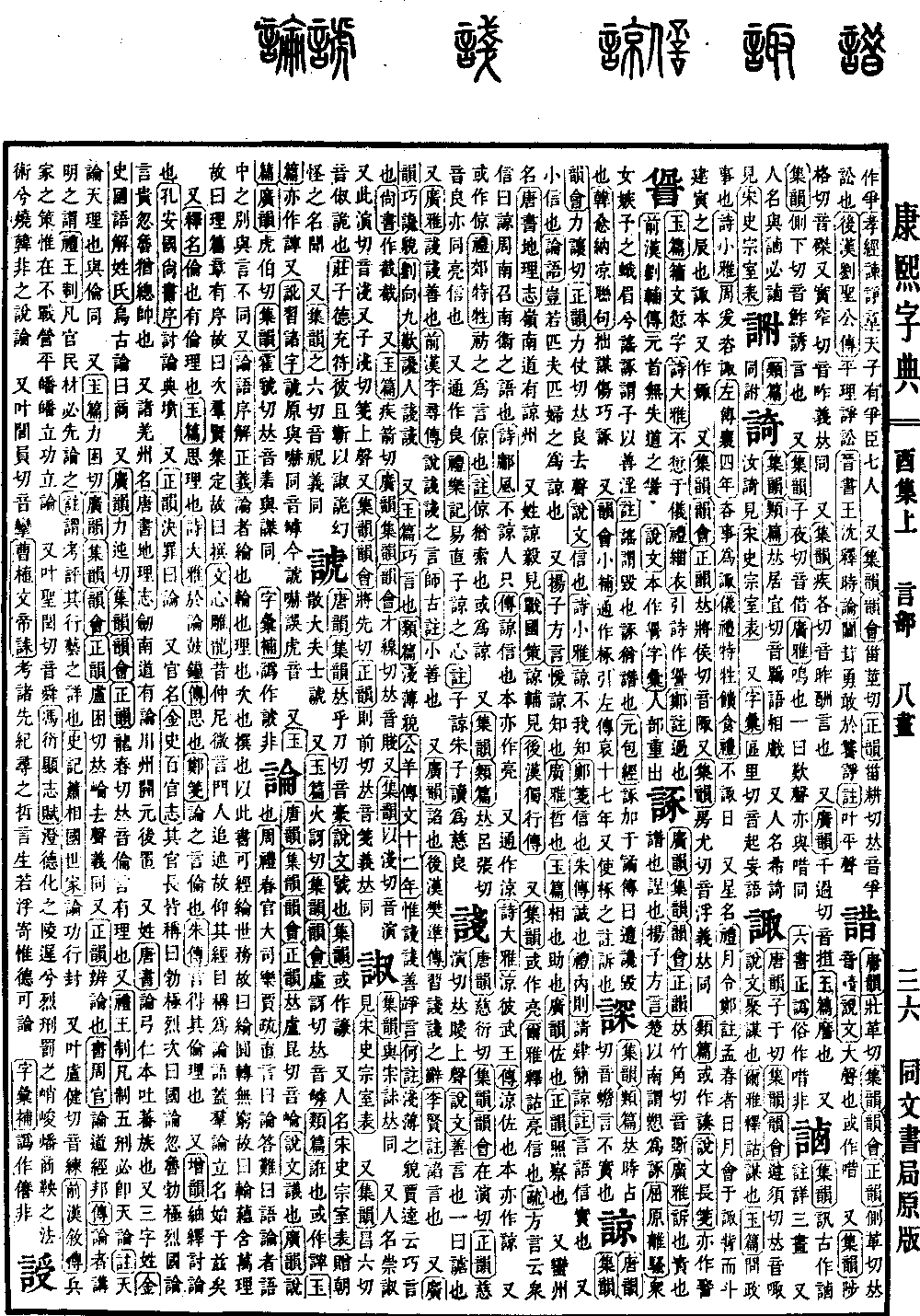
You Collection, Upper Volume
Radical: Speech (yán)
Kangxi Strokes: 15
Page 1168, Entry 13
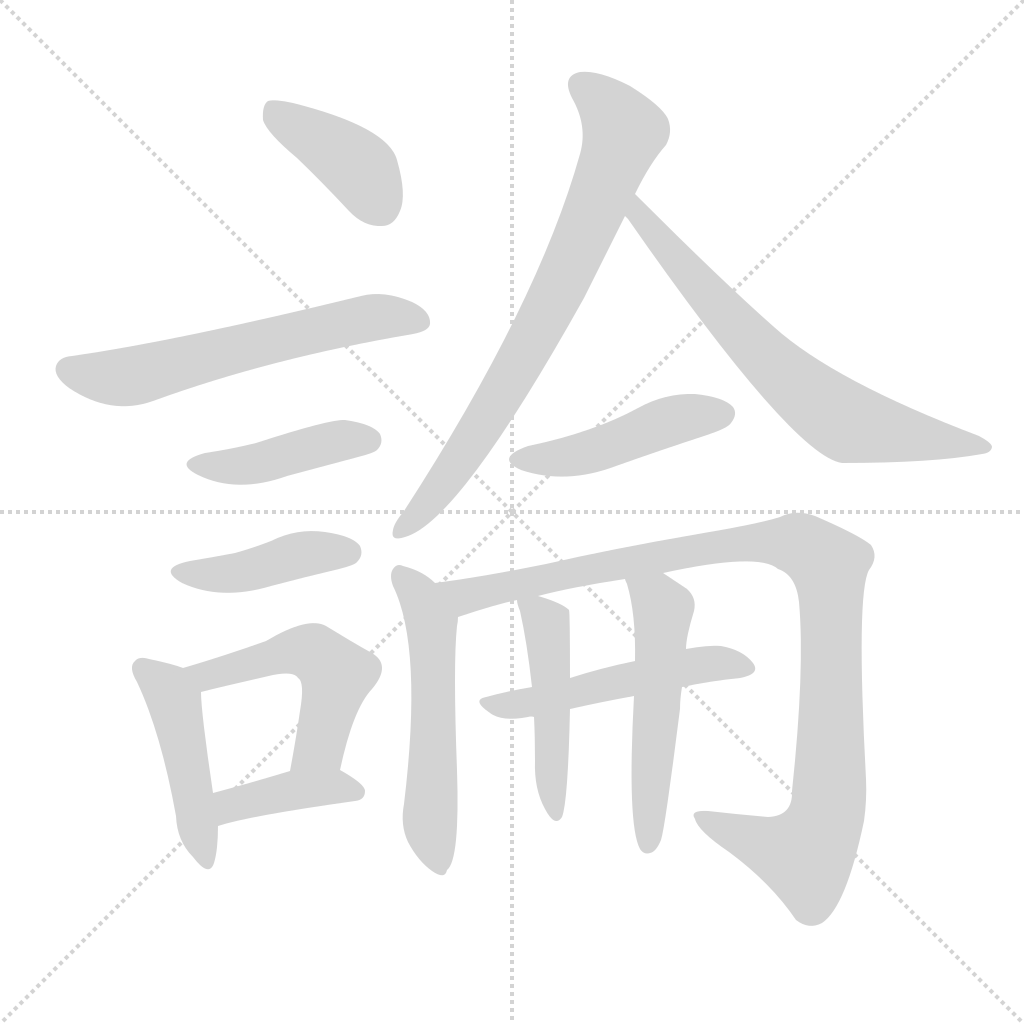
Pronounced lun. According to Explaining Graphs and Analyzing Characters (Shuowen), it means to discuss. According to Broad Rhymes (Guangyun), it means to explain. According to the commentary by Jia on the Spring and Autumn Rites (Zhouli), Spring Office, Grand Musician, to state directly is called lun, while answering challenges is called yu. Lun is a distinction within speech, different from general talking. According to the Correct Meaning of the Preface to the Analects (Lunyu), the character lun implies the concepts of silk, wheel, principle, order, and compilation. Because this book can organize worldly affairs, it is like silk (lun); because it is as perfectly turning as a wheel, it is called lun; because it contains myriad principles, it is called principle (li); because the chapters have order, it is called order (ci); because it was compiled by many sages, it is called compilation (zhuan). According to The Literary Mind and the Carving of Dragons (Wenxin Diaolong), in the past, Confucius had subtle discourse, and his disciples recalled and recorded it, hence the veneration of his classics under the title Analects (Lunyu). This is likely where the establishment of titles for various treatises began. According to Explaining Names (Shiming), it means to be orderly, having system and sequence. According to Jade Chapters (Yupian), it is to reflect upon and analyze principles. In the Book of Odes (Shijing), Greater Odes, it says, "In the lun of the drums and bells." The Commentary (Zhuan) says it means to think. The Zheng Note says the character lun speaks of moral order. The Zhu Commentary says it means to accord with its system and order. According to Expanded Rhymes (Zengyun), it means to organize, elucidate, explore, and discuss. According to the Preface to the Book of Documents (Shangshu) by Kong Anguo, it means to explore and discuss ancient records. According to Correct Rhymes (Zhengyun), to pass judgment on a crime is called lun. It is also a title for an official post. According to the History of the Jin Dynasty (Jinshi), Record of Officials, their chiefs were called bejile, and the next rank was called guolun hulu bejile. Guolun means honorable; hulu is like a commander-in-chief. It is also the name of a prefecture established by various Qiang tribes. According to the History of the Tang Dynasty (Tangshu), Treatise on Geography, the Jiannan Circuit had Lun-chuan Prefecture, established after the Kaiyuan era. It is also a surname. The History of the Tang Dynasty mentions Lun Gongren, originally a member of the Tibetan people. It is also a three-character surname. According to the History of the Jin Dynasty, Language Explanation, the surname Wugulun is translated into the Chinese surname Shang. Pronounced lun. It means that speech has principle. According to the Book of Rites (Liji), Royal Regulations, all formulations of the five punishments must be based on heavenly lun. The Note says heavenly lun means heavenly principle. It is the same as the character for moral order (lun). It is also pronounced lun in the departing tone. The meaning is the same. According to Correct Rhymes (Zhengyun), it means to debate. According to the Book of Documents (Shangshu), Zhou Officials, it means to discuss principles and govern the state. The Commentary says lun means to explain and clarify. According to the Book of Rites (Liji), Royal Regulations, all selection of talent from among the people for office must first undergo lunding. The Note says this means to examine and evaluate the details of their conduct and talents. According to the Records of the Grand Historian (Shiji), Biography of Chancellor Xiao, it means to evaluate merits and distribute rewards. It is also rhymed as lian. According to the Former Han Dynasty (Qianhan), Narrative Biography, the strategies of military thinkers lie only in not fighting. The Marquis of Yingping, with white hair, established merit and created a judgment (lun). It is also rhymed as shun. According to Feng Yan, Displaying Ambition Rhapsody, clarifying the decline of moral education, and the severity of harsh punishments. Burning the laws and stratagems of Shang Yang, and incinerating the theories and discourses (lun) of Han Fei. It is also rhymed as luan. According to Cao Zhi, Eulogy for Emperor Wen, examining various records of previous generations, and seeking those wise discourses (lun). Human life is like a floating weed in its transience, and only one's virtue can be discussed (lun). The Supplement to Dictionary of Characters (Zihui Bu) notes that writing it incorrectly is wrong.