Zi Collection, Page Position: Lower
Radical: Power (lì)
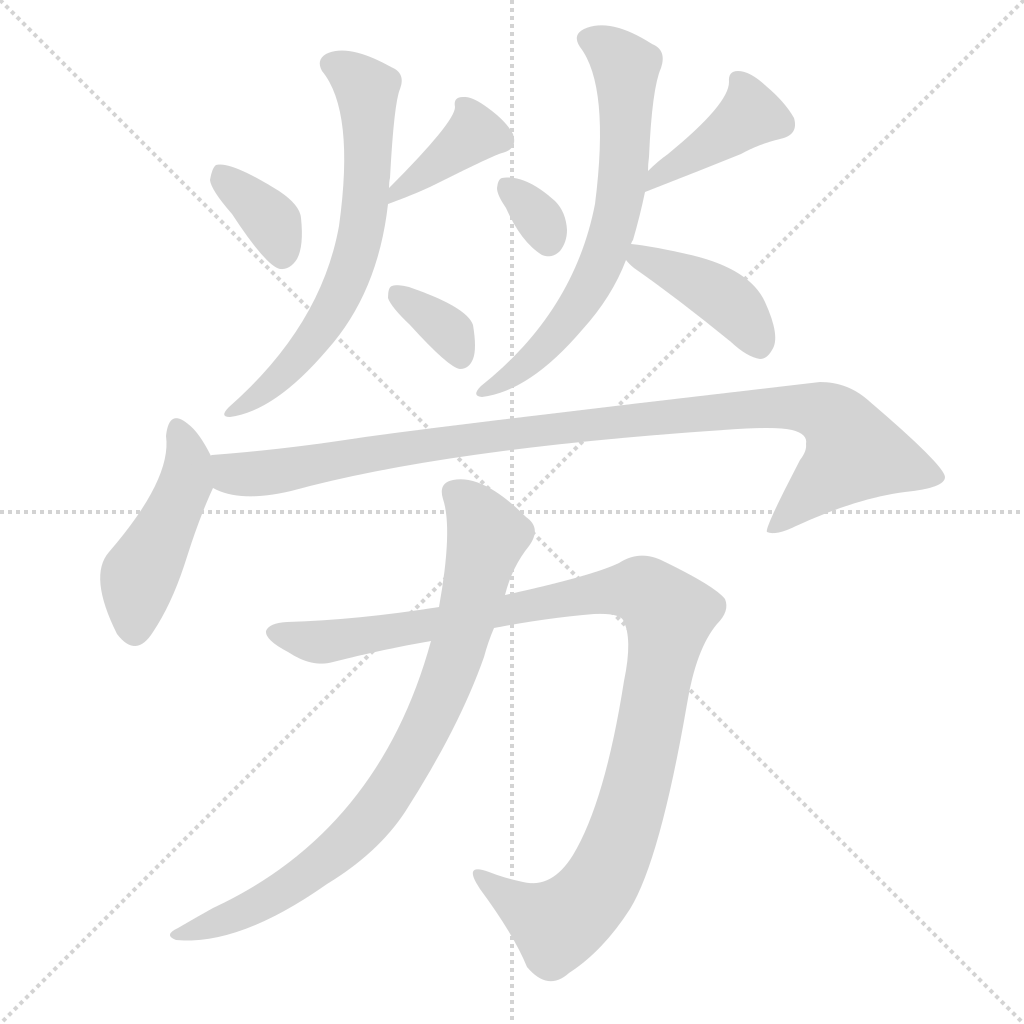
láo
Kangxi strokes: 12
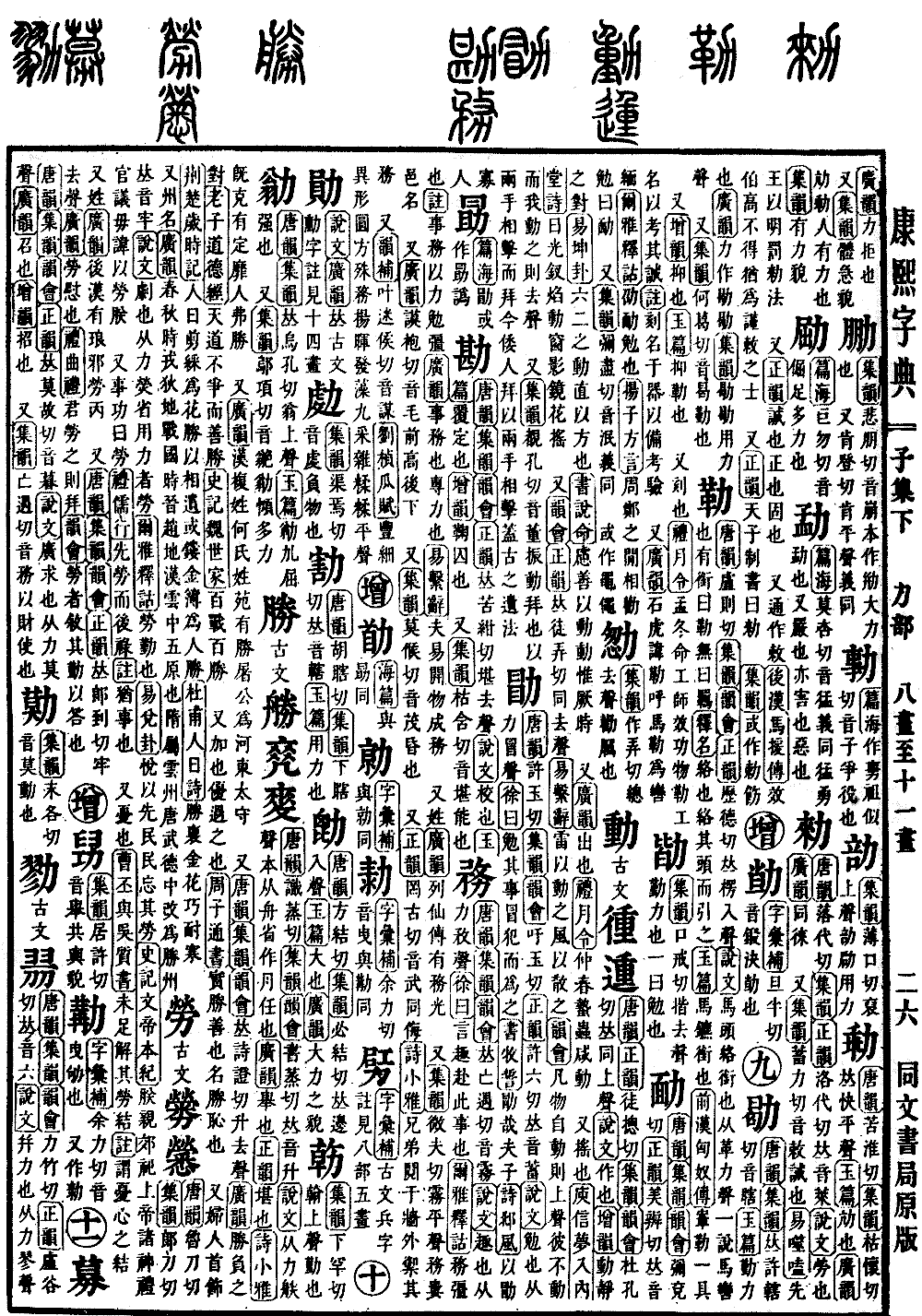
Page 148, entry 35 (Ancient form)
Tang Rhyme: lǔ dāo qiè. Ji Rhyme: láng dāo qiè, pronounced láo. Shuowen Jiezi (Shuōwén Jiězì): "Intense; hard." Formed from Power (lì) and a phonetic element (荧省 yíng shěng). One who exerts effort toils. Erya (Ěryǎ), Explanation of Words: "Láo means diligent; industrious." Book of Changes (Yì Jīng), "Duì" hexagram: "Guide the people with a harmonious and joyful attitude, and the people will forget their toil." Records of the Grand Historian (Shǐ Jì), "Annals of Emperor Wen": "I personally offer sacrifices to God and all deities; when the ritual officials deliberate, they should not avoid anything out of fear of my exhaustion."
Also refers to achievements, merits. Book of Rites (Lǐ Jì), "Conduct of the Ru": "First establish merits and then receive emoluments." Commentary: "Láo refers to accomplished deeds."
Also refers to sorrow, worry. Cao Pi's Letter to Wu Zhi: "Insufficient to untangle the accumulated sorrow in his heart." Commentary: "Refers to a knot of worry."
Also a surname. Guangyun (Guǎngyùn): "During the Later Han dynasty, there was Láo Bǐng from Langya."
Also, Tang Rhyme, Ji Rhyme, Yunhui (Yùnhuì), Zheng Rhyme: láng dào qiè, pronounced láo (qu-sheng tone). Guangyun: "Láo means to comfort; to console." Book of Rites, "Summary of Rites": "When a ruler comforts and rewards his minister, the minister must perform a bow." Yunhui: "Láo means to acknowledge the other's diligence as a sign of gratitude."