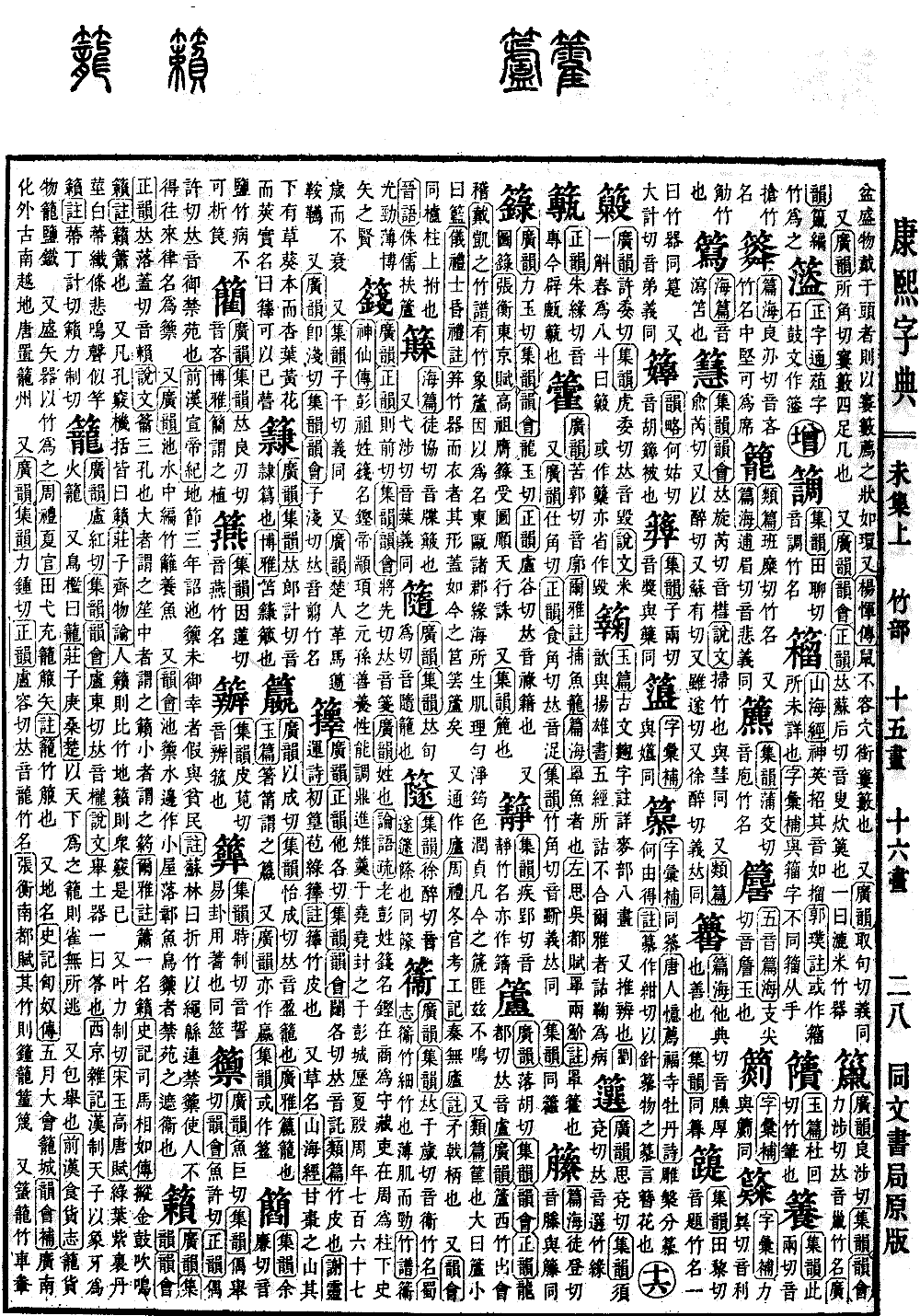
Wei Collection, Upper Volume
Radical: Bamboo (zhú)
22 strokes
Page 904, Entry 44
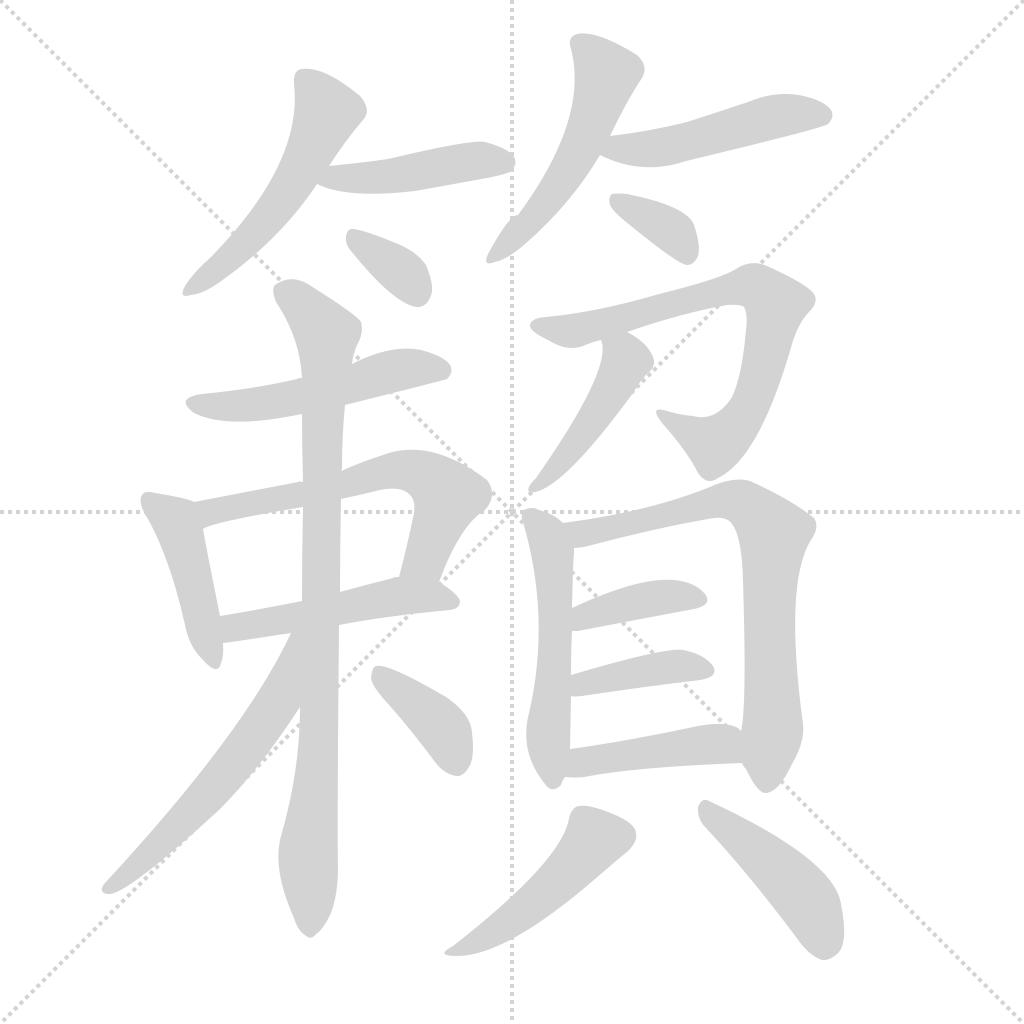
Broad Rhymes (Guangyun), Collected Rhymes (Jiyun), Rhyme Meetings (Yunhui), and Orthodox Rhymes (Zhengyun) state it is pronounced lai. According to the Explaining Graphs and Analyzing Characters (Shuowen), it refers to a bamboo flute with three holes. The largest is called a sheng, the medium-sized is called a lai, and the smallest is called a yue. The Commentary to the Approaching Elegance (Erya) states the xiao flute is also known as a lai. In the Records of the Grand Historian (Shiji), Biography of Sima Xiangru, it is written: Beating metal drums and blowing the sounding lai. The commentary explains that the lai is a xiao flute. Furthermore, all openings, apertures, and mechanical components are referred to as lai. In the Zhuangzi, Discourse on Making All Things Equal (Qiwulun), it is written: The human lai is like organized bamboo, while the earthly lai consists of various apertures. It is also pronounced li (falling tone). In Song Yu’s Rhapsody on Gaotang (Gaotang Fu), it is written: With creeping leaves and purple inner linings, red stems and white stalks. The slender branches moan, their sounds resembling the yu and lai flutes. The commentary notes that stalks is pronounced di (falling tone), and lai is pronounced li (falling tone).
Textual verification: In the Records of the Grand Historian (Shiji), Biography of Sima Xiangru, the text reads: Beating metal drums and blowing the sounding lai. Based on the original text, the character for beating has been corrected.