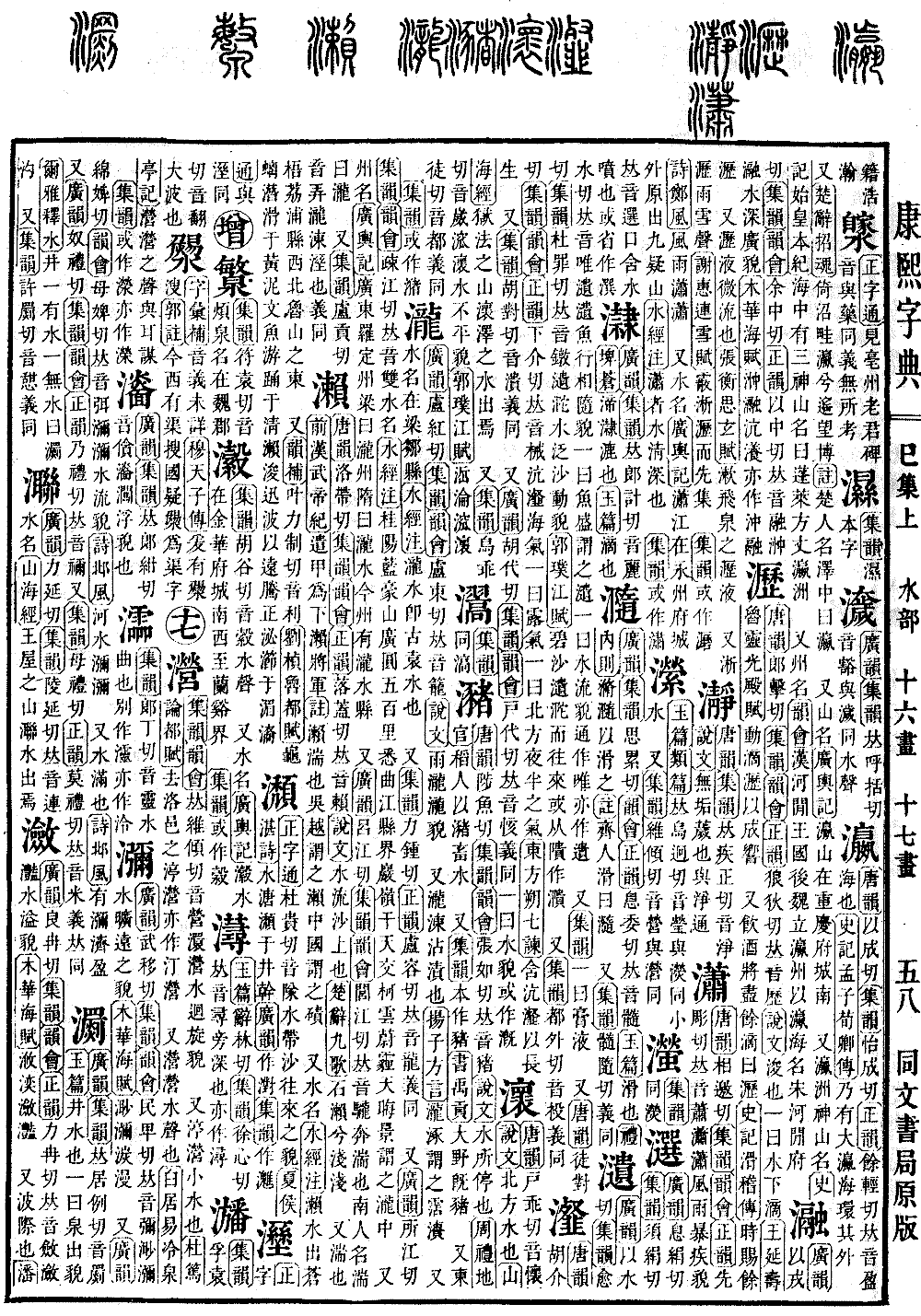
Si Collection, Upper Volume
Radical: Water (shuǐ)
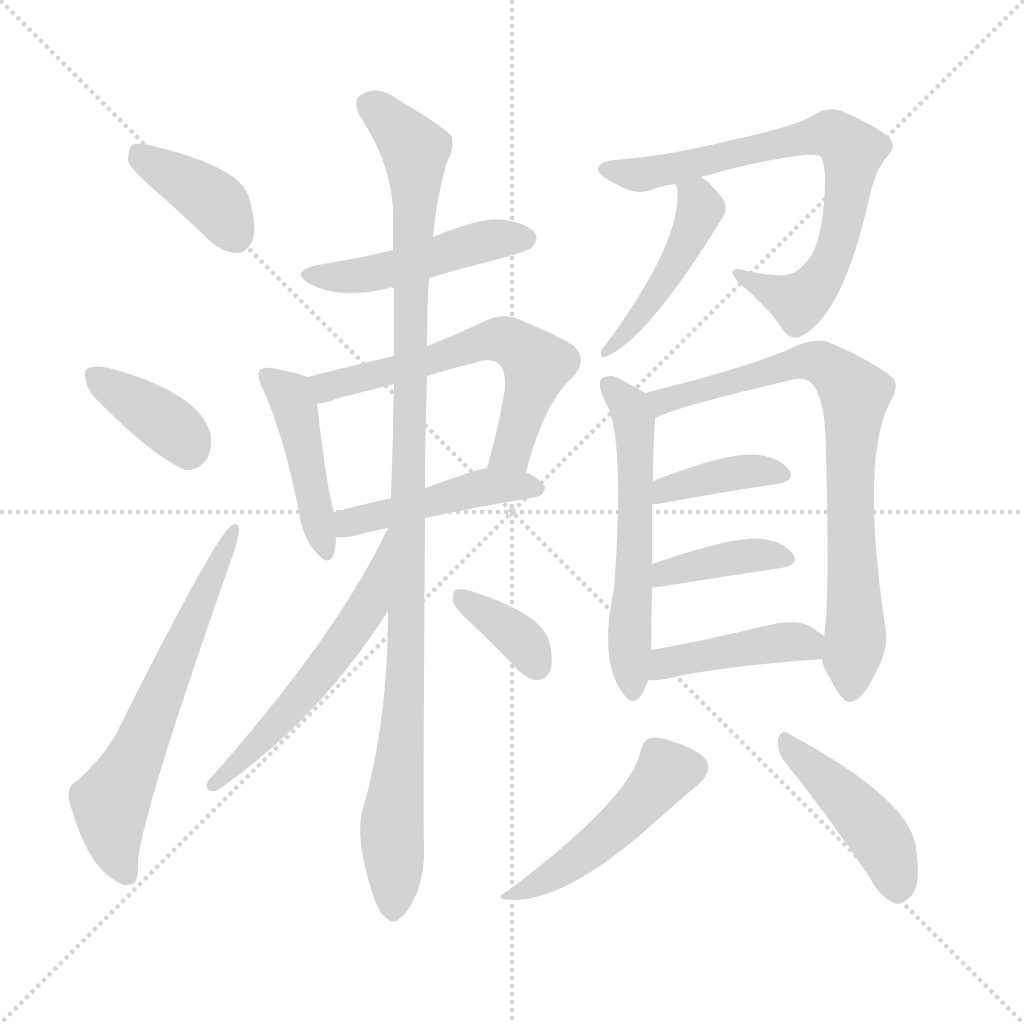
瀨
Kangxi strokes: 20
Page 660, Entry 20
Tang Rhymes (Tangyun): Pronounced lai. Collected Rhymes (Jiyun), Rhyme Compendium (Yunhui), and Orthodox Rhymes (Zhengyun): Pronounced lai. Pronounced the same as lai.
Explaining Graphs and Analyzing Characters (Shuowen): Water flowing over sand and stone.
Songs of Chu (Chuci), Nine Songs (Jiuge): Water flowing between stones is rapid and clear.
Also refers to a rapid current.
History of the Former Han (Qianhan Shu), Annals of Emperor Wu: Dispatched Jia to serve as General of the Lower Rapids.
Commentary: Lai refers to a rapid current. In the Wu and Yue regions, it is called lai, while in the Central Plains, it is called qi.
Also a river name.
Commentary on the Water Classic (Shuijing Zhu): Lai River, originating on the east side of Mount Lu, northwest of Lipu County, Cangwu Commandery.
Also, in the Rhyme Supplement (Yunbu), it is pronounced li.
Liu Zhen, Rhapsody on the Capital of Lu (Ludu Fu): Tortoises and hornless dragons slide and swim through yellow mud, while patterned fish swim and leap in the clear, rapid current. Deep and swift waves rush toward the distance, churning and surging against the banks.