Zi Collection, Middle Volume
Radical: Person (rén)
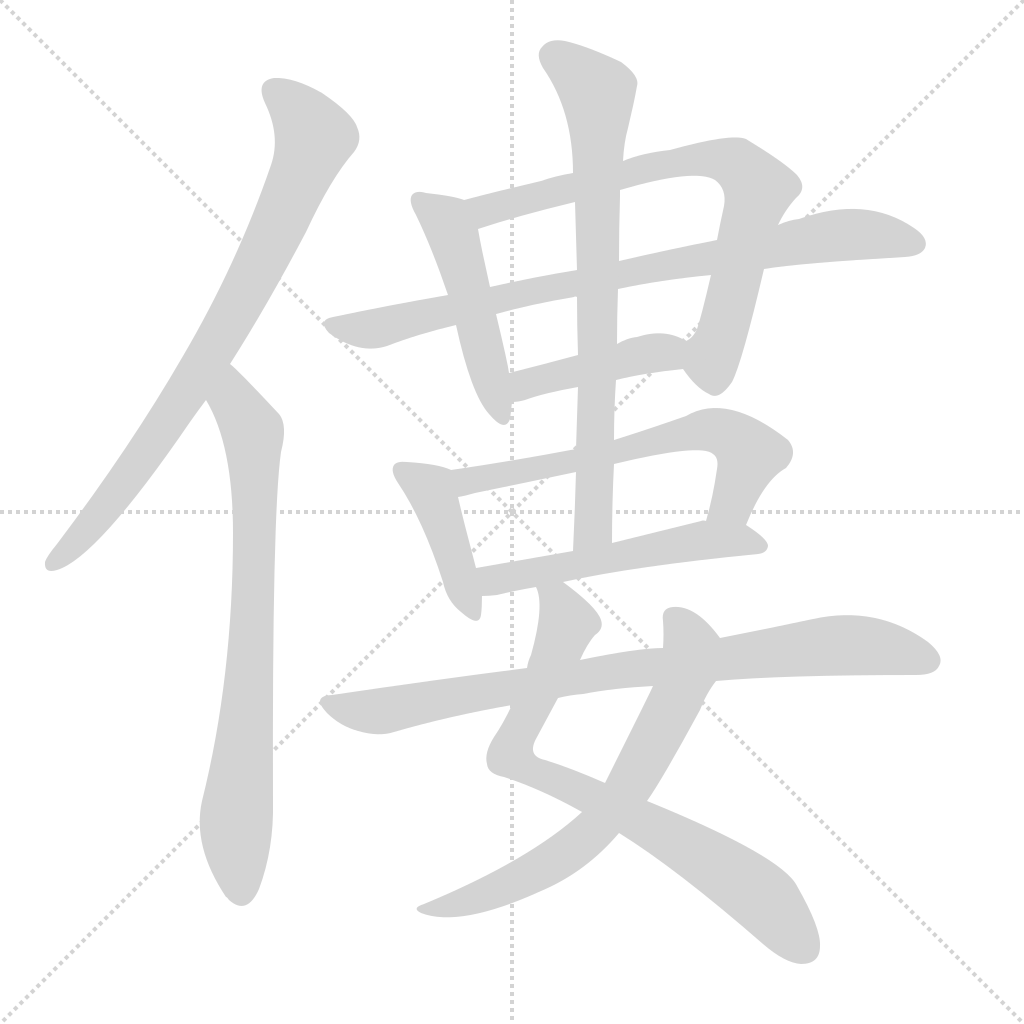
Lóu
Kangxi strokes: 13
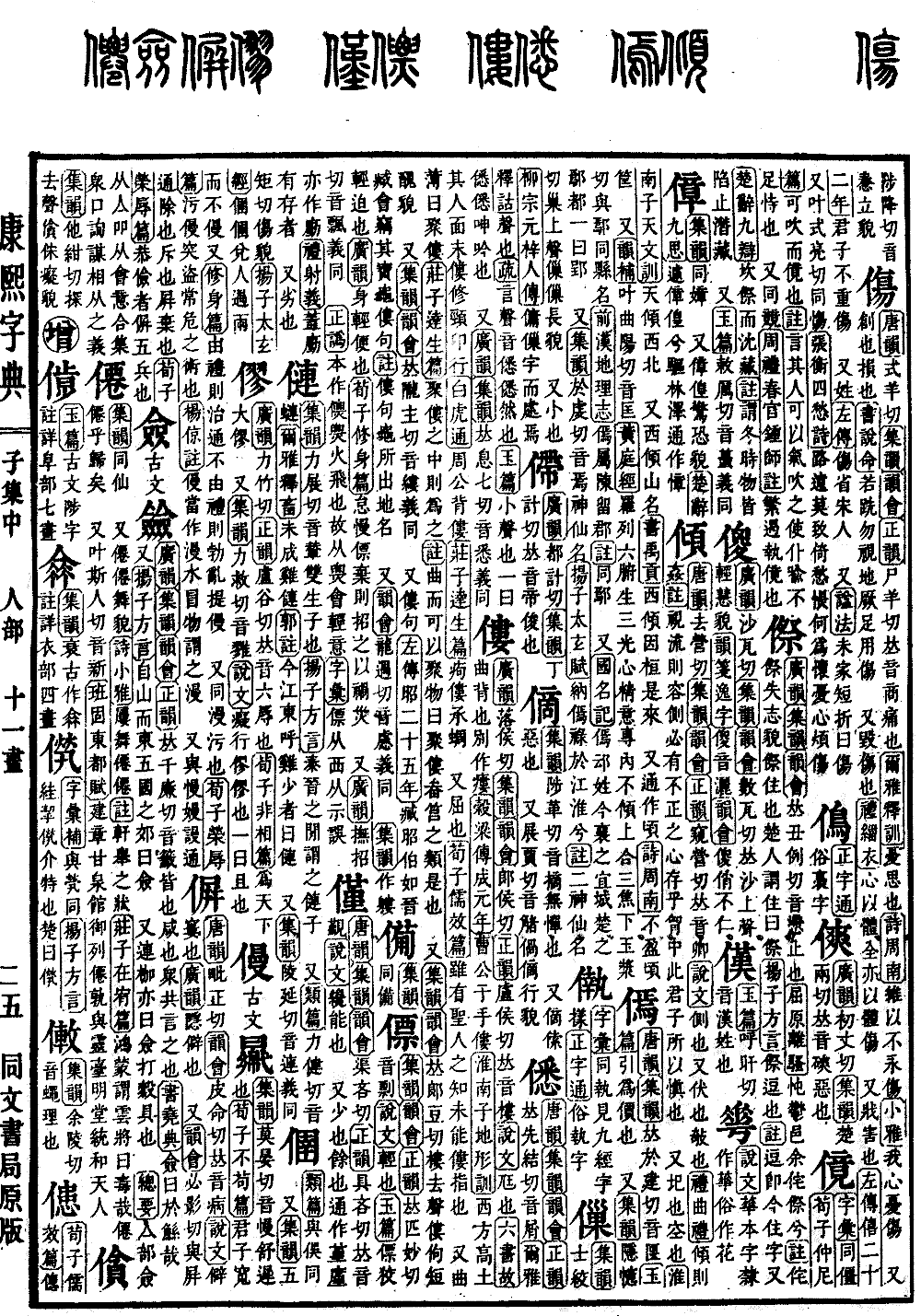
Page 115, Entry 17
Pronounced lóu.
According to the Shuowen Jiezi (Explanation of Graphs and Analysis of Characters), it refers to a body that is thin, weak, or disabled.
According to the Liushu Gu (Six Writings Explained), it refers to a hunchback. It is also written in a variant form (lòu).
Gongyang Zhuan (Gongyang Commentary on the Spring and Autumn Annals), First Year of Duke Cheng: The hand of the son of the Lord of Cao was bent.
Huainanzi (Huainan Masters), Terrain Training: People on the high western lands have pointed faces, hunched backs, and long necks; they walk with their heads held high.
Baihu Tong (Comprehensive Discussions in the White Tiger Hall): The Duke of Zhou was a hunchback.
Zhuangzi (Zhuangzi), Chapter on Fulfilling Life: A hunchback catching cicadas with a pole.
Also refers to being bent or curved.
Xunzi (Xunzi), Chapter on the Effectiveness of the Ru: Even with the wisdom of a sage, one cannot immediately point out everything one by one.
Also, curved, thin vessels are called jùlóu.
Zhuangzi (Zhuangzi), Chapter on Fulfilling Life: To work within a curved vessel.
Commentary: A curved object that can hold items is called a jùlóu, such as a dustpan or a bamboo basket.
Also pronounced lòu (falling tone), sounding like lóu. Refers to lóugōu, describing a small and ugly appearance.
Also pronounced lǚ, sounding like lǚ. The meaning is the same.
Also refers to Lóugōu.
Zuo Zhuan (Zuo Commentary on the Spring and Autumn Annals), 25th Year of Duke Zhao: Zang Zhaobo went to the state of Jin, and Zang Hui stole his precious turtle, the Lóugōu.
Commentary: Lóugōu is the name of the place where this type of turtle originated.
Also pronounced lǜ, sounding like lǜ. The meaning is the same.
According to the Jiyun (Collected Rhymes), it is also written in a variant form (lǒu).