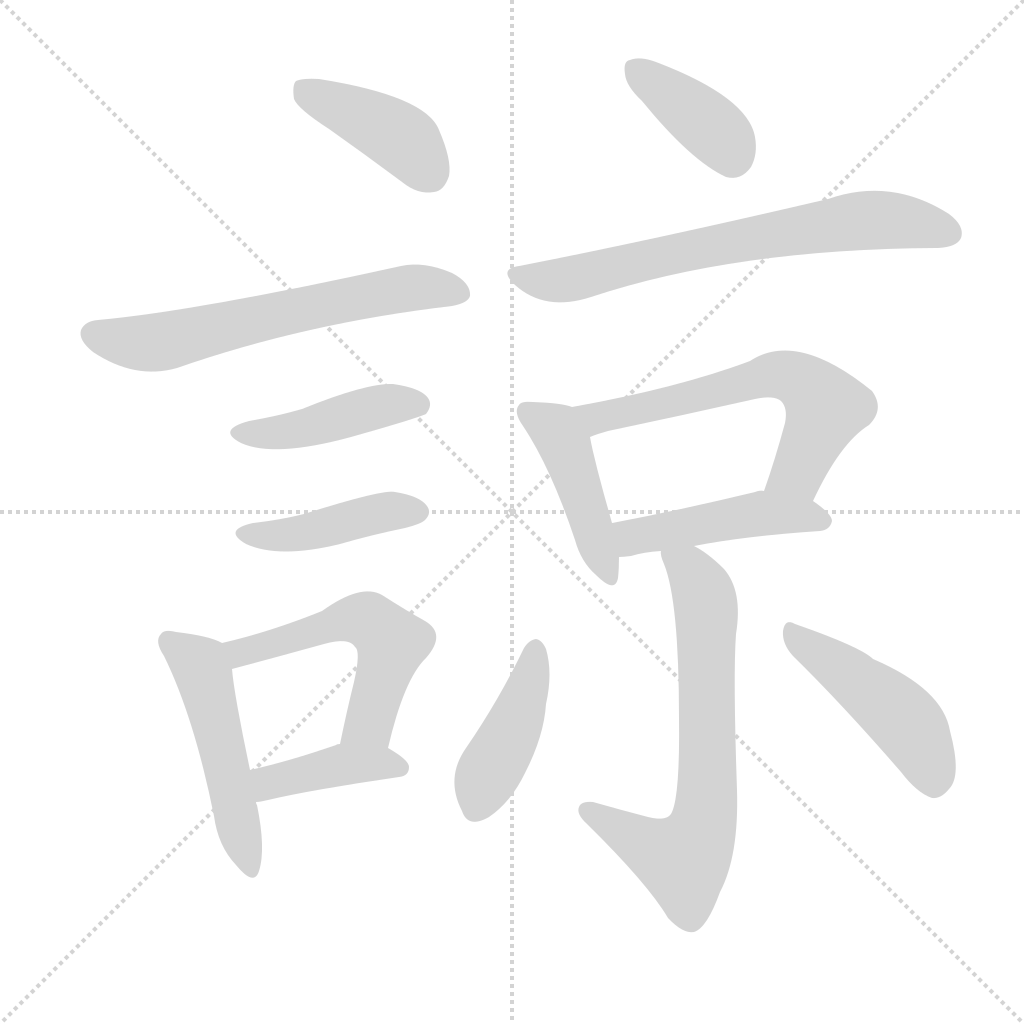
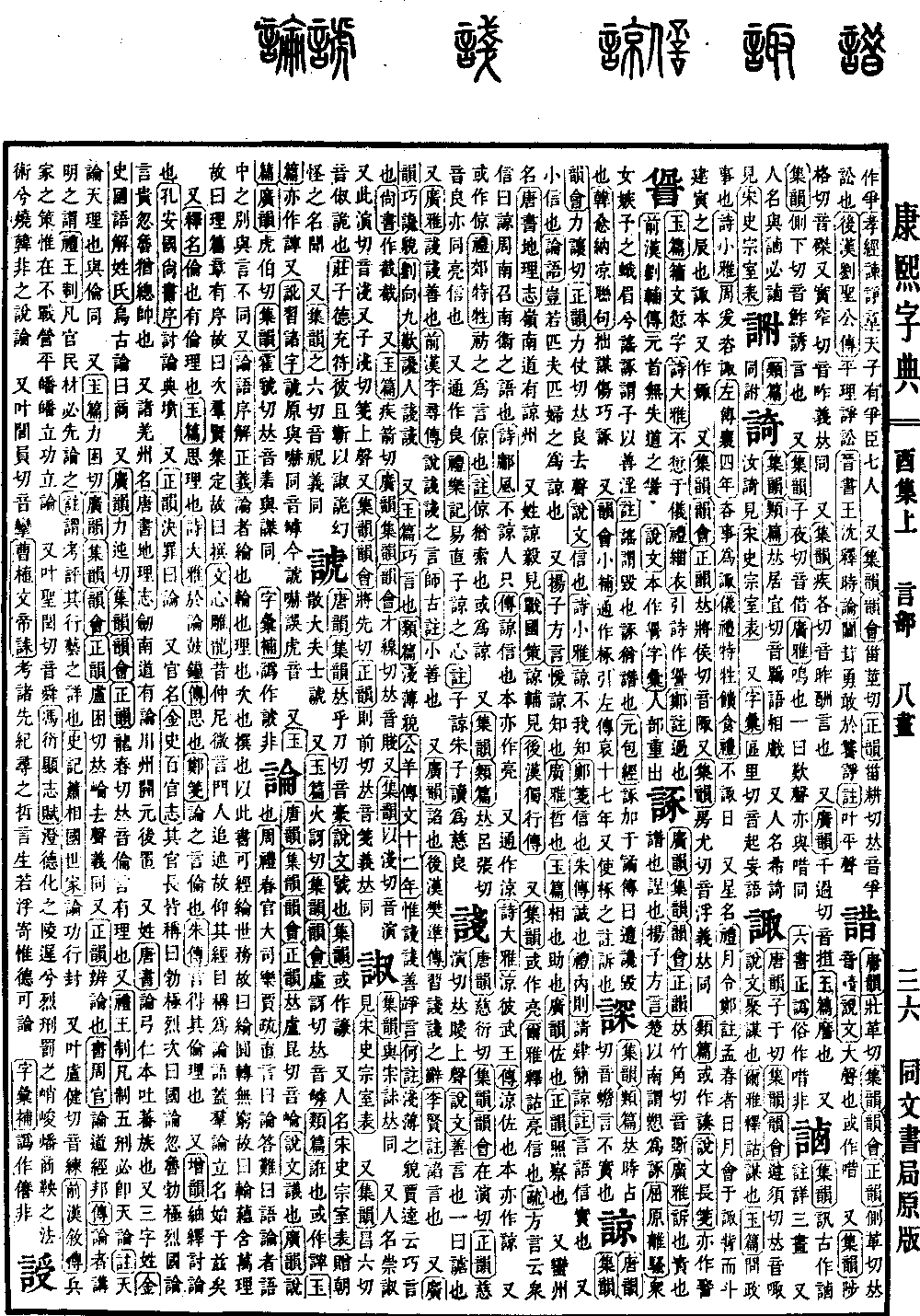
You Collection, Upper Volume
Radical: Speech (yán)
Kangxi Strokes: 15
Page 1168, Entry 09
Pronounced liàng (falling tone). Also pronounced liàng (falling tone), and in the rising tone as liáng.
Shuowen Jiezi (Explanation of Simple and Compound Characters): To be truthful.
Book of Odes (Shijing), Lesser Odes of the Kingdom: Truly, you do not understand me. Zheng Xuan’s commentary: To be truthful. Zhu Xi’s commentary: To be sincere.
Book of Rites (Liji), Inner Chapters: Requesting to study the requirements of sincerity. Commentary: To be truthful and sincere in speech.
Also, minor sincerity. Analects (Lunyu): How can one be like a common man or woman who acts only out of petty sincerity?
Also, Yang Xiong’s Dialects (Fangyan): Huan-liang means to know. Guangya: To be wise. Yupian: To assist or to help. Guangyun: To support. Zhengyun: To observe and examine.
Also, the name of a barbarian prefecture. Old Book of Tang (Tangshu), Treatise on Geography: There is Liang Prefecture in the Lingnan Circuit.
Also, a surname. Liang Yi appears in Strategies of the Warring States (Zhanguo Ce). Liang Fu appears in the Biographies of Exemplary Conduct from the Book of the Later Han (Hou Hanshu).
Also, in Jiyun (Collected Rhymes), sometimes written as liàng. Erya: Explaining Ancient Terms: Liang means to be truthful. Commentary: Dialects states that general trust is called liang. This is the language of the regions of Zhou Nan, Shao Nan, and Wei. Book of Odes (Shijing), Odes of Yong: Not considering the person. Commentary: Liang means to be truthful. Originally also written as liàng.
Also, commonly written as liáng. Book of Odes (Shijing), Greater Odes of the Kingdom: Assisting that Martial King. Commentary: Liang means to assist. Originally written as liàng.
Also, sometimes written as jìng. Book of Rites (Liji), Sacrificial Rites: The meaning of the beng (sacrificial building) is search. Commentary: Jing means to search. Sometimes written as liàng.
Also, in Jiyun and Leipian (Classified Chapters), pronounced liáng. It is the same as liàng, meaning to be truthful.
Also, commonly written as liáng. Book of Rites (Liji), Record of Music: A mind that is easy, upright, kind, and sincere. Commentary: The scholar Zhu Xi reads zi-liang as kind and good.