Wei Collection, Middle Volume
Radical: Silk (mì)
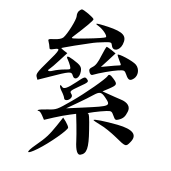
絫
Kangxi strokes: 12
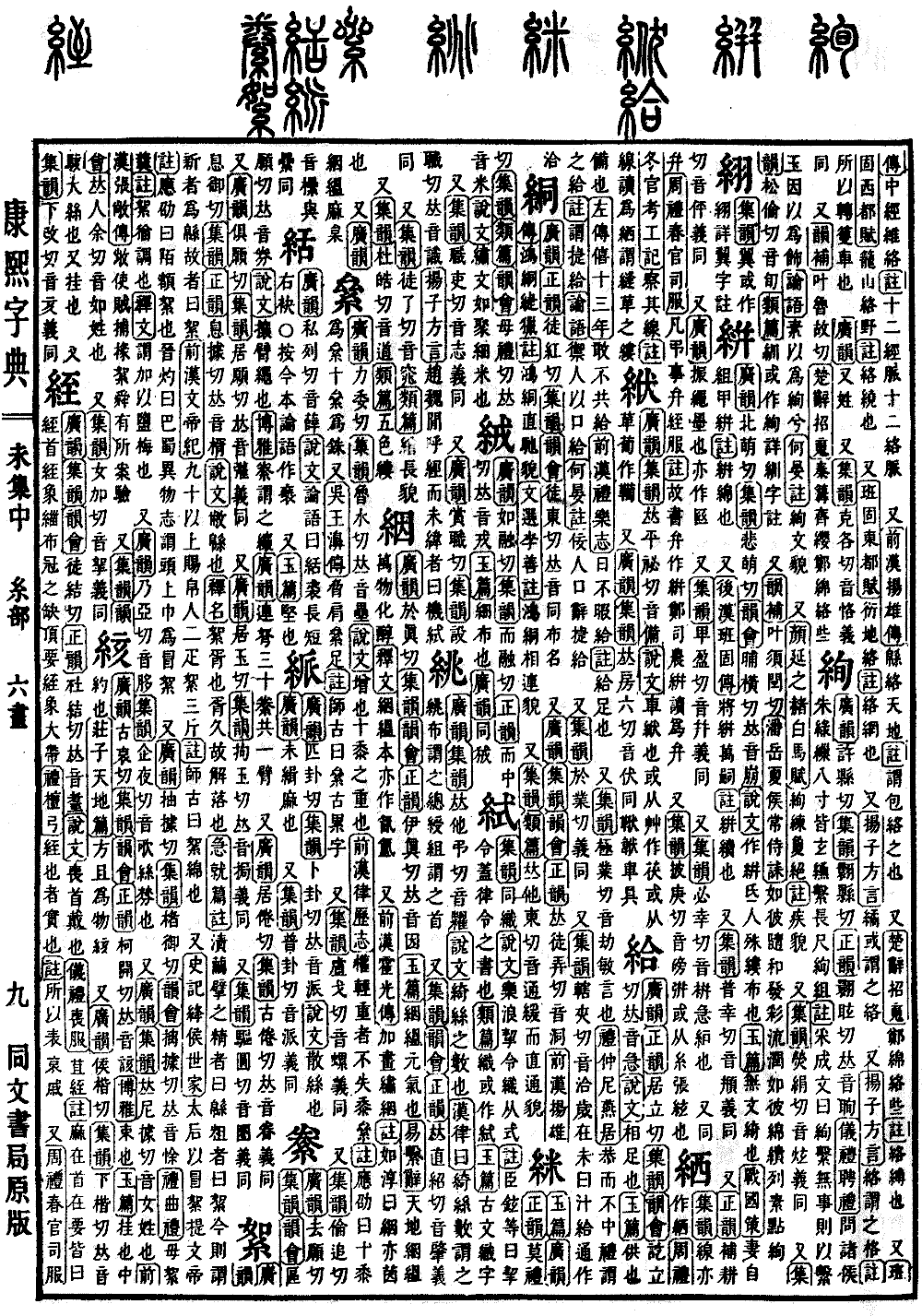
Page 923, Entry 13
According to the Broad Rhymes (Guangyun), pronounced lei (rising tone). According to the Collected Rhymes (Jiyun), pronounced lei (rising tone). The pronunciation is the same as lei (third tone).
Explaining the characters (Shuowen Jiezi) defines it as to increase. It refers to the weight of ten millet grains.
In the History of the Former Han (Qianhan Shu), section on harmonics and the calendar (Luli Zhi), it states that when measuring weight, there is no error of even one millet grain or one lei. The commentary by Ying Shao states: ten millet grains equal one lei, and ten lei equal one zhu.
Also, in the Biography of Prince Pi of Wu (Wu Wang Bi Zhuan), there is the phrase to press shoulders and stack feet. The commentary by Yan Shigu states: lei is the ancient form of the character lei.
According to the Collected Rhymes (Jiyun), it is also pronounced luo. The meaning is the same. According to the Collected Rhymes (Jiyun), it is also pronounced lei. It is the same as the character lei.