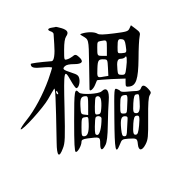
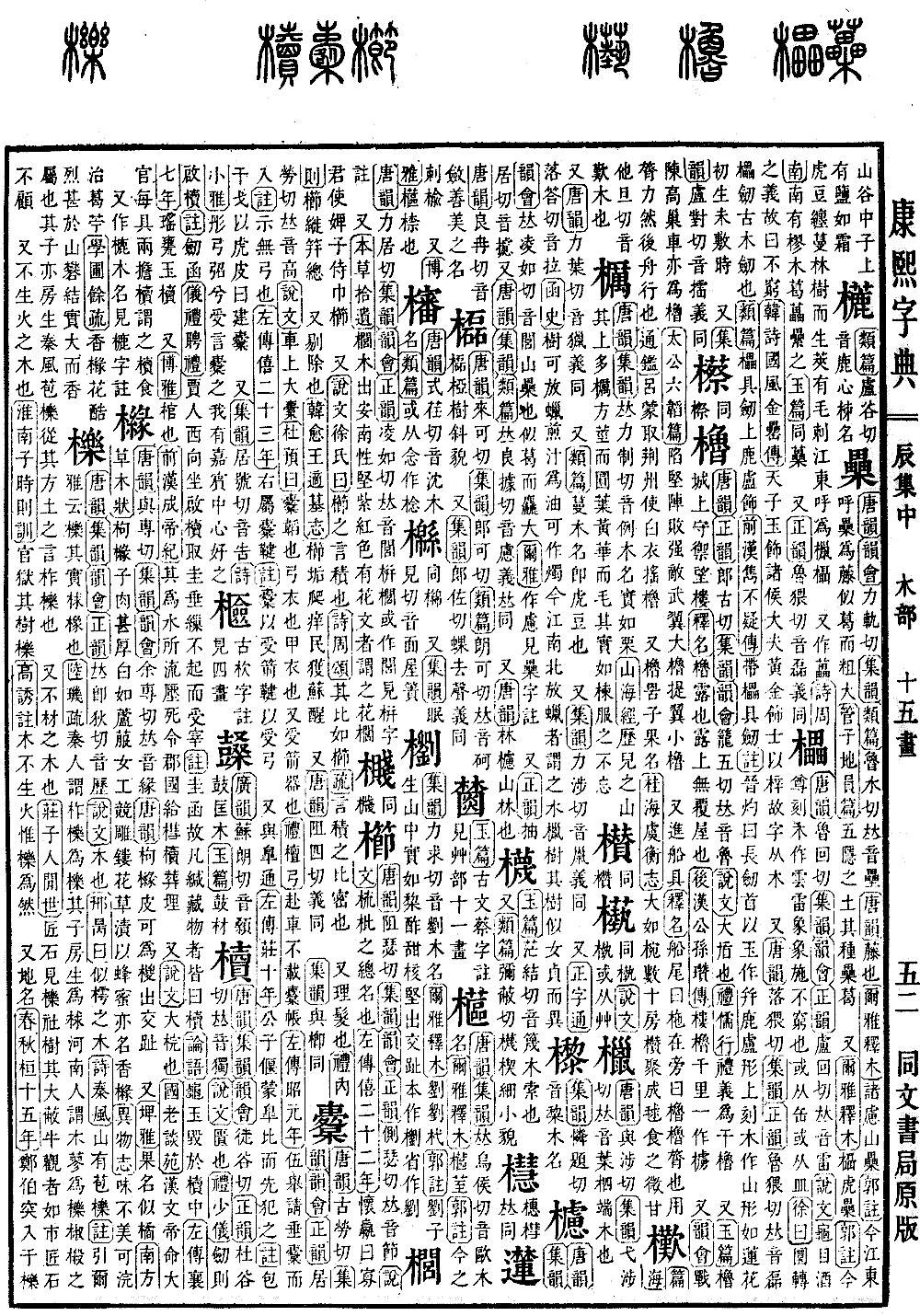
Chen Collection, Middle Volume. Radical: Tree (mù). Kangxi strokes: 19. Page 560, Entry 03.
Pronounced lei. According to the Shuo Wen Jiezi (Shuowen), it refers to a wine vessel decorated with turtle-eye patterns, carved from wood with cloud and thunder motifs, signifying inexhaustible proliferation. It is sometimes written with the characters for earthenware jar or vessel. Xu says this implies a rounded, revolving motion, hence the term inexhaustible. According to the commentary on the Golden Lei in the Odes of the States section of the Han version of the Book of Odes (Shijing), the vessel is ornamented with jade for the Emperor, gold for feudal lords and high officials, and made of catalpa wood for scholars, hence the character is written with the tree radical.
Also pronounced lei. Refers to a wooden sword from ancient times. According to the Lei Pian, it also refers to the deer-windlass-shaped ornament on a sword. In the Biography of Juan Buyi from the History of the Former Han Dynasty (Qian Hanshu), it is noted that he wore a sword with such an ornament. The commentary by Jin Zhuo states that it refers to the pommel of a long sword, made of jade in the shape of a deer windlass, with mountain-shaped carvings that resemble a lotus bud before it has fully bloomed.
Also pronounced lei. The meaning is the same.