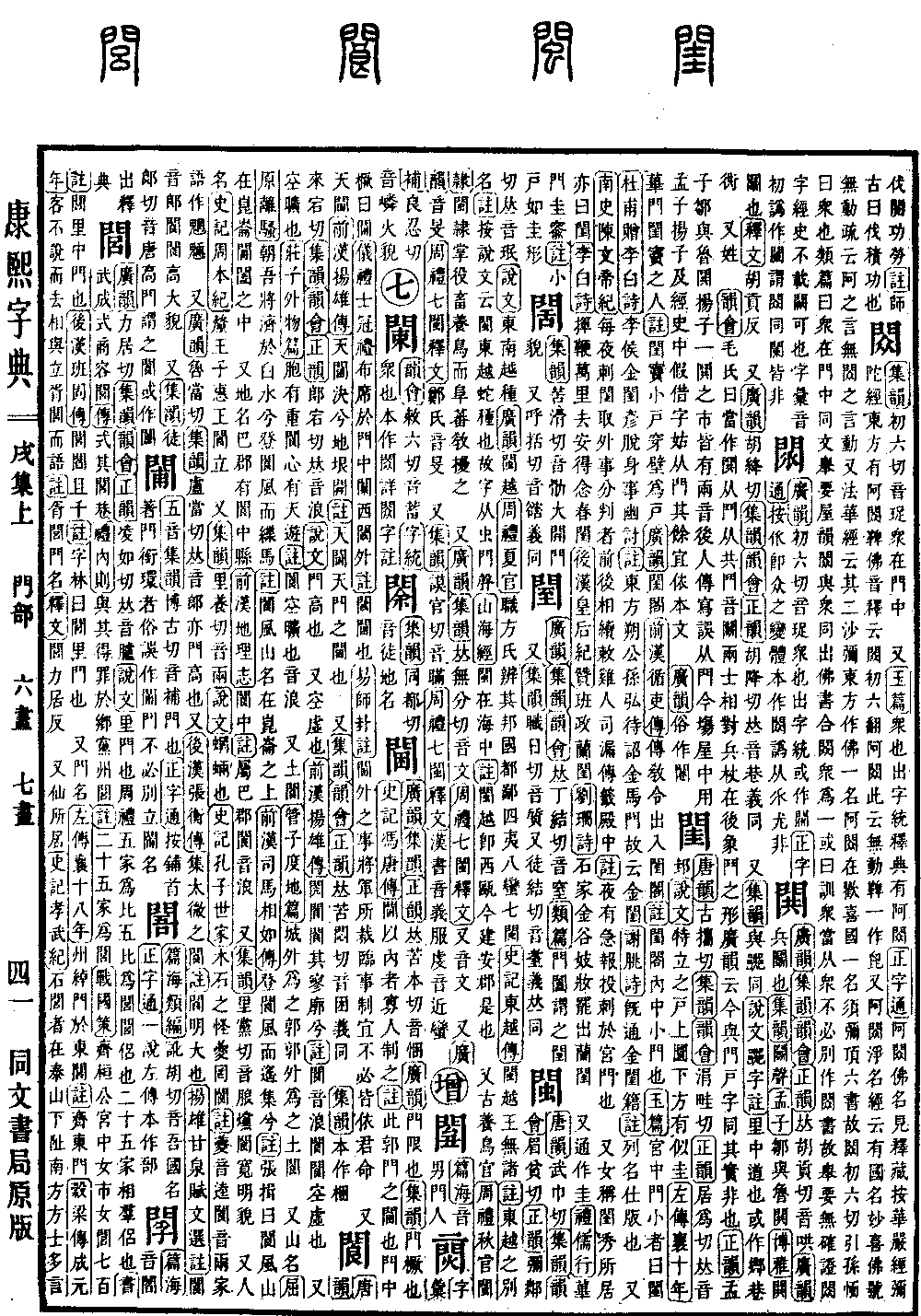
Xu Collection, Upper Volume
Radical: Gate (mén)
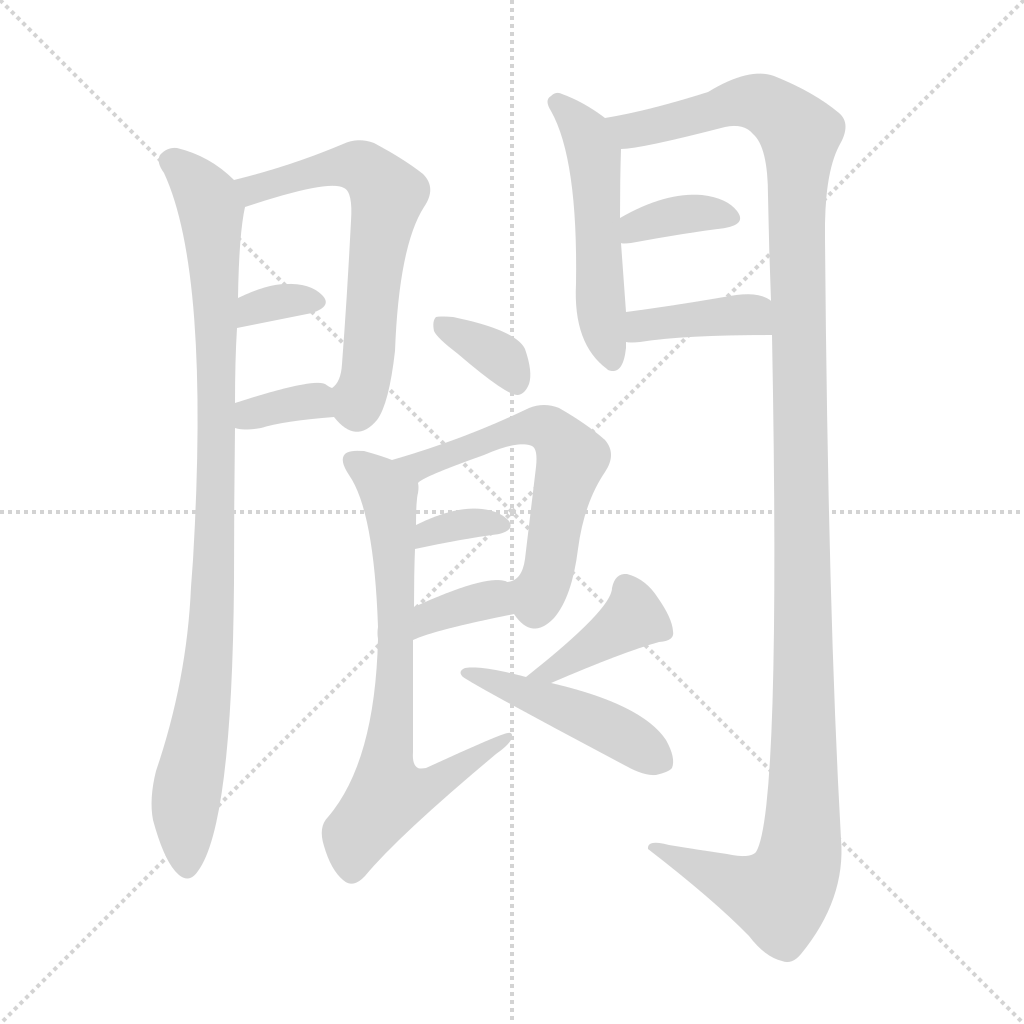
Lang
Kangxi strokes: 15
Page 1335, Entry 13
Pronounced lang.
According to the Explaining Graphs and Analyzing Characters (Shuowen), it means a high gate. It also means empty or void.
In the History of the Former Han (Qian Han Shu), Biography of Yang Xiong, it is written: Wide and empty is the vastness. The commentary states: Lang is pronounced lang; langlang means empty and void.
It also means vast and open. In the Zhuangzi, Outer Things chapter, it is written: The vesicles have deep voids, the heart has heavenly travels. The commentary states: Lang means vast and open, pronounced lang.
It also refers to earth-walls (tu lang). In the Guanzi, Measuring Land chapter, it is written: Outside the city walls there are the outer suburbs, and outside the outer suburbs are the earth-walls.
It also refers to a mountain name. In Qu Yuan’s Encountering Sorrow (Lisao), it is written: In the morning I will cross the White Water, and ascend Langfeng to tether my horse. The commentary states: Langfeng is the name of a mountain located above the Kunlun Mountains. In the History of the Former Han, Biography of Sima Xiangru, it is written: Ascending Langfeng to gather from afar. The commentary by Zhang Yi states: Langfeng Mountain is located within the Changhe gates of the Kunlun Mountains.
It also refers to a place name. In Ba Commandery there is Langzhong County. In the History of the Former Han, Treatise on Geography, it is written: Langzhong. The commentary states: It belongs to Ba Commandery. Lang is pronounced lang.
Also, according to the Collected Rhymes (Jiyun), pronounced lang. Tanglang means a broad and bright appearance.
It also appears in names. In the Records of the Grand Historian (Shiji), Annals of Zhou, it is written: After the death of King Li, his son King Lang ascended the throne.
Also, according to the Collected Rhymes (Jiyun), pronounced liang. It refers to a mountain demon (wangliang). In the Records of the Grand Historian, Hereditary House of Confucius, it is written: The spirits of wood and stone are the Kui and the Wangliang. The commentary states: Kui is pronounced kui; lang is pronounced liang. In the School Sayings of Confucius (Kongzi Jiayu), it is written as wangliang.
Also, according to the Broad Rhymes (Guangyun), pronounced lang. It also means a high gate.
Also, in the History of the Later Han (Hou Han Shu), Biography of Zhang Heng, it is written: Gathering the brightness of the Taiwei. The commentary states: Lang means bright and large. In the commentary to the Sweet Spring Rhapsody (Ganquan Fu) by Yang Xiong in the Selections of Refined Literature (Wenxuan), it is noted: Lang is pronounced lang; langlang means high and large in appearance.
Also, according to the Collected Rhymes (Jiyun), pronounced tang. A high gate is called a lang. Sometimes written in a variant form.