Chen Collection, Middle Volume
Radical: Tree (mù)
Kangxi Strokes: 10
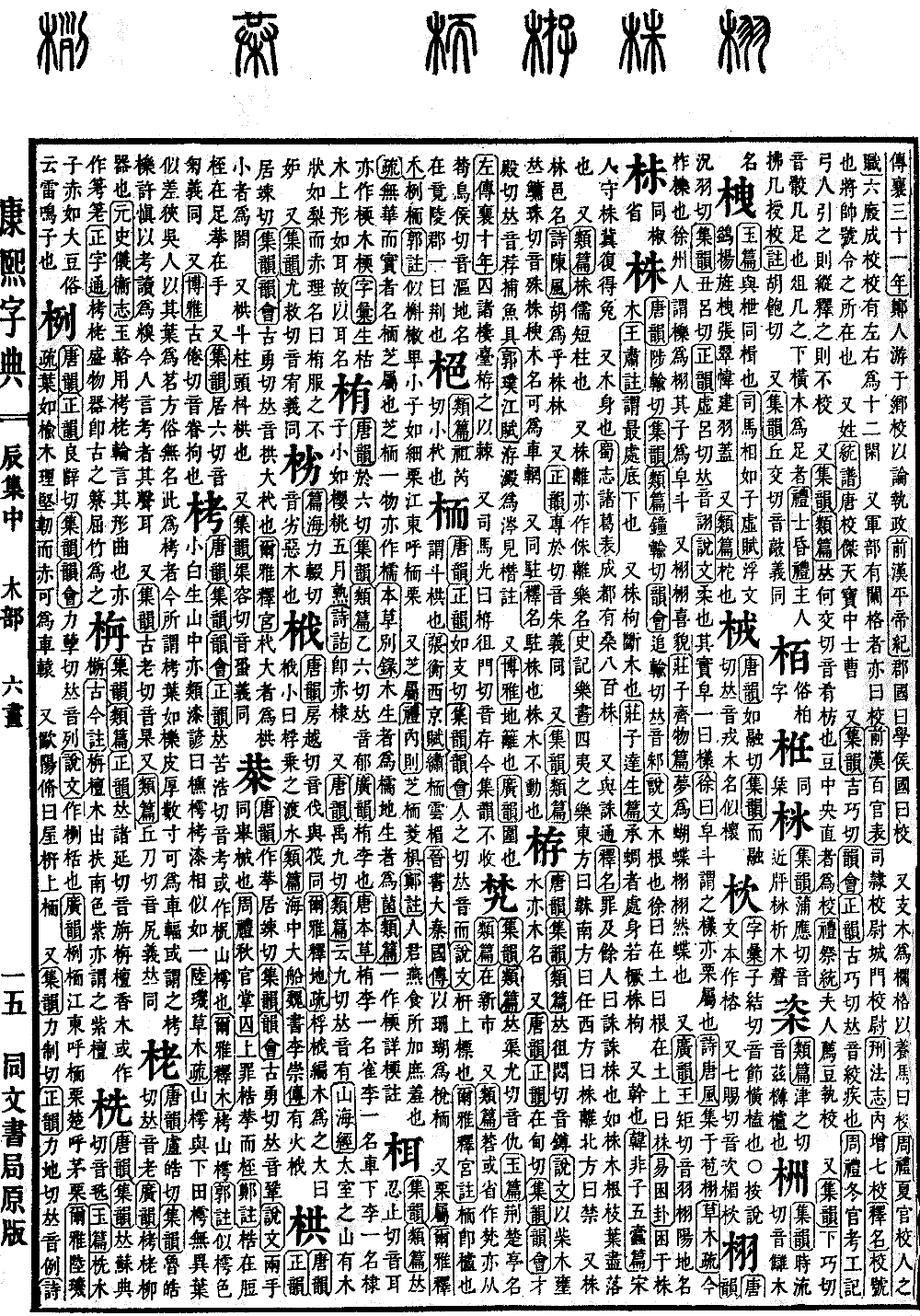
Page 523, Entry 22
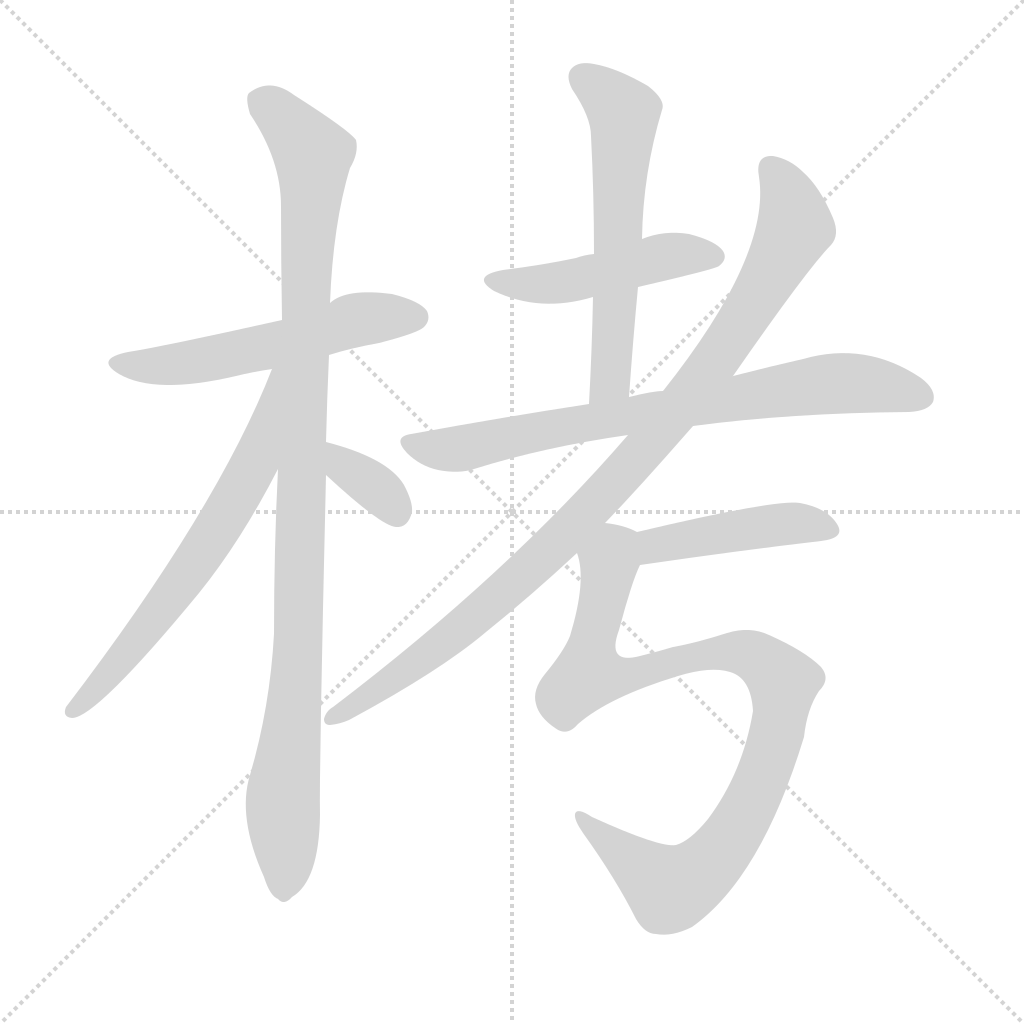
Tang Rhyme (Tangyun), Collection Rhymes (Jiyun), Rhyme Meetings (Yunhui), and Proper Rhymes (Zhengyun) state that it is pronounced kao (rising tone), which is the same as the pronunciation of kao (rising tone). Sometimes also written in a variant form (zhuan). Refers to the mountain ailanthus tree.
Literary Expositor (Erya), Interpretation of Trees: The kao is the mountain ailanthus.
Guo Commentary: It resembles the ailanthus tree, is white in color, grows in the mountains, and also resembles the lacquer tree. A proverb says: the toon, the ailanthus, the kao, and the lacquer all look similar.
Lu Ji, Commentary on Grasses and Trees (Caomu Shu): The mountain ailanthus is no different from the ailanthus on flat land, though its leaves seem slightly narrower. People in the Wu region use its leaves as tea and do not call it kao locally. The tree currently called kao has leaves like the oak and bark several inches thick, which can be used to make wheel spokes. Some people call it the kao-oak. Xu Shen believed that the character kao should be pronounced like qiu, and that current usage of kao is merely a similar pronunciation.
Additionally, according to Collection Rhymes (Jiyun), it is pronounced gao (rising tone).
Additionally, according to Classified Compendium (Leipian), it is pronounced kao (level tone). The meaning is the same.