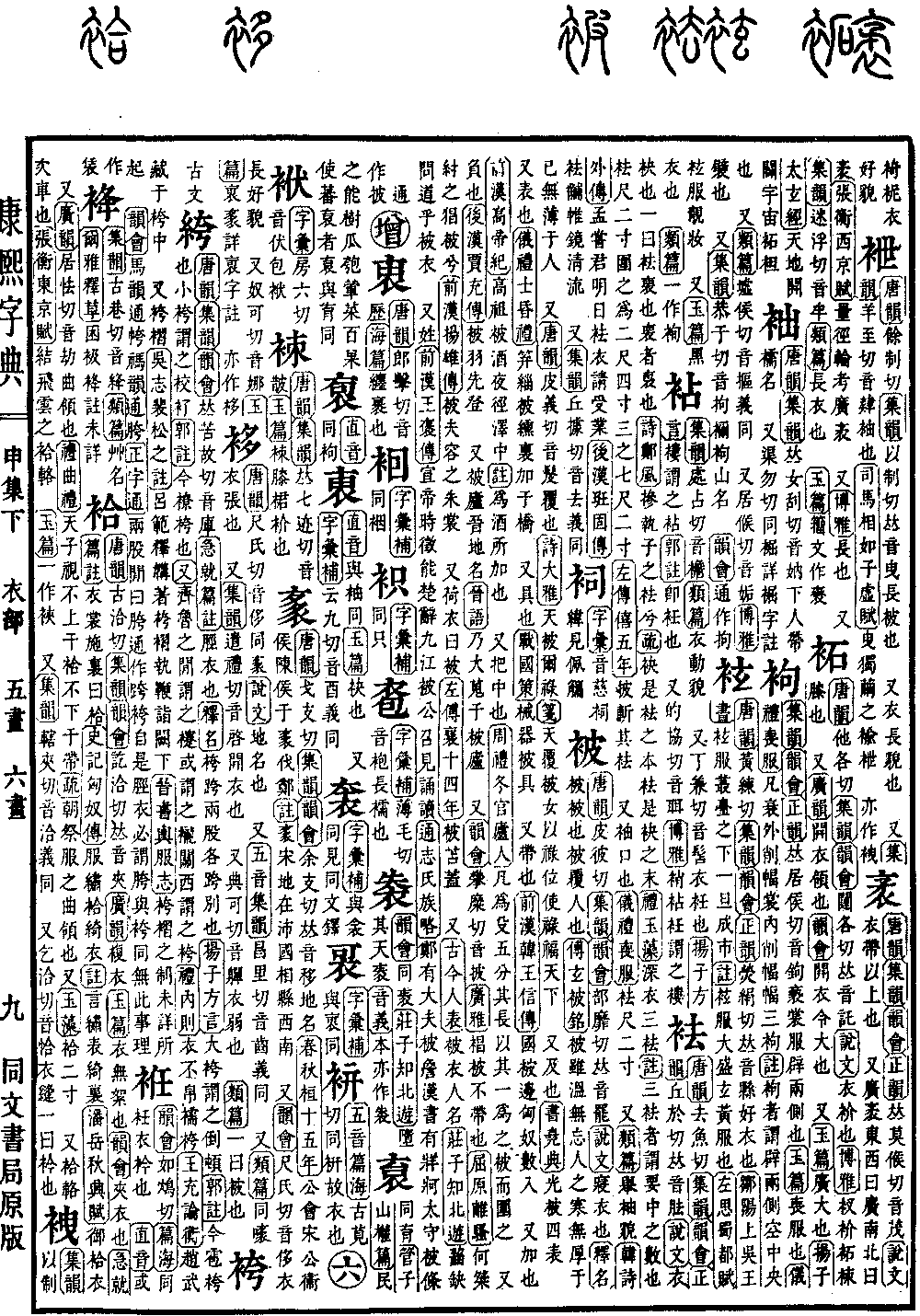
Shen Collection, Lower Volume
Radical: Clothing (yī)
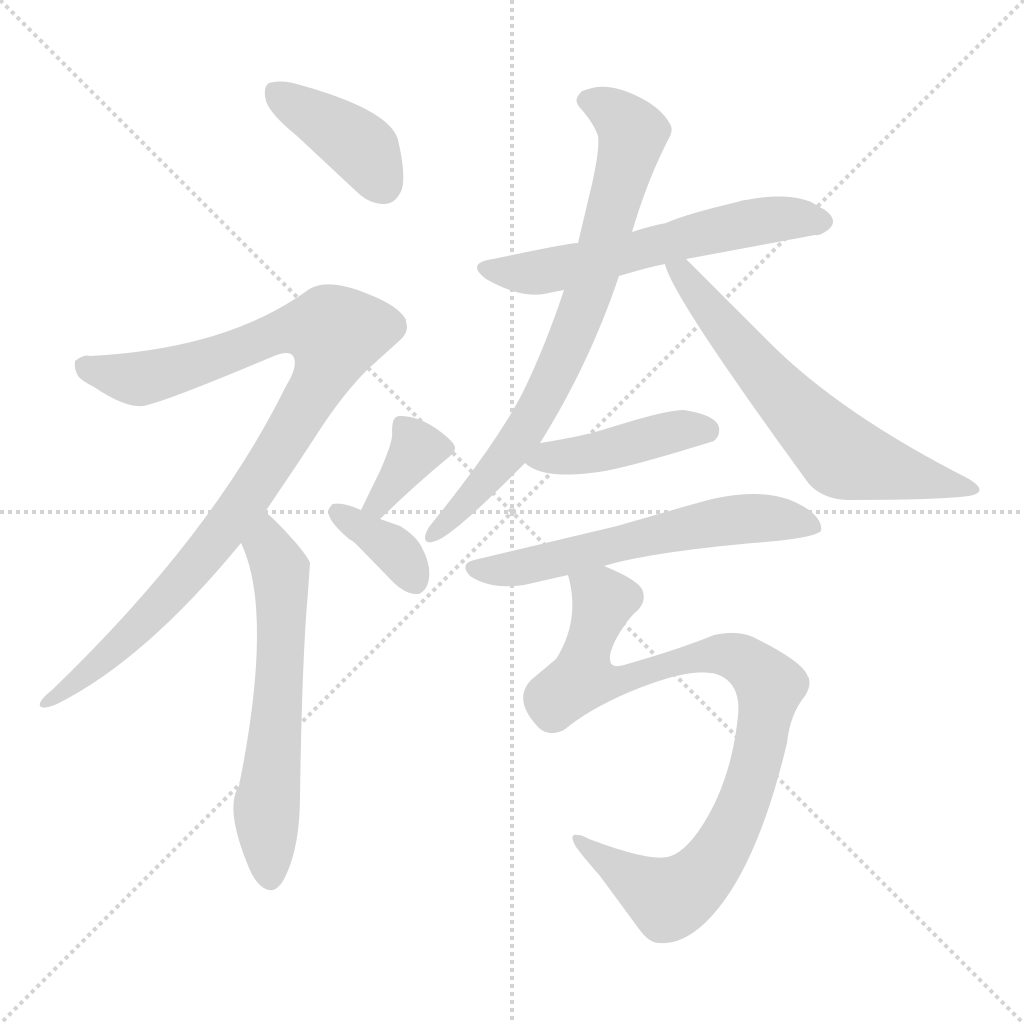
袴
Kangxi Stroke Count: 12
Page 1115, Entry 26
Ancient form: 絝
Tang Rhymes (Tangyun), Collected Rhymes (Jiyun), Dictionary of Rhymes (Yunhui): Pronounced ku (falling tone).
Quick Reference Commentary (Jijiupian zhu): Trousers.
Explanation of Names (Shiming): The term for trousers (ku) is related to the word for straddle (kua). It means that the two legs are each placed in separate coverings.
Yangzi's Regional Dialects (Fangyan): Large trousers are called daodun. Guo commentary: This refers to the modern puffy trousers. Small trousers are called [omitted]. Guo commentary: This refers to modern trousers.
Also: In the regions of Qi and Lu, they are called [omitted], sometimes called long, and in the region west of the pass, they are called ku.
Book of Rites (Liji), Inner Chapters (Neize): One should not wear silk jackets or trousers.
Wang Chong's Balanced Discourses (Lunheng): Zhao Wu was hidden inside the trousers.
Also: Trousers and pleated robes (kuzhe).
Records of the Three Kingdoms (Wuzhi), Pei Songzhi Commentary: Lu Fan removed his arm guards, put on pleated robes, held a whip, and proceeded to the palace gate.
History of Jin (Jinshu), Records on Carriages and Attire (Yufuzhi): The origin of the pleated robe is not clear.
Dictionary of Rhymes (Yunhui): The rhyme category ma allows for this, and it also allows for the word kua (thigh/stride).
Correction of Dictionaries (Zhengzitong): The area between the two legs is called the crotch (kua). It is often written interchangeably with the word for stride (kua). Trousers are strictly a form of leg covering; to claim that the word for crotch and the word for trousers are identical is unreasonable.