Chou Collection, Middle Volume
Radical: Earth (tǔ)
Kangxi strokes: 11
Page 231, Entry 22
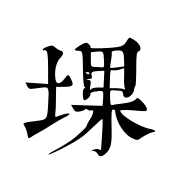
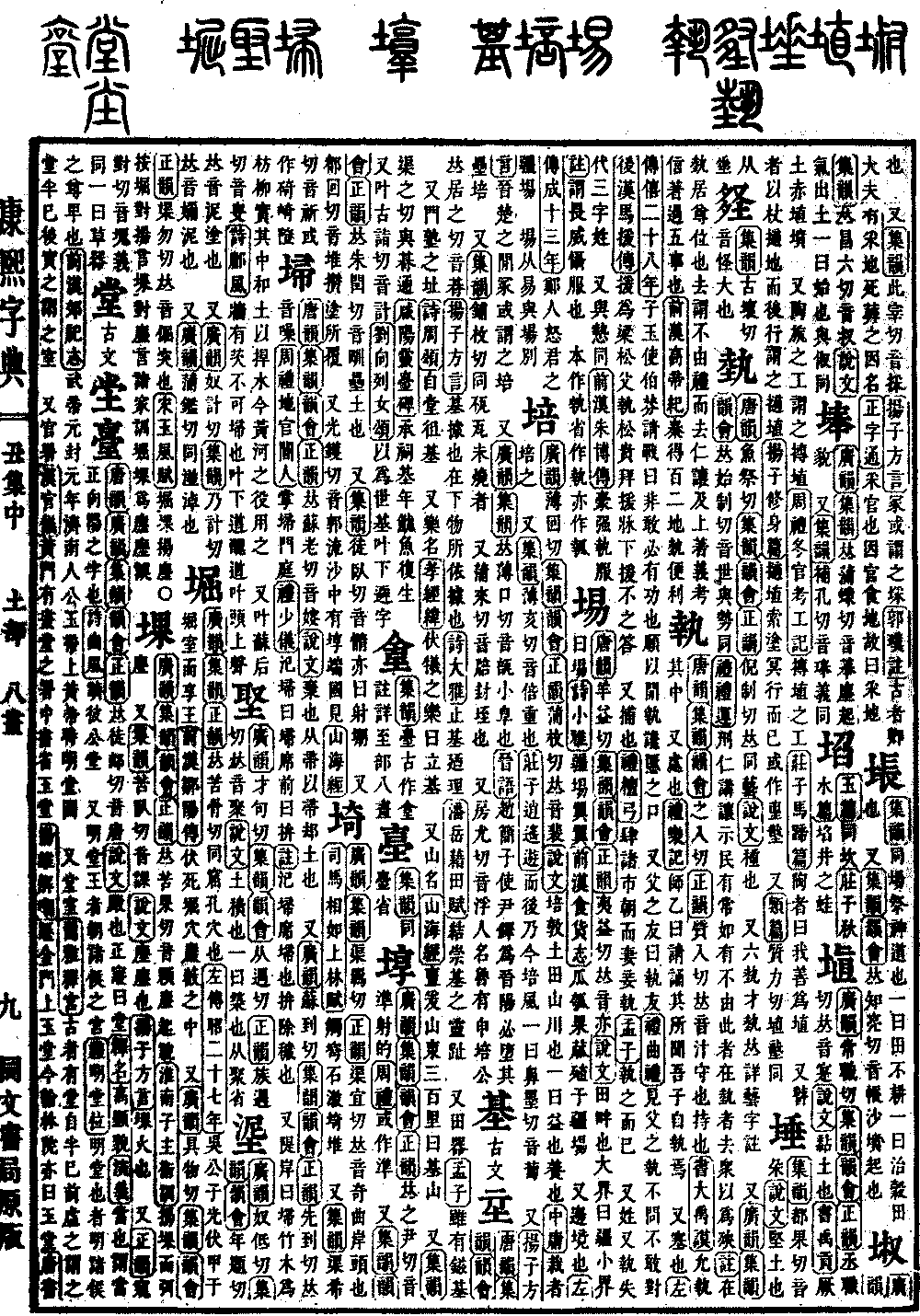
Broad Rhymes (Guangyun), Collected Rhymes (Jiyun), Rhyme Compendium (Yunhui), Correct Rhymes (Zhengyun): Pronounced ke (third tone). The appearance of dust rising. Master of Arts (Zhushu Xun) in the Huainanzi (Huainanzi): Raising dust to settle it.
Also, Collected Rhymes (Jiyun): Pronounced ke (fourth tone). Extensive Records (Boya): Ke means dust.
Also, Correct Rhymes (Zhengyun): Pronounced kuai (fourth tone). The meaning is the same. One account states it refers to a tool woven from grass.
Textual research: The Analytical Dictionary of Chinese Characters (Shuowen Jiezi) defines dust as mei. Note: The Analytical Dictionary of Chinese Characters does not contain the character ke. The citation here of dust is the commentary for the character mei, which was erroneously attributed to the character ke. Checking the Collected Rhymes (Jiyun), it states ke is pronounced ke (fourth tone), citing the Extensive Records (Boya) as ke means dust. This has been corrected to refer to the Extensive Records (Boya) definition of ke as dust.
Yang Xiong's Dialects (Fangyan): The term meaning fire. Note: The original text of the Dialects relates to fire and is written with the fire radical, not the earth radical. It was erroneously categorized under the character ke and these seven characters have been deleted.
Regarding the aforementioned citation from the Master of Arts (Zhushu Xun) in the Huainanzi (Huainanzi) regarding raising dust, the following commentary by Gao You has been added: Ke is the appearance of dust flying upward.