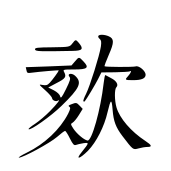
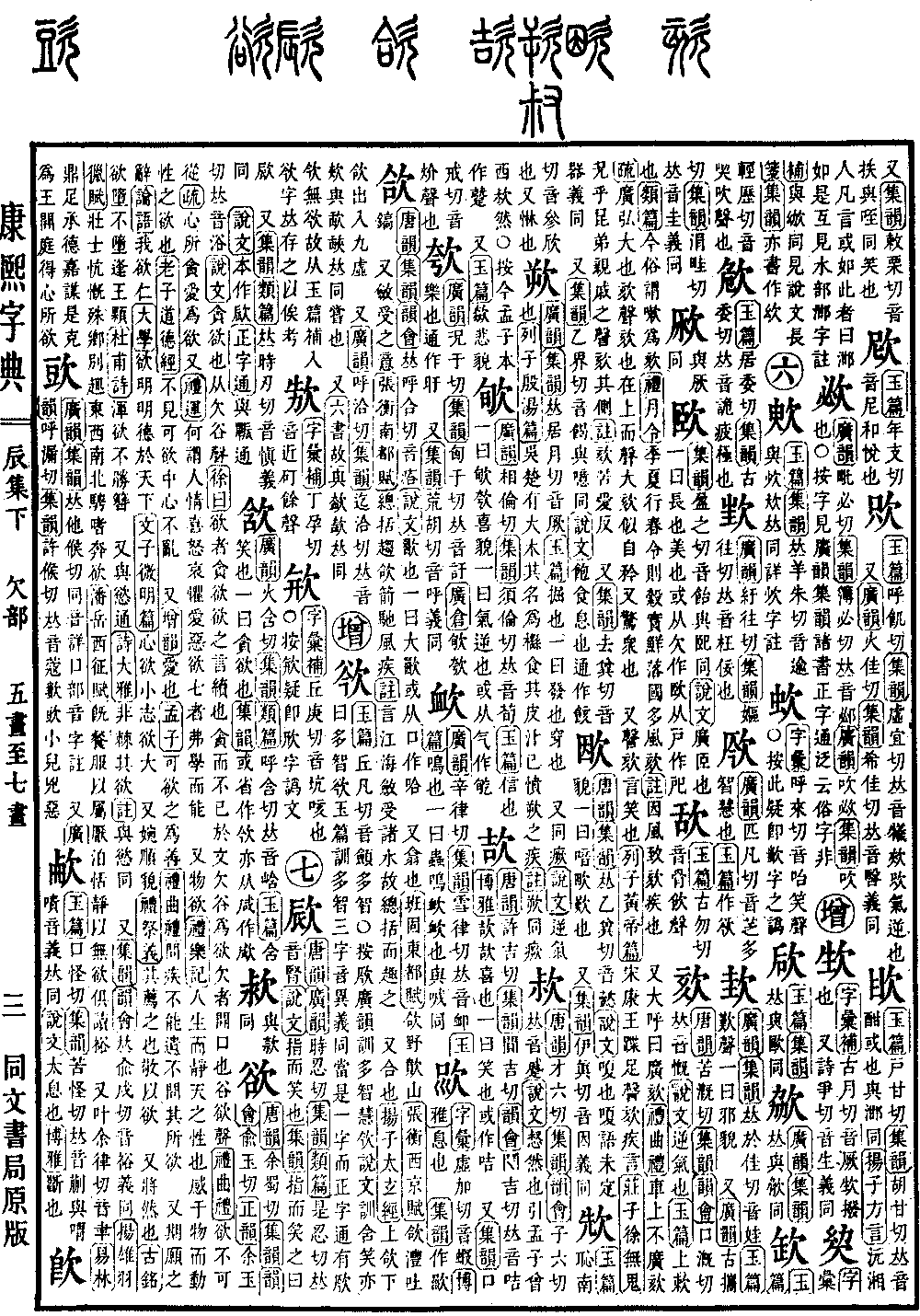
Chen Collection, Lower Volume
Radical: Lack (qiàn)
Kangxi strokes: 10
Page 567, Entry 19
Pronounced kai (falling tone).
Shuowen Jiezi (Explaining Single-component Characters and Analyzing Compound Characters): To have obstructed breathing.
Yupian (Jade Chapters): To catch one's breath upward.
Leipian (Classified Chapters): Commonly referred to today as a cough.
Book of Rites (Liji), Monthly Ordinances (Yueling): In the final month of summer, if the government policies of spring are implemented, then grain will ripen prematurely and fall, and the state will suffer from many cases of wind-induced coughs.
Commentary: This refers to cough-related illnesses caused by the wind.
Also, to shout loudly is called kuang-kai.
Book of Rites (Liji), Summary of the Rules of Propriety (Quli): When on a carriage, one should not engage in loud coughing.
Sub-commentary: Kuang means grand or loud. Kai refers to the sound of a cough. To cough loudly while in a high position appears boastful and also startles others.
Also, qing-kai refers to speaking and laughing.
Liezi (Master Lie), Yellow Emperor Chapter: King Kang of Song stamped his feet, coughed, and spoke rapidly.
Zhuangzi (Master Zhuang), Xu Wugui: How much more so for brothers and relatives who cough and laugh at one's side.
Commentary: Pronounced ai (falling tone).
Also, pronounced qi (falling tone). Same meaning.
Also, pronounced ai (falling tone). Same as the character for sighing (yi).
Shuowen Jiezi: The sound of breathing after a full meal. Often written interchangeably with the character for belching (ai).