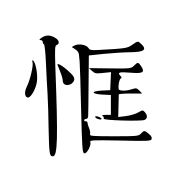
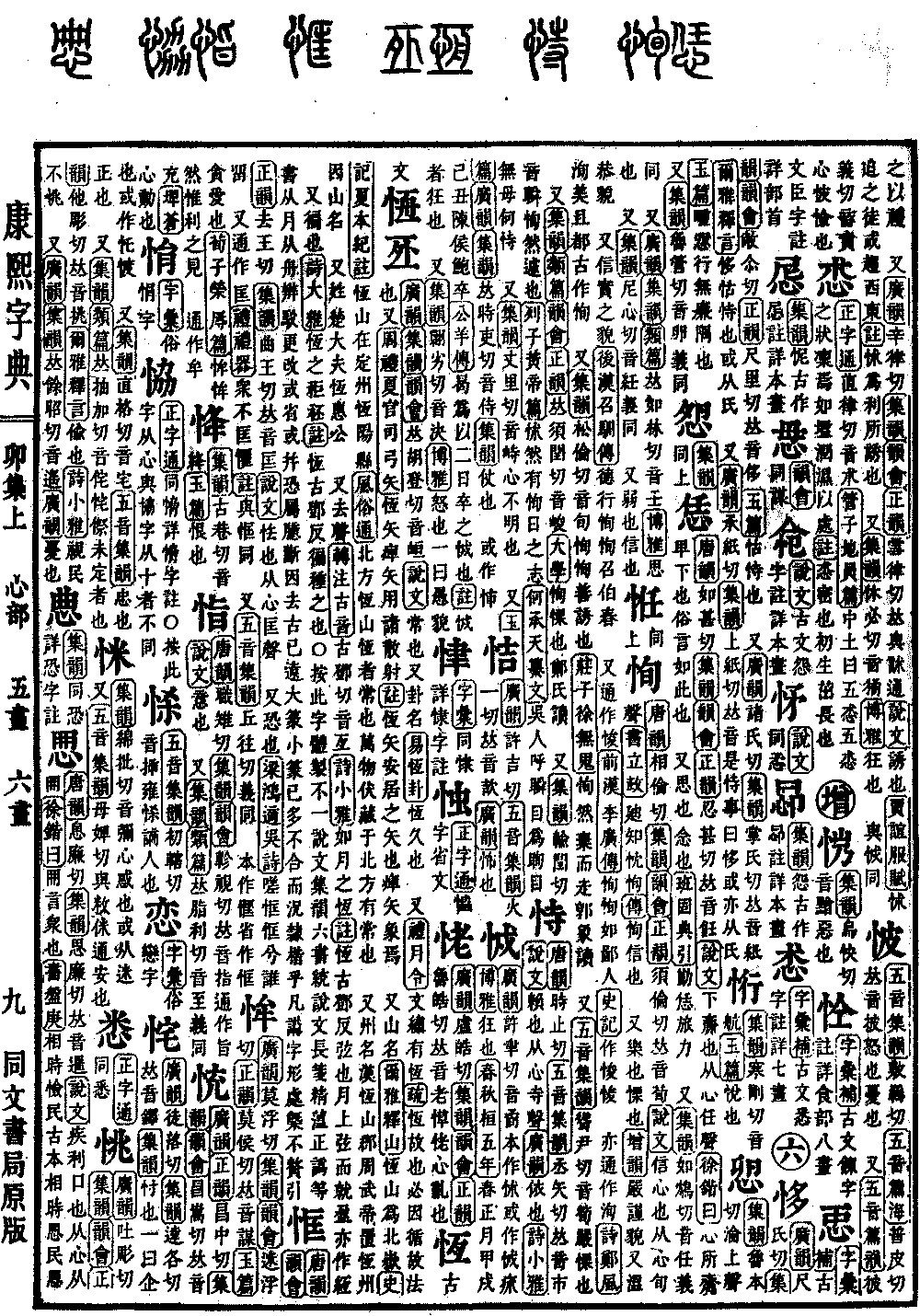
Mao Collection, Upper Volume
Radical: Heart (xīn)
Kuāng; Kangxi stroke count: 10; Page 383, Entry 28
Pronounced kuāng. According to the Tang Rhyme (Tangyun), Rhyme Collection (Yunhui), and Orthodox Rhymes (Zhengyun), and the Collected Rhymes (Jiyun), the pronunciation is kuāng. Explanations in the Explaining Graphs and Analyzing Characters (Shuowen Jiezi) define it as timid or cowardly. The character structure is composed of the heart radical and the phonetic component kuāng, which also indicates fear. In the Poem on Moving to Wu by Liang Hong, it is used to express: Alas, fearful and uneasy, who will remain? It also serves as a variant form for the character kuāng. In the Book of Rites (Liji), specifically in the Rites and Vessels (Liqi) chapter, it appears in a passage describing the multitude as not fearful or apprehensive. The commentary notes that here, kuāng is synonymous with kuāng. According to the Five Sounds Collected Rhymes (Wuyin Jiyun), it is pronounced qiū. The meaning remains the same. Originally written as a more complex variant, it was later simplified to this form.