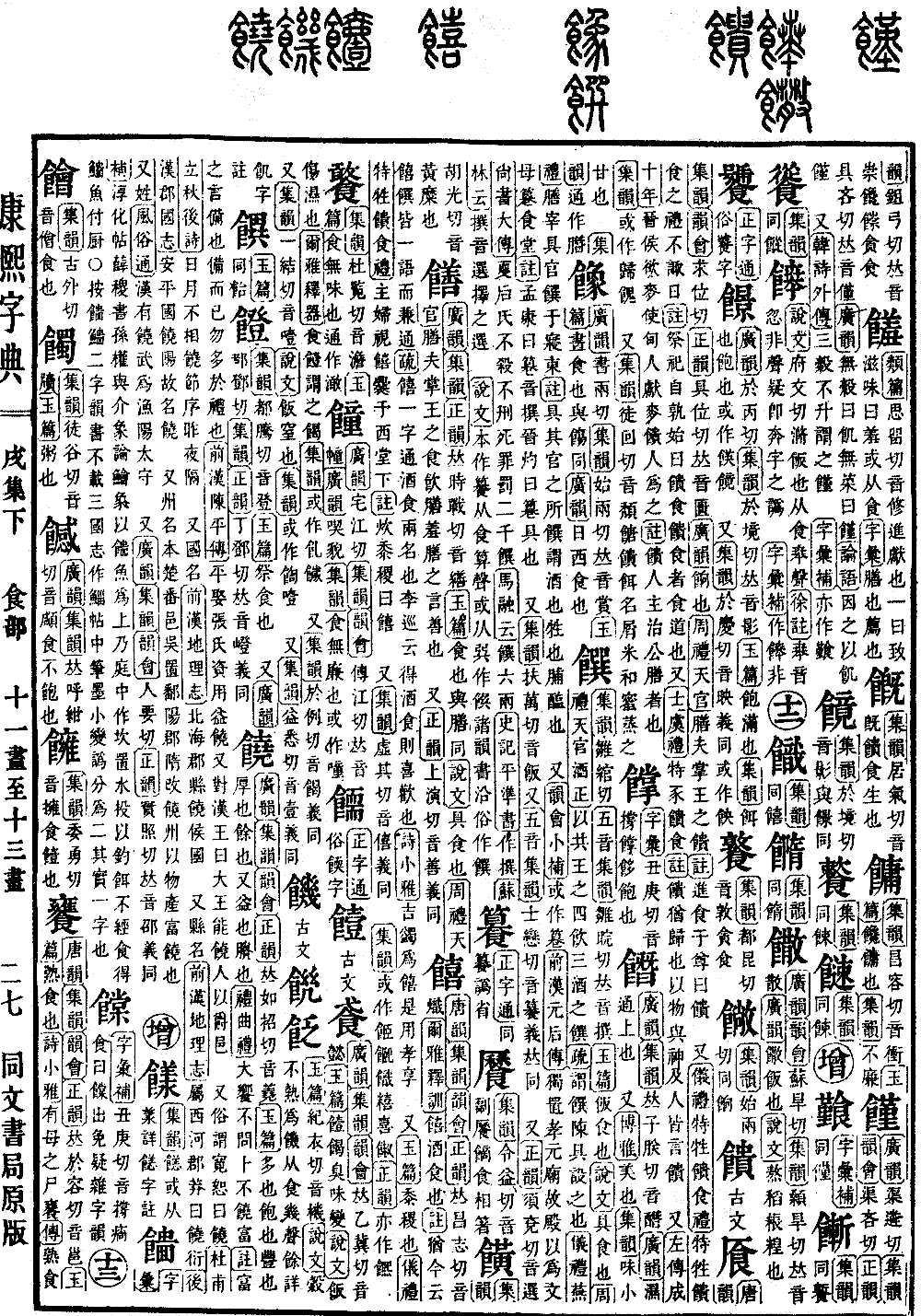
Xu Collection, Lower Volume
Radical: Food (shí)
Kangxi strokes: 21
Page 1425, Entry 19
According to the Tang Rhyme (Tangyun), the Collection of Rhymes (Jiyun), and the Collection of Rhymes and Notes (Yunhui), the character is pronounced gui (falling tone), matching the pronunciation of the character meaning exhausted.
The Broad Rhyme (Guangyun) defines this as to provide food as a gift.
The Rites of Zhou (Zhouli), section on the Officials of Heaven, states: The chief steward handles all food offerings to the king. The commentary explains: Offering food to a person of high status is called gui.
Additionally, the Book of Etiquette and Ceremonial (Yili), in the chapter on the ritual of offering a single sacrificial animal, states: In the ritual of offering a single sacrificial animal, there is no need to select an auspicious day. The commentary explains: In sacrificial rites, the act of offering cooked food is called offering food. Offering food refers to the method of worshipping with food.
Furthermore, the Book of Rites for the Post-Funeral Sacrifice of Officers (Shi Yuli) states: Offering a single pig. The commentary explains: Gui is the same as the character meaning to present a gift. Whether offering items to spirits or bestowing them upon others, both are termed gui.
Also, the Zuo Commentary (Zuozhuan), in the tenth year of Duke Cheng, states: The Duke of Jin desired wheat, so he ordered the field officer to present it, and the officer in charge of food preparation processed it. The commentary explains: The officer in charge of food preparation is the official responsible for the meals of the ruler.
The Collection of Rhymes (Jiyun) notes that it is sometimes written in variant forms meaning to return or to present.
Additionally, the Collection of Rhymes (Jiyun) notes it is pronounced tui (rising tone). This refers to a type of pastry made by steaming broken rice with honey.
Textual research: In the Rites of Zhou (Zhouli), section on the Officials of Heaven, the original text stating the chief steward manages the king's food has been emended to read all food offerings to the king. The original commentary stating offering food to a superior is called gui has been supplemented to read offering food to a person of high status is called gui.