Shen Collection, Upper Volume
Radical: Grass (cǎo)
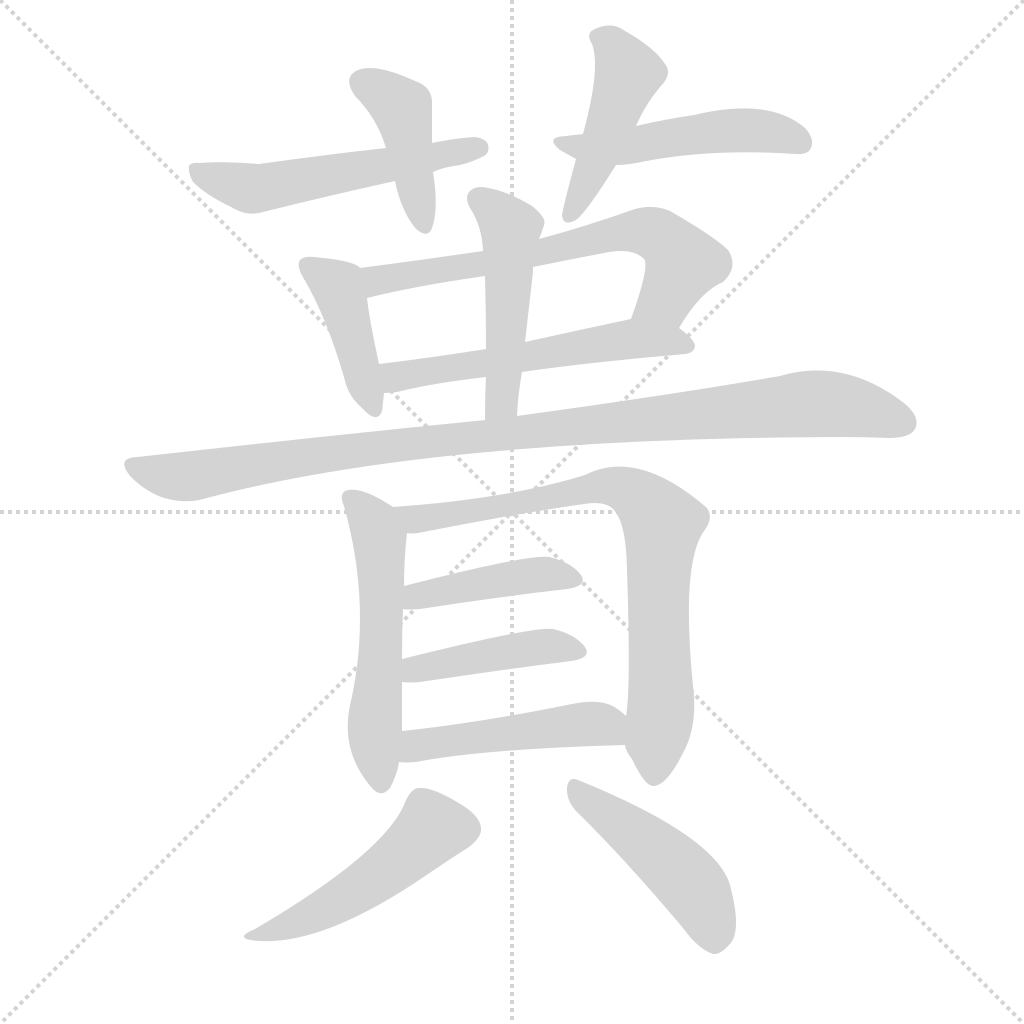
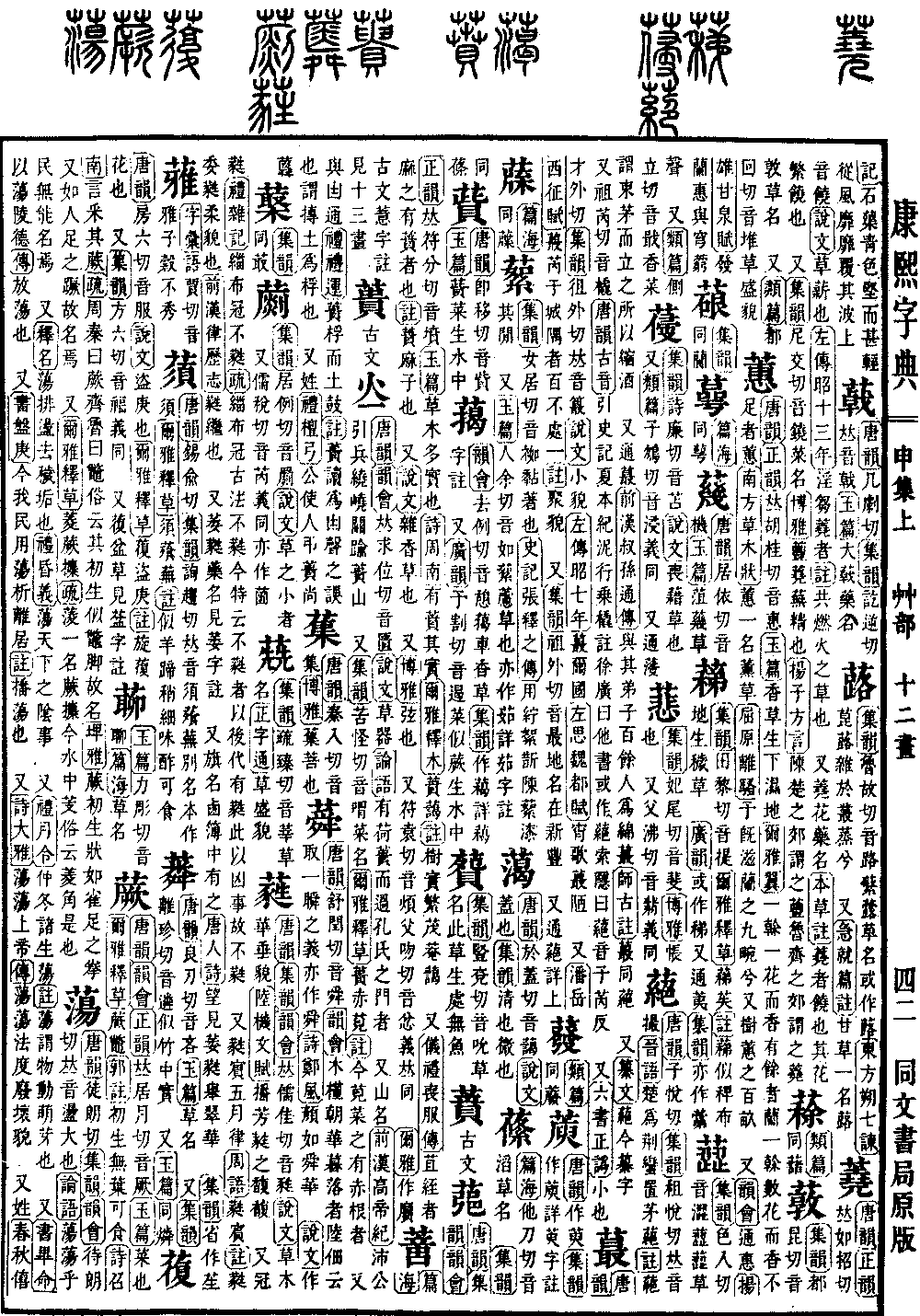
Kui; Kangxi stroke count: 18; Page 1058, Entry 28
According to Tang Rhyme (Tangyun) and Rhyme Collection (Yunhui), the pronunciation is kui. According to Explaining Graphs and Analyzing Characters (Shuowen Jiezi), it refers to a grass-woven tool. Analects (Lunyu) records: Someone carrying a grass basket passed by the gate of Confucius. It also refers to the name of a mountain. Book of the Former Han (Qian Hanshu), Annals of Emperor Gao (Gaodiji) records: The Prince of Pei led troops to bypass Yao Pass and climbed Kui Mountain. According to Collected Rhymes (Jiyun), the pronunciation is kuai. It refers to a type of vegetable. Erya, Explaining Plants (Shicao) records: Kui is red-stemmed amaranth. Commentary: Refers to the variety of amaranth with red stems. It is also used as a phonetic loan character, interchangeable with a character meaning a clod of earth. Book of Rites (Liji), Conveyance of Rites (Liyun) records: Using clods of earth to make drumsticks and using earth to make drums. Commentary: Kui should be read as a character meaning a clod of earth; the error arose due to phonetic similarity, referring to molding earth into drumsticks. It is also used as a surname. Book of Rites (Liji), Tan Gong records: The Duke sent someone to offer condolences to Kui Shang.
Verification: In Erya, Explaining Plants (Shicao), it states: Kui is red amaranth. Commentary: The current variety of amaranth has red roots. Note: The original text was amended to change red roots to red stems.