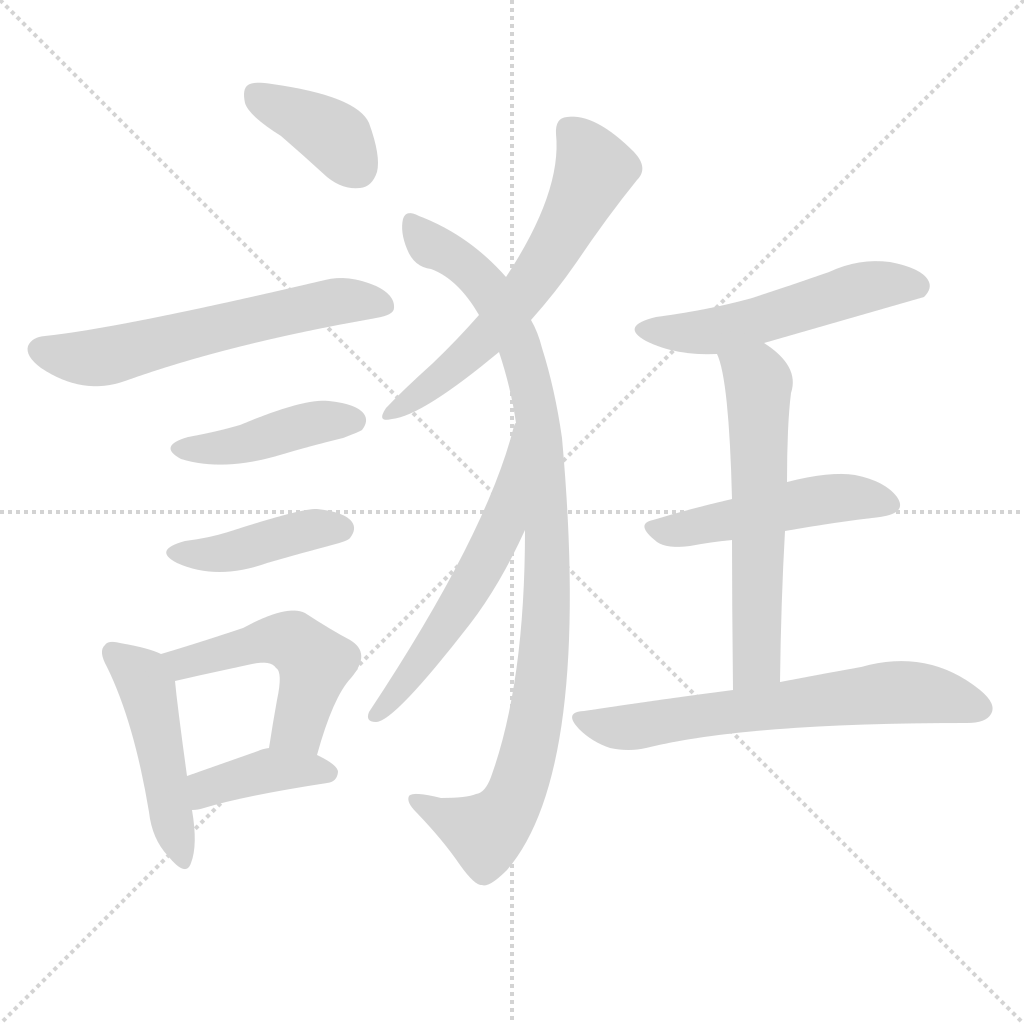
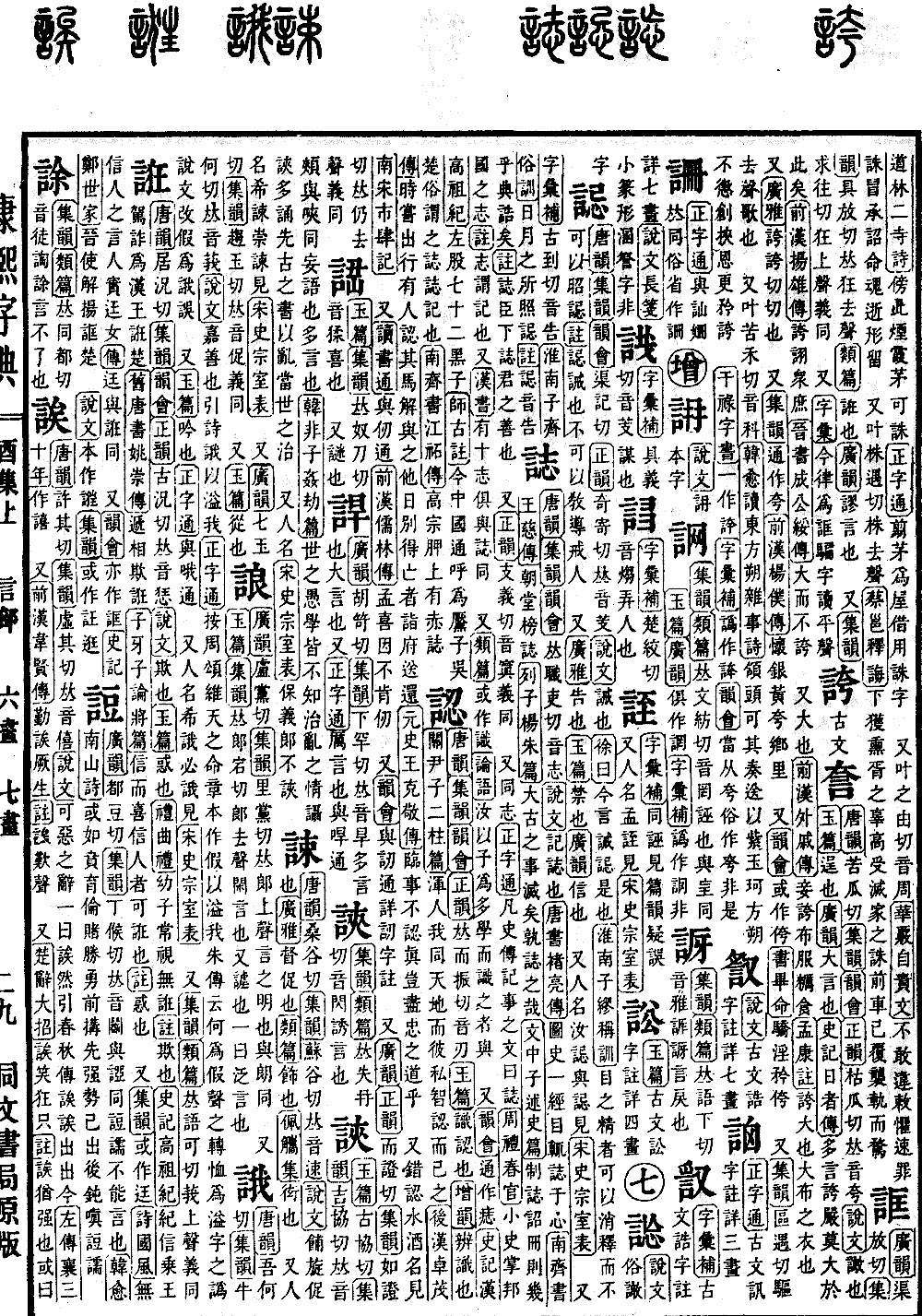
You Collection, Upper Volume
Radical: Speech (yán)
Kuang
Kangxi Strokes: 14
Page 1161, Entry 26
Tang Rhymes (Tangyun): Pronounced kuang. Collected Rhymes (Jiyun), Rhyme Gathering (Yunhui), Correct Rhymes (Zhengyun): Pronounced kuang.
Explanatory Dictionary (Shuowen): To deceive.
Jade Compendium (Yupian): To confuse.
Book of Rites (Liji), Songs of Refinement (Quli): Young children are constantly observed to ensure they do not deceive.
Explanation of Text (Shiwen): To deceive.
Records of the Grand Historian (Shiji), Annals of Emperor Gaozu: Ji Xin rode in the king’s carriage and pretended to be the King of Han to deceive Chu.
Old Book of Tang (Jiu Tangshu), Biography of Yao Chong: Mutually deceiving one another.
Ziyazi, Treatise on Generals: One who is trustworthy and loves to trust others can be deceived.
Commentary: To confuse.
Also, Collected Rhymes (Jiyun): Sometimes written as wang.
Book of Odes (Shijing), Airs of the States: Do not believe the words of others, for they will surely deceive you.
Commentary: Wang is the same as kuang.
Also, Rhyme Gathering (Yunhui): Also written as kuang.
Records of the Grand Historian (Shiji), House of Zheng: The state of Jin sent Xie Yang to deceive Chu.
Explanatory Dictionary (Shuowen): Originally written as kuang.
Collected Rhymes (Jiyun): Sometimes written as kuang.
Textual Research:
Book of Rites (Liji), Songs of Refinement (Quli): Young children are constantly observed to ensure they do not deceive.
Commentary: To deceive.
The editors have followed the original text of the commentary and amended the Explanation of Text (Shiwen).