Hai Collection, Upper Volume
Radical: Hair (biāo)
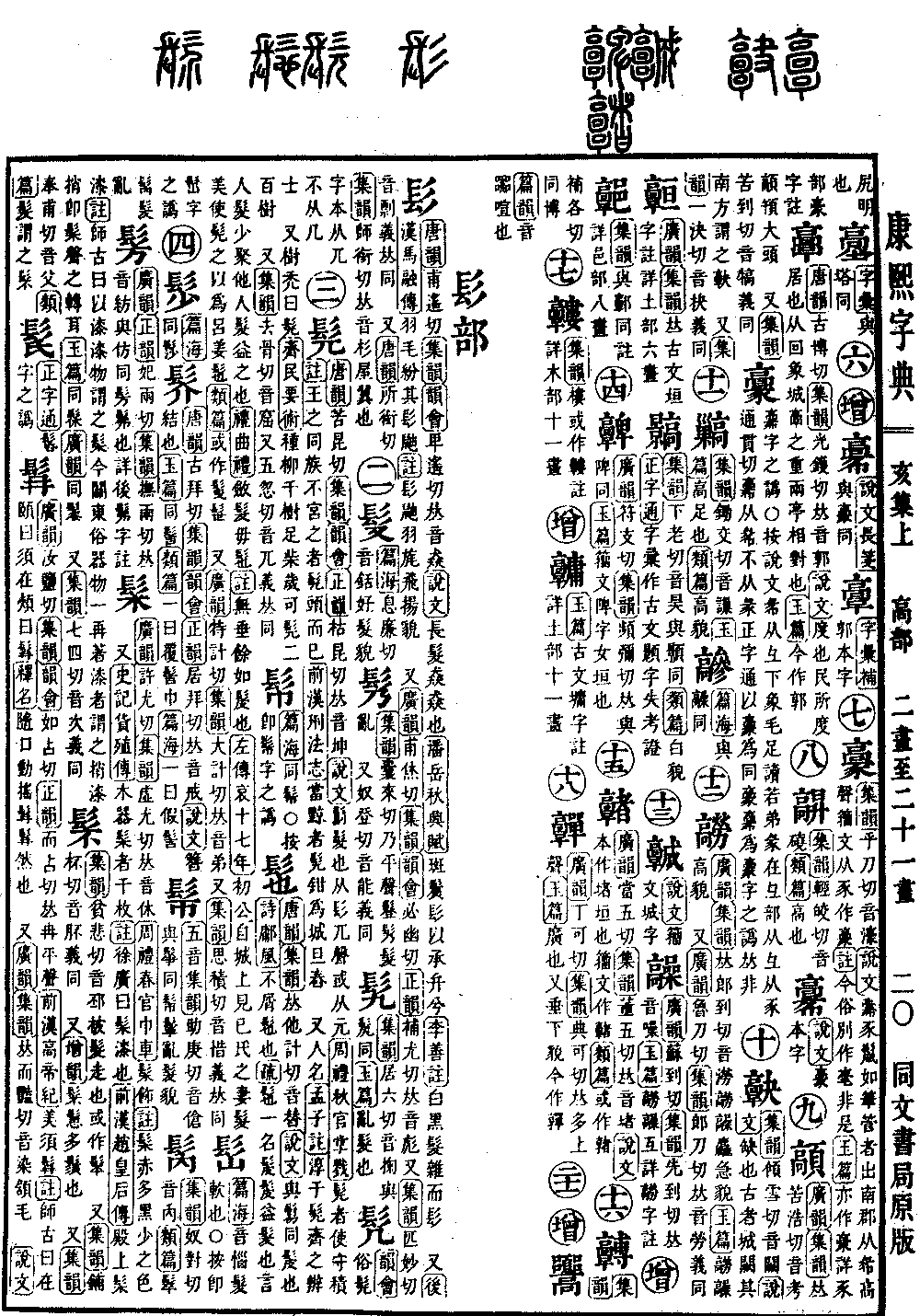
Kun
Kangxi strokes: 13
Page 1452, Entry 31
Pronounced kun
Shuowen Jiezi (Explanation of Simple and Compound Characters): To shave the hair. Derived from the radical for hair, with the sound of the component meaning to behead or cut off. Sometimes written with the component for head.
Book of Rites of Zhou (Zhouli), Office of Autumn, Chief of Punishments: Those who receive the punishment of shaving the hair are ordered to guard the granary. Commentary: Those of the same clan as the King are not subjected to castration, but merely have their hair shaved off.
History of the Former Han Dynasty (Qianhan Shu), Treatise on Law: Those who should receive the punishment of tattooing are instead subjected to shaving the hair, wearing a wooden collar, and performing labor such as building walls or pounding grain.
Also a personal name. Commentary on the Mencius (Mengzi): Chunyu Kun was a man of the State of Qi skilled in debate.
Also, trees that are bare are called kun. Essential Techniques for the Welfare of the People (Qimin Yaoshu): If one plants a thousand willow trees, one can obtain firewood, and each year two hundred trees may be pruned.
Also pronounced ku.
Also pronounced wu.
The definition is the same.