You Collection, Upper Volume
Radical: Speech (yán)
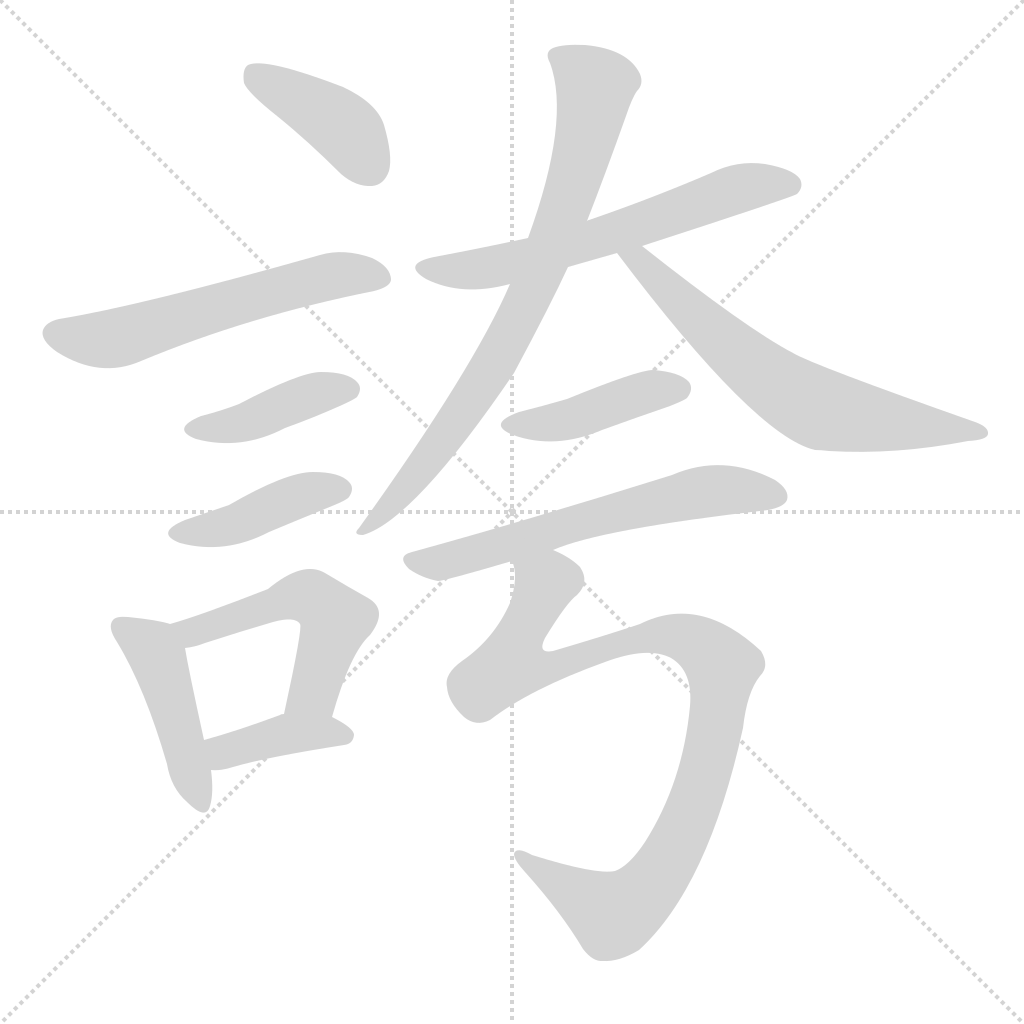
Kua
Kangxi Strokes: 13
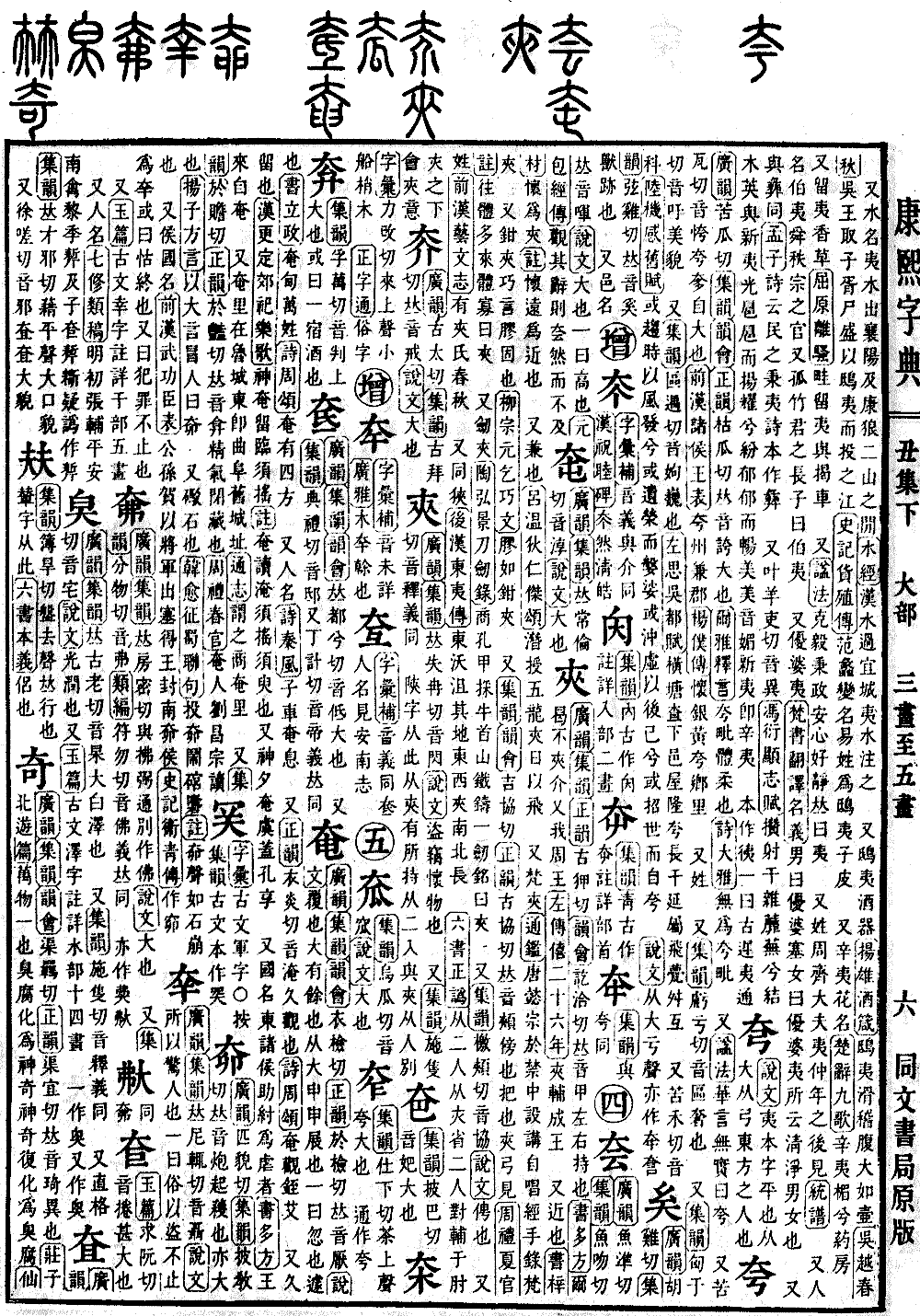
Page 250, Entry 01
Ancient form. Pronounced kua.
According to the Shuowen Jiezi (Dictionary of Explanations of Characters), it means to boast. According to the Yupian (Jade Chapters), it means to show off. According to the Guangyun (Broad Rhymes), it means to speak in a grand manner.
Historical Citations:
Records of the Grand Historian (Shiji), Biography of the Diviner: To speak much and boast, there is nothing greater than this.
Book of Han (Hanshu), Biography of Yang Xiong: Boasting and showing off to the masses.
Book of Jin (Jinshu), Biography of Cheng Gong Sui: Great but not boasting.
Also means large.
Historical Citations:
Book of Han (Hanshu), Biography of Imperial Relatives: The concubine wore coarse cloth and ate rough food. The commentator Meng Kang notes: Kua means large, as in a garment of coarse cloth.
Also, according to the Guangya (Expanded Encyclopedia), kuakua means earnest or meticulous.
Also, according to the Jiyun (Collection of Rhymes), it is used interchangeably with the character kua.
Historical Citations:
Book of Han (Hanshu), Biography of Yang Pu: Wearing the silver and yellow seals, showing off to his village.
According to the Yunhui (Collection of Rhymes), it is sometimes written as the variant form kua.
Historical Citations:
Book of Documents (Shujing), Decree of Bi: Arrogant, licentious, and boastful.
Also, according to the Jiyun, pronounced qu (falling-rising tone), meaning to sing.
Also rhymes with he (level tone), pronounced ke.
Historical Citations:
Han Yu, Poem on Reading the Miscellaneous Affairs of Dongfang Shuo: Nodding his head to approve the memorial, presenting it with a purple jade horse bit. Shuo was not deterred, holding onto favor and boasting further.
The Ganlu Zishu (Manual of Official Characters) lists one variant as kua. The Zihui Bu (Supplement to the Dictionary of Characters) records an erroneous form. According to the Yunhui, one should follow the standard form of kua. Popular usage writes it as the variant form, which is incorrect.