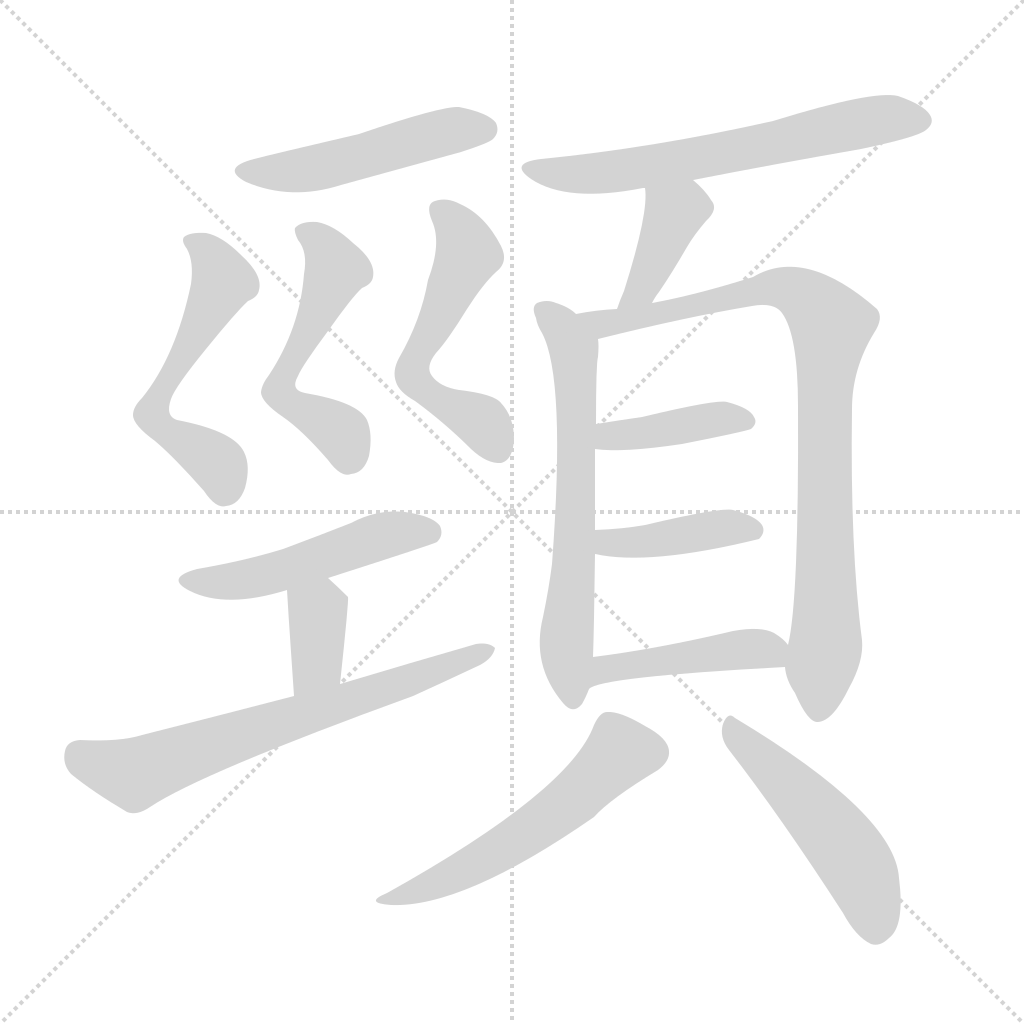
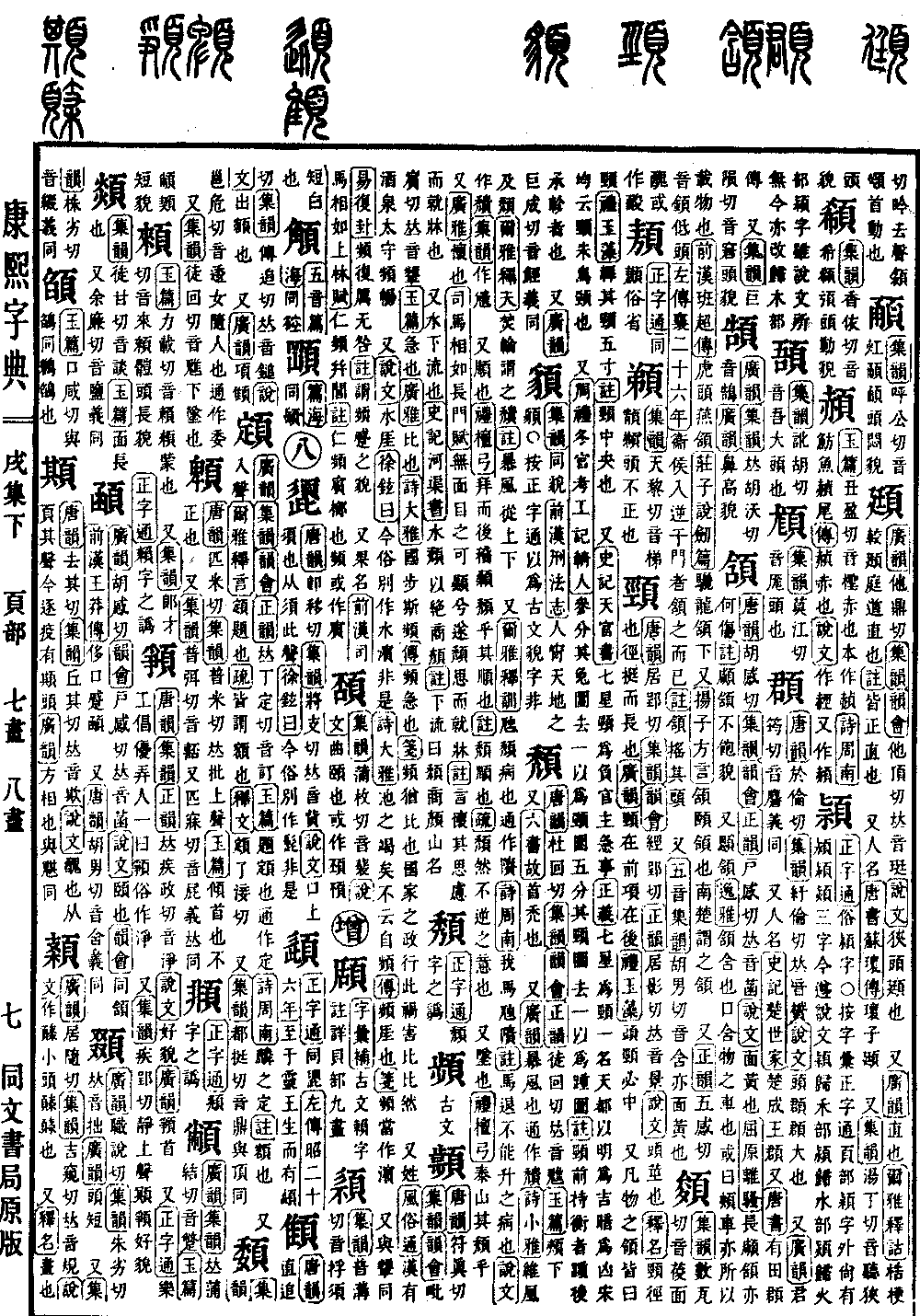
Xu Collection, Lower Volume
Radical: Leaf (yè)
Stroke count: 16
Page 1405, Entry 14
Pronounced jing (rising tone).
According to the Shuo Wen Jiezi (Shuo Wen), it is the stalk of the head.
According to the Explanation of Names (Shiming), it is the neck, a passage that is straight and long.
According to the Guangyun, the neck is in the front, and the nape is in the back.
According to the Book of Rites (Liji): When the head and neck are straight, it is considered centered.
Also, any part of an object that acts as a collar is called a neck.
According to the Book of Rites (Liji): The apron is five inches at its neck. Commentary: The neck refers to the central part.
According to the Records of the Grand Historian (Shiji): The neck of the Seven Stars is called the round office, which governs urgent matters. Corrected interpretation: The seven stars constitute the neck, also known as the Celestial Capital; brilliance indicates good fortune, dimness indicates calamity. Song Jun states: The neck is the neck of the Vermilion Bird.
According to the Rites of Zhou (Zhouli): Divide the circumference of the pole tip into three parts and remove one to determine the neck circumference. Divide the neck circumference into five parts and remove one to determine the heel circumference. Commentary: The neck is the part that holds the yoke in front. The heel is the part that supports the axle in the back.
Also, pronounced cheng (level tone). The meaning is the same.
Textual Research: In the Records of the Grand Historian (Shiji), it is written as the neck of the Seven Stars is the negative office. In accordance with the original text, negative office has been corrected to round office.