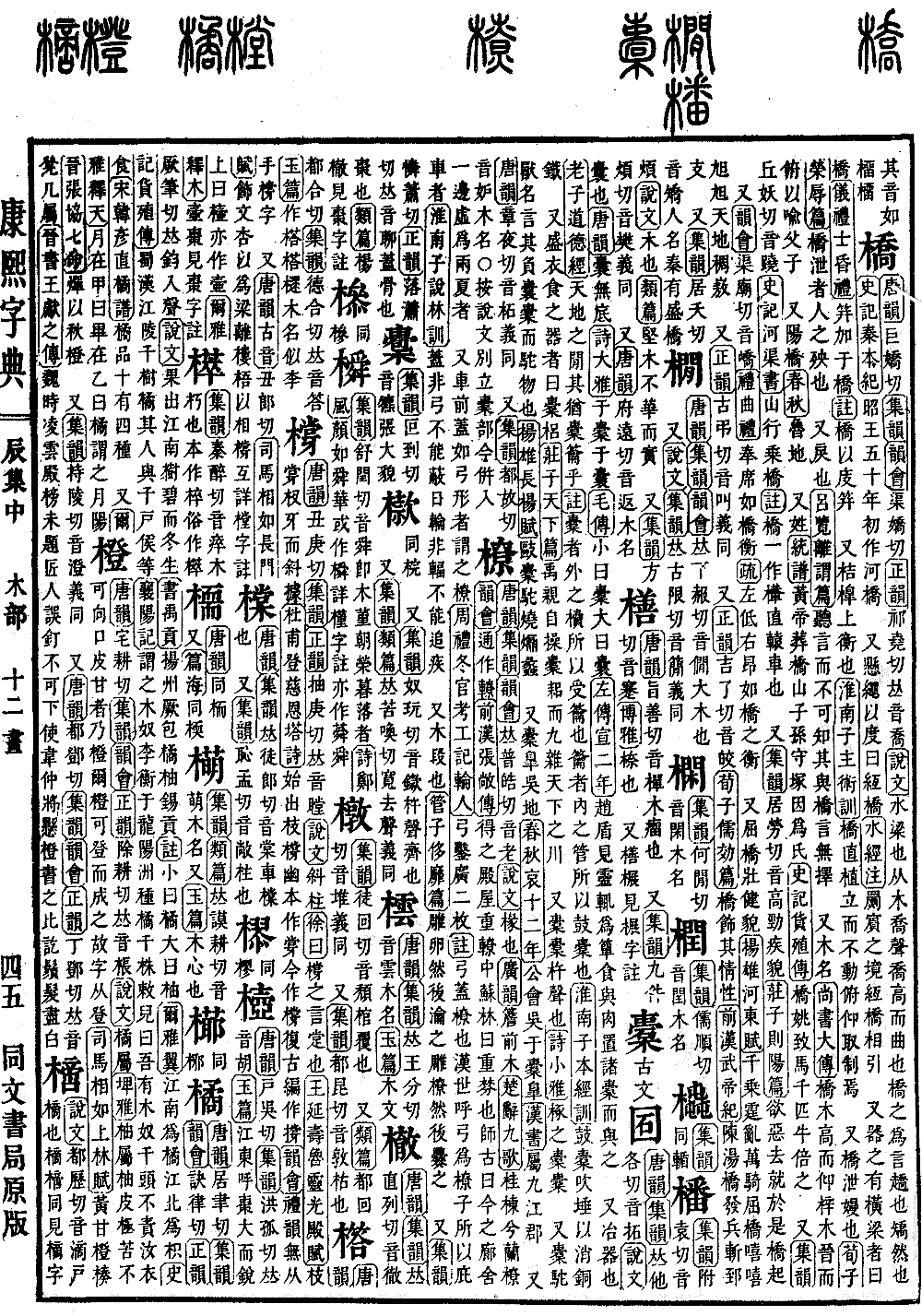
Chen Collection, Middle Volume
Radical: Tree (mù)
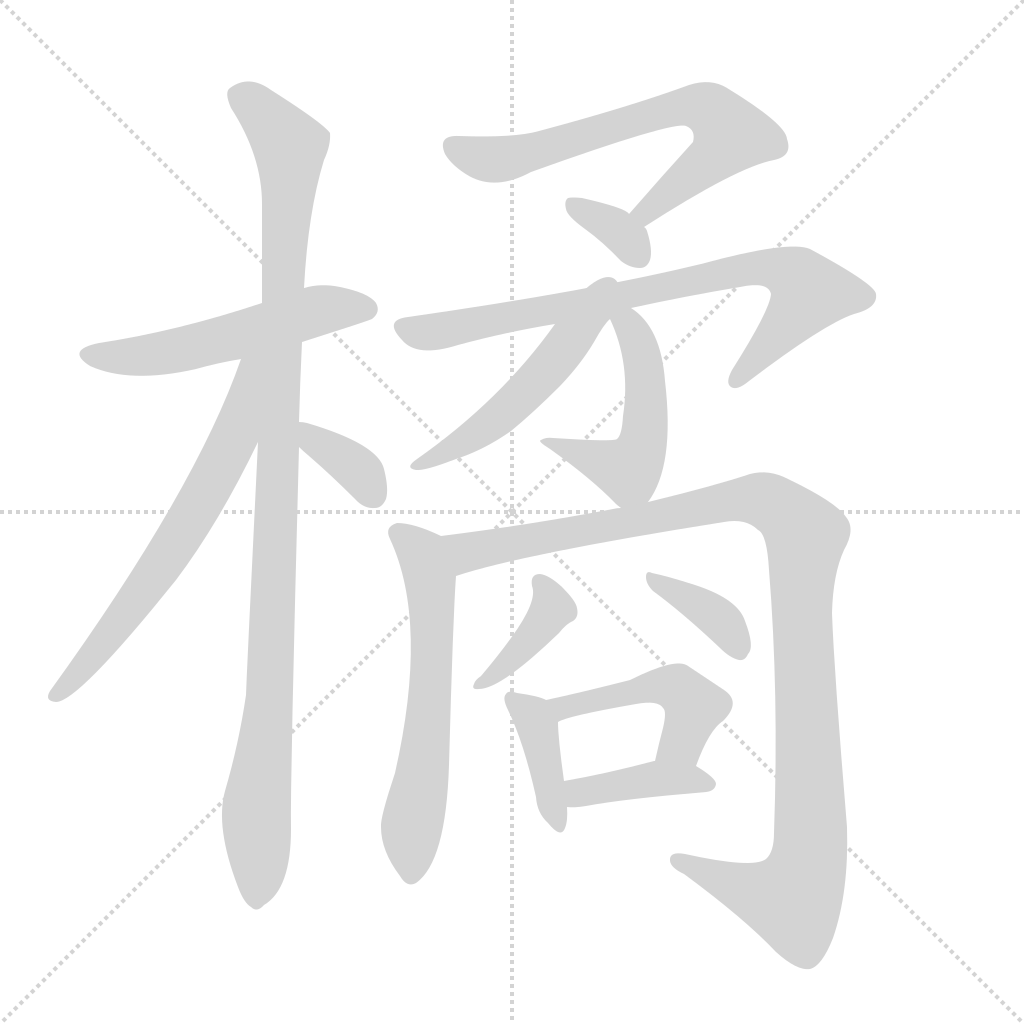
Tangerine; Kangxi stroke count: 16
Page 553, Entry 27
Pronounced ju (entering tone)
Shuowen Jiezi (Explanation of Simple and Compound Characters): A fruit originating in Jiangnan; the tree is green and remains evergreen in winter.
Book of Documents (Shujing), Tribute of Yu (Yugong): In the Yangzhou region, its tribute consists of tangerines and pomelos. Annotation: The small ones are called tangerines, and the large ones are called pomelos.
Erya Yi (Expanded Notes on the Erya): When grown south of the Yangtze River, it is called a tangerine; when grown north of the Yangtze River, it is called a trifoliate orange.
Records of the Grand Historian (Shiji), Biographies of the Money Makers: In Shu, Han, and Jiangling, there are thousands of tangerine trees; the owners of such orchards are the equals of marquises with a thousand households.
Xiangyang Ji (Record of Xiangyang): Known as wood slaves. Li Heng planted a thousand tangerine trees on Longyang Islet and instructed his sons, saying: I possess a thousand wood slaves, so I shall not burden you with providing for my clothing and food.
Song Dynasty, Han Yanzhi, Tangerine Treatise (Jupu): There are fourteen varieties of tangerines.
Also, Erya, Explanation of Heaven (Shitian): When the month is in the position of jia, it is called bi; when it is in the position of yi, it is called tangerine, which is referred to as the solar aspect of the month.