Mao Collection, Middle Volume
Radical: Hand (shǒu)
Kangxi stroke count: 12
Page 435, Entry 16
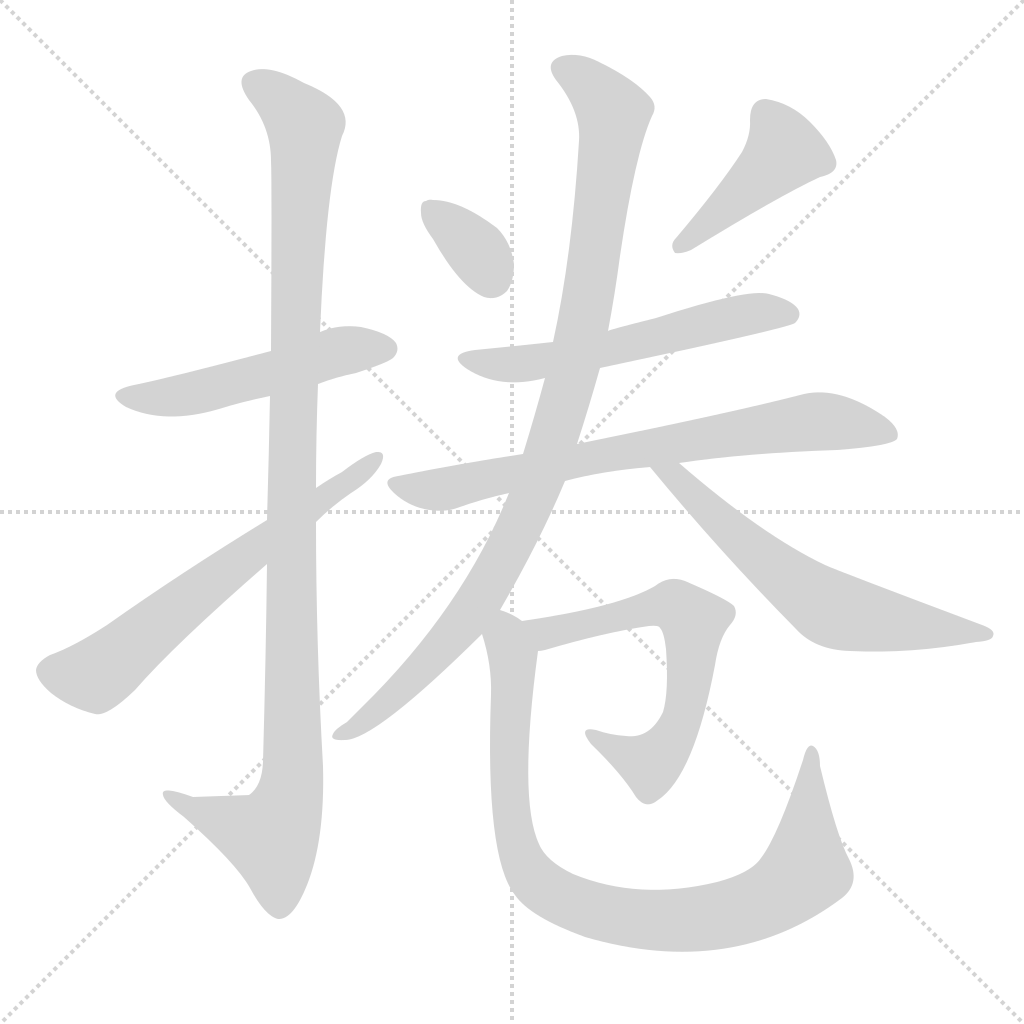
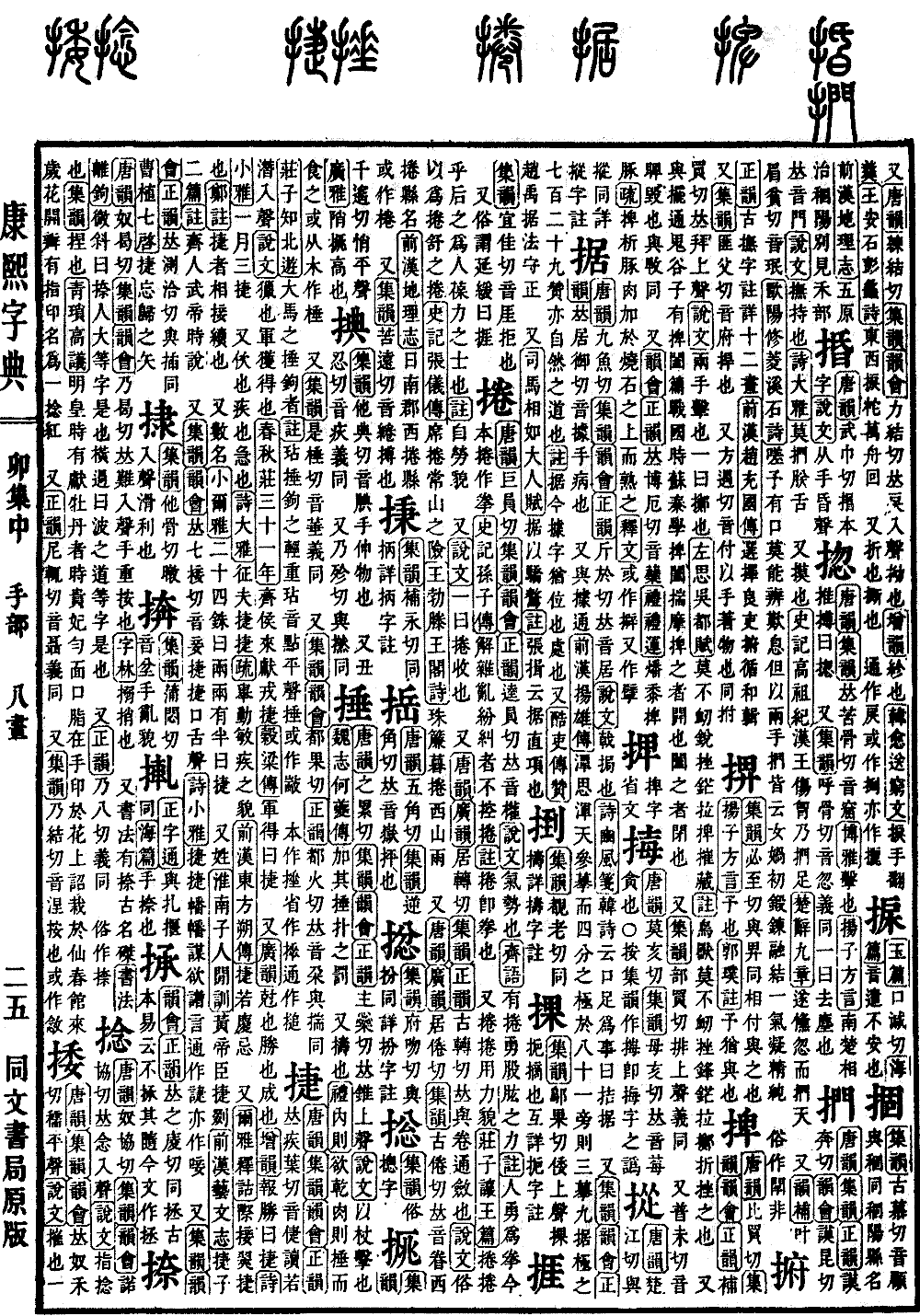
Pronounced quan (rising tone). According to the Tang Rhyme (Tangyun), Collection Rhyme (Jiyun), Rhyme Compilation (Yunhui), and Orthodox Rhymes (Zhengyun), it is pronounced quan (rising tone), which is the same as the pronunciation of quan. The Explanation of Graphs and Analysis of Characters (Shuowen Jiezi) interprets it as momentum. The Discourses of Qi (Qiyu) records the phrase, the exertion of strength in the thighs and arms. The commentary notes that the martial prowess of a person is called quan. In contemporary versions, the character is written as quan. The Records of the Grand Historian (Shiji), Biography of Sun Zi, states, one who untangles a chaotic knot does not hold onto it. The commentary notes that this implies the same as the character for fist. It also appears as quan quan, which describes the appearance of exerting strength. The Book of Master Zhuang (Zhuangzi), chapter Let Wang, states, the appearance of the ruler is diligent, like one who preserves his strength. The commentary notes this describes the appearance of self-exertion. Another interpretation in the Explanation of Graphs and Analysis of Characters (Shuowen Jiezi) is that it signifies gathering or retracting.
Pronounced juan (falling-rising tone). This is interchangeable with the character juan, meaning to gather or contract. The Explanation of Graphs and Analysis of Characters (Shuowen Jiezi) notes that the vulgar form is used in the phrase to roll or expand. The Records of the Grand Historian (Shiji), Biography of Zhang Yi, mentions sweeping up the strategic passes of Mount Chang. The poem by Wang Bo, Pavilion of Prince Teng, contains the line, the pearl curtain at dusk rolls up the rain from the western mountains.
Pronounced juan (falling tone). This is the same as the pronunciation of juan. Xijuan is the name of a district. The History of the Former Han (Qianhan), Treatise on Geography, records that there was a Xijuan District in Rinan Commandery. Sometimes it is written as quan.
Pronounced quan (rising tone). This is the same as the pronunciation of quan. It signifies to fight or wrestle.