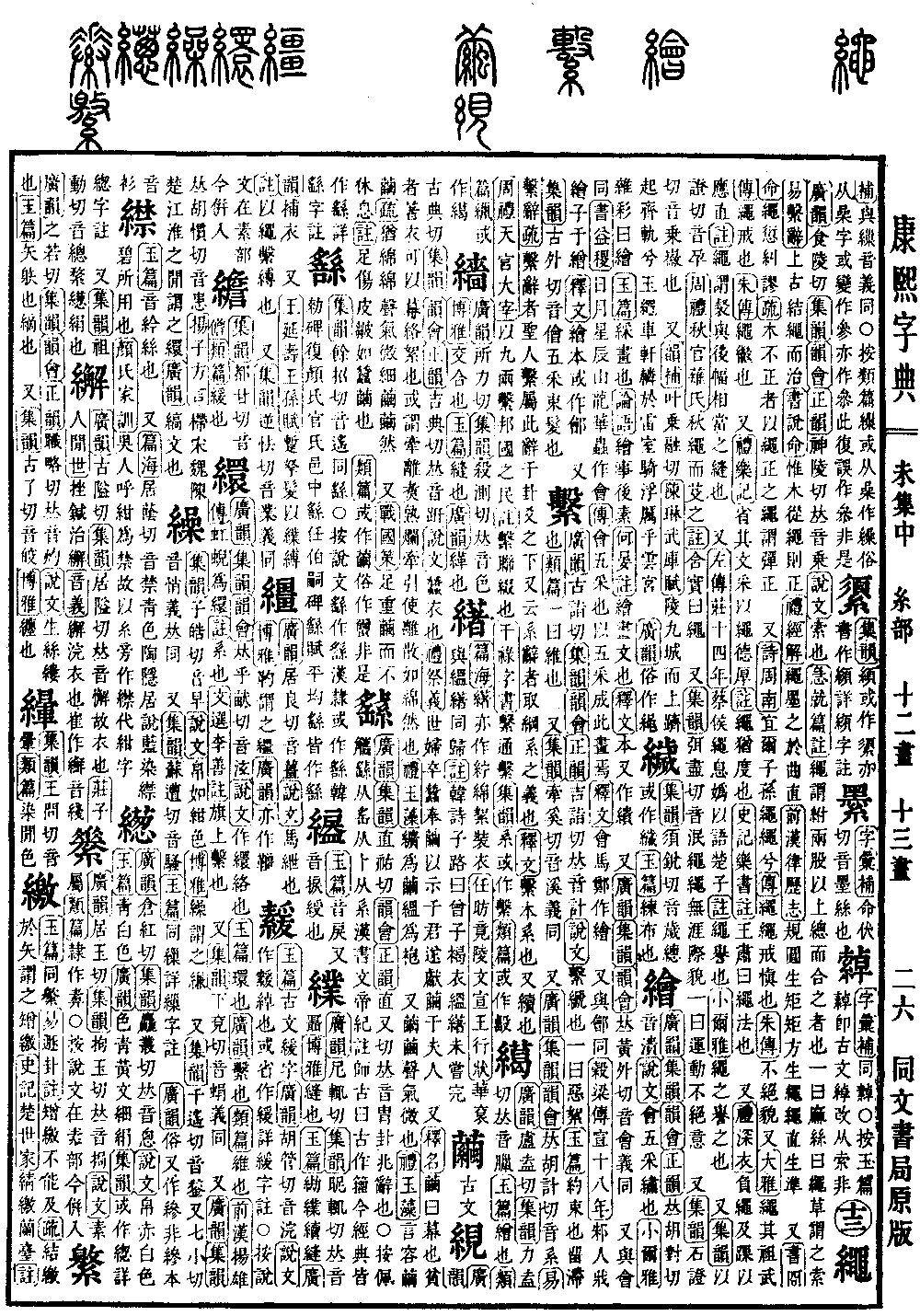
Wei Collection, Lower Volume
Radical: Silk (mì)
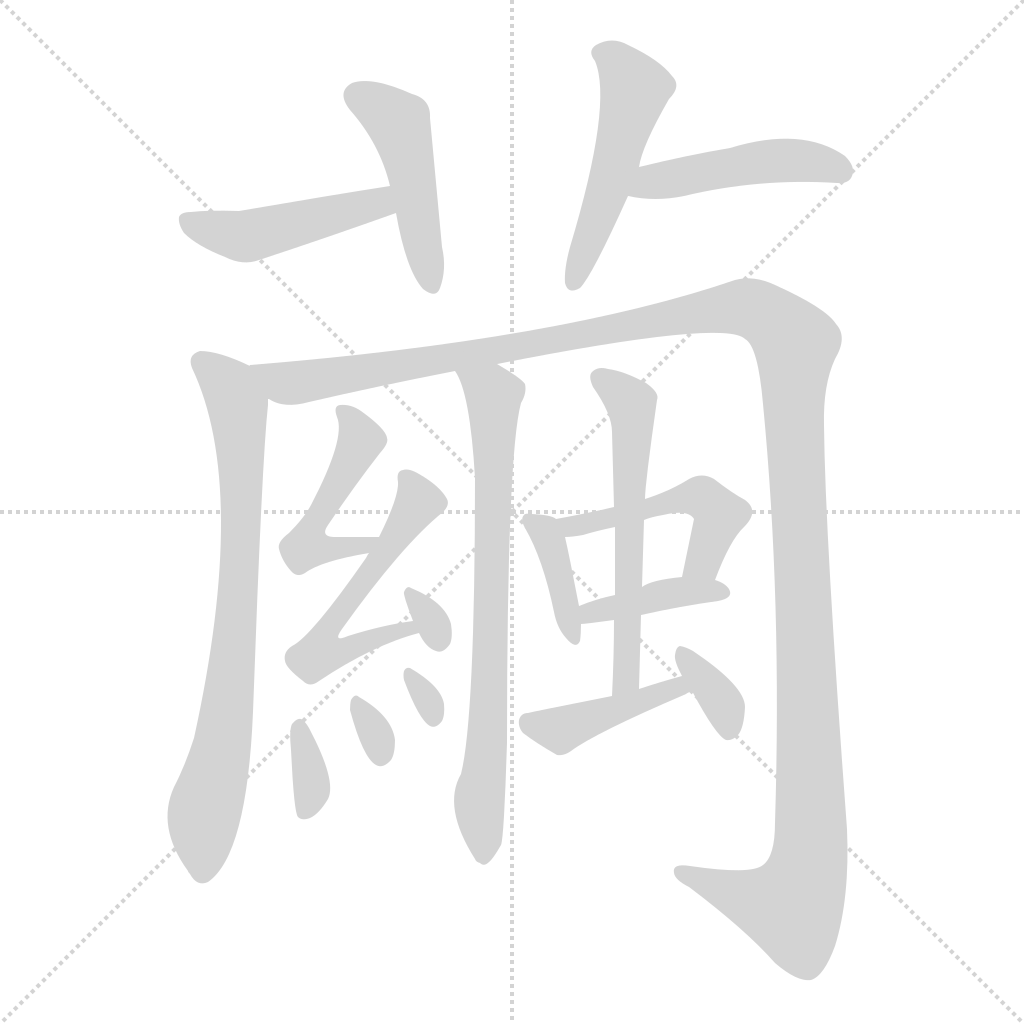
繭
Kangxi strokes: 19
Page 940, Entry 11
In classical texts, it is written in a variant form (jiǎn).
Pronounced jiǎn.
Explained in the Explaining Graphs and Analyzing Characters (Shuowen Jiezi) as the shell formed by a silkworm secreting silk.
The Book of Rites (Liji) states: After the palace ladies finished sericulture, they held the cocoons to show the sovereign and then offered them to the lady.
Also, the Explanations of Names (Shiming) records: Boiled cocoons are called mu. The clothing worn by the poor can be padded with them. Some also call them qianli; when boiled until soft, they can be pulled and spread out like silk floss.
The Book of Rites (Liji) states: Garments padded with new silk floss are called jianyi, while those padded with old floss are called pao.
Also, jianjian describes the appearance of a faint voice or breath.
The Book of Rites (Liji) states: The demeanor and voice when speaking should be faint and subtle.
The Commentary (Shu) explains: It is like an unceasing, continuous state, with the voice and breath as subtle as silk threads from a cocoon.
Also, the Strategies of the Warring States (Zhanguoce) records: Not resting even when thick calluses have formed on the feet.
The annotation explains: The skin of the feet becomes rough and wrinkled due to friction, resembling silkworm cocoons.
The Classification of Graphs (Leipian) contains a variant form, and the vulgar form is written as 蠒, which is incorrect.
Textual Research: The Explanations of Names (Shiming) entry says boiled cocoons are called mu. In accordance with the original text of the Explanations of Names (Shiming) as cited in the Extensive Records of the Taiping Era (Taiping Yulan), this has been corrected to: Boiled cocoons are called mu, or referred to as qianli. In accordance with the original text of the Explanations of Names (Shiming), the character zhi has been added after the character wei.