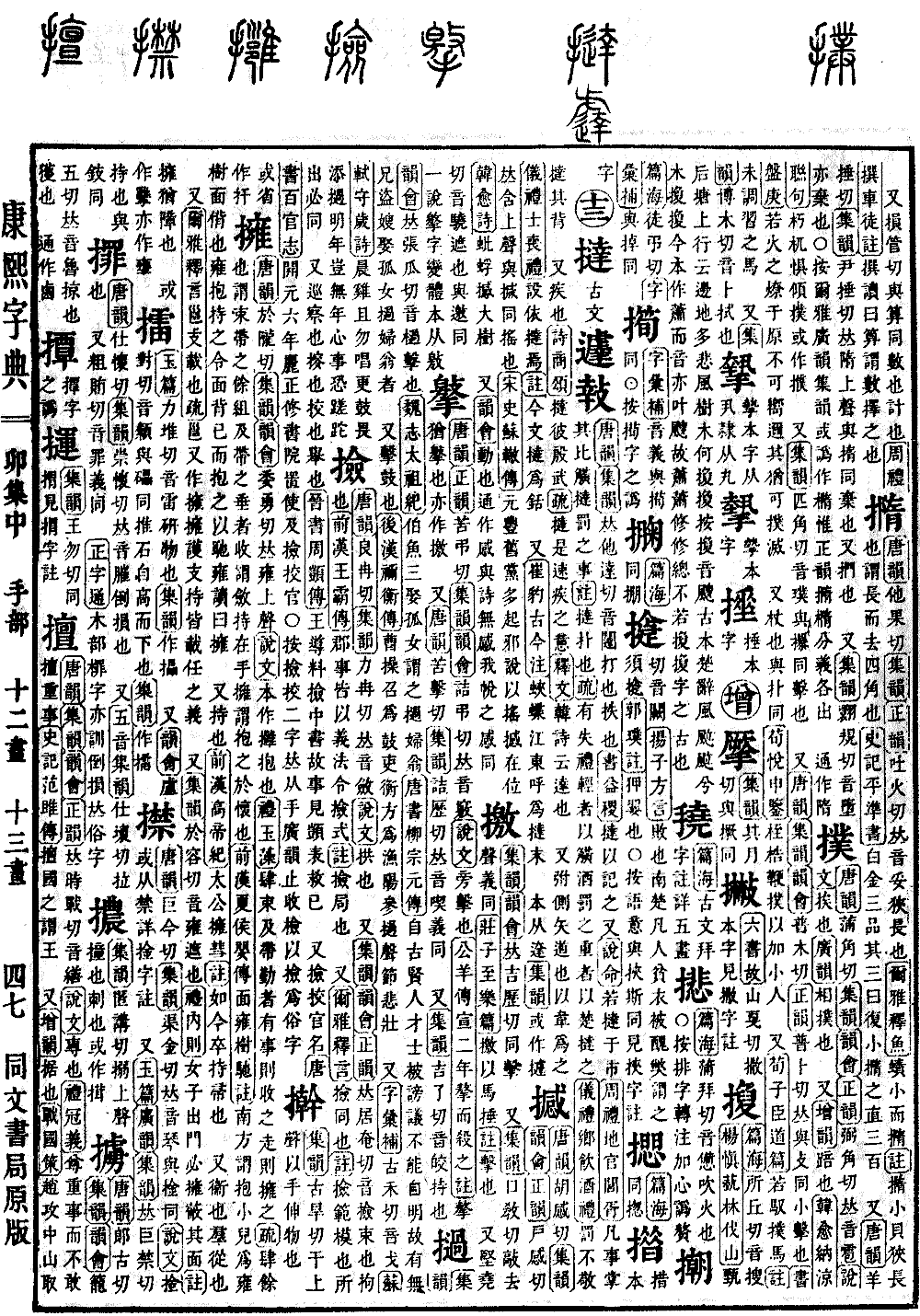
Mao Collection, Middle Volume
Radical: Hand (shǒu)
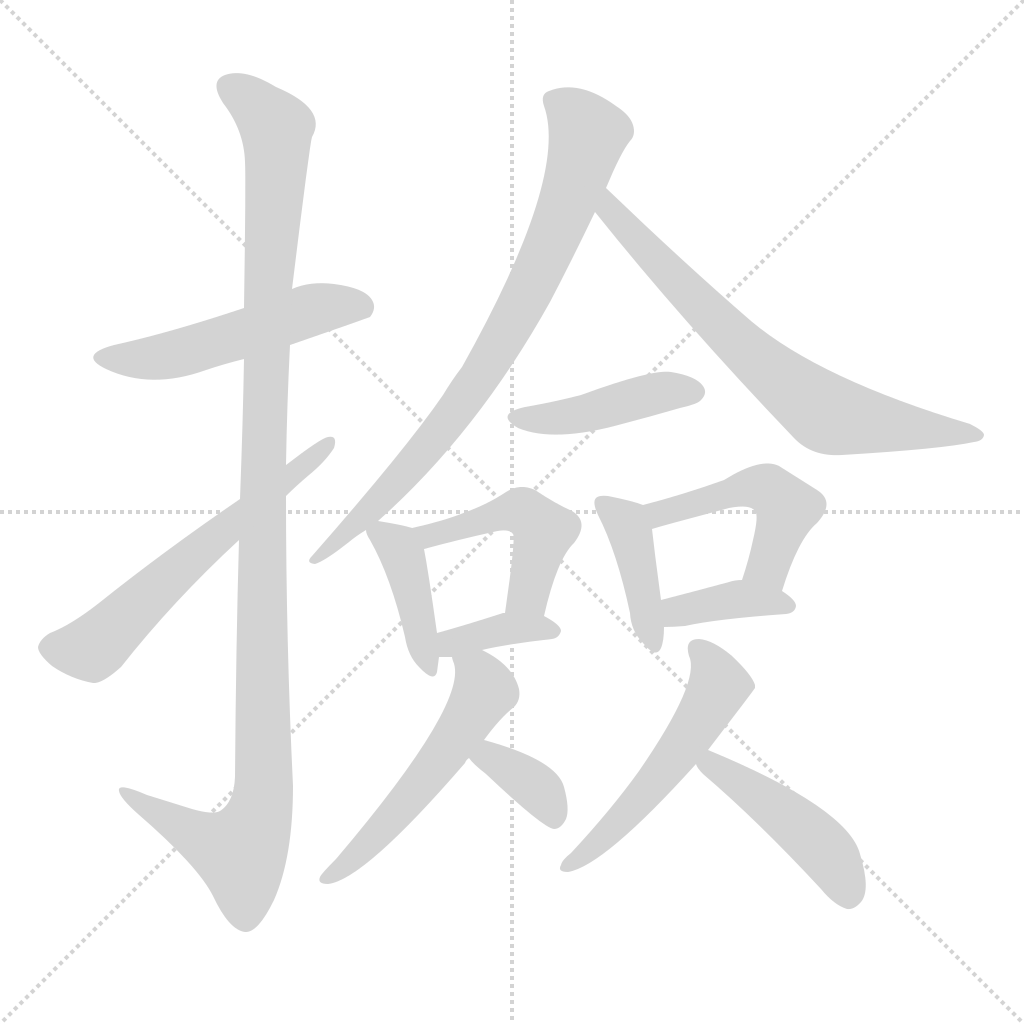
捡
Kangxi strokes: 17
Page 457, Entry 24
Pronounced lian (third tone). Defined in Tang Rhymes (Tangyun) and Collected Rhymes (Jiyun) as having the same pronunciation as the character for collect (lian). Defined in Explaining Graphs and Analyzing Characters (Shuowen) as the act of folding hands to perform a bow.
Also defined in Collected Rhymes (Jiyun), Rhyme Compilation (Yunhui), and Orthodox Rhymes (Zhengyun) as having the same pronunciation as the character for restrain (jian). It denotes constraint or restriction. According to the Biography of Wang Ba in the History of the Former Han (Qianhan Shu), the affairs of the commandery were all based on moral laws to impose constraint and regulation. The commentary states that this means to limit or standardize.
According to the Erya (an early dictionary), it also means the same as consistent. The commentary notes that this refers to standards or patterns that inevitably produce the same result.
It also carries the meanings of patrolling, inspecting, verifying, or reporting. In the Biography of Zhou Yi in the History of the Jin (Jinshu), Wang Dao examined the old documents of the Secretariat and saw the petition submitted by Zhou Yi to save him.
There is also the term jianjiao, which is the name of an official title. According to the Treatise on Officials in the History of the Tang (Tangshu), in the sixth year of the Kaiyuan era, the Lizheng Academy established official posts and inspecting officials.
Note: Both characters in jianjiao belong to the hand radical. The Wide Rhymes (Guangyun) only records the standard form (jian) and considers the current character a common variant.