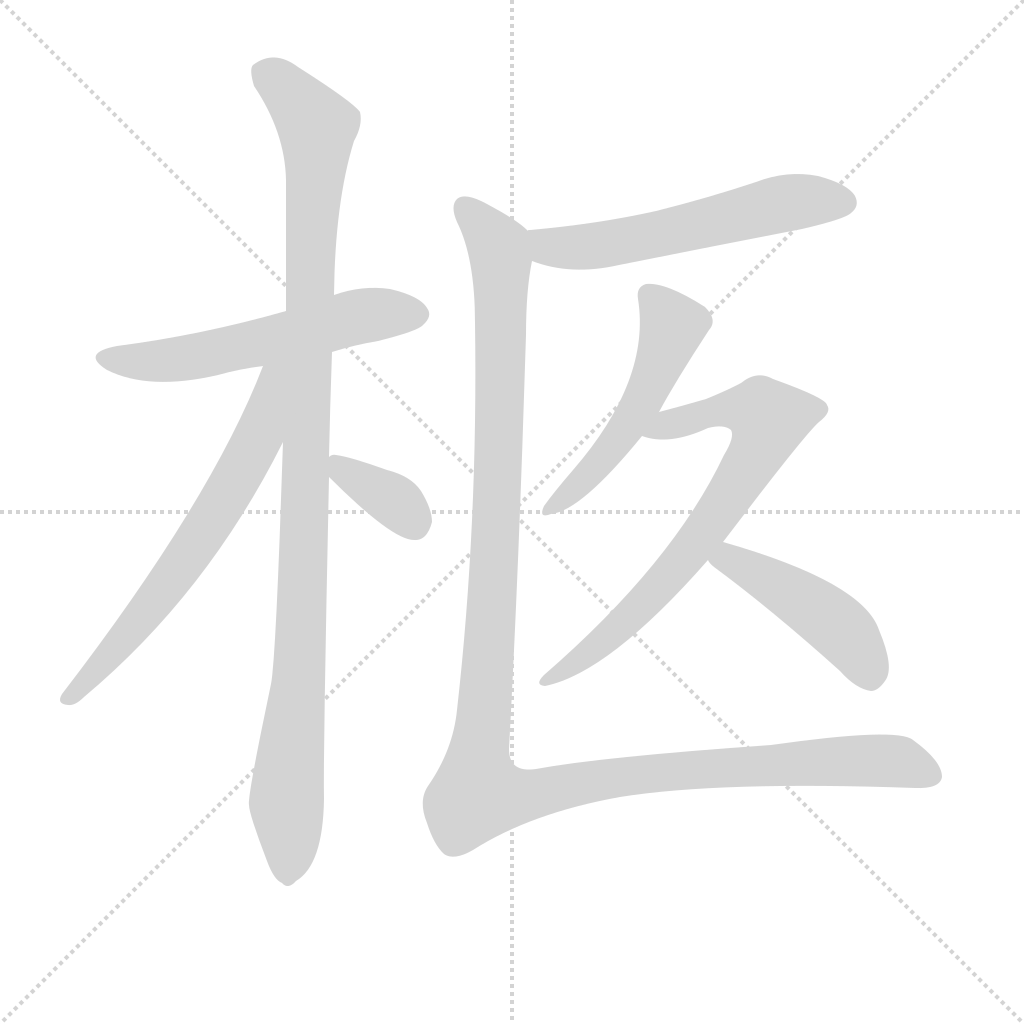
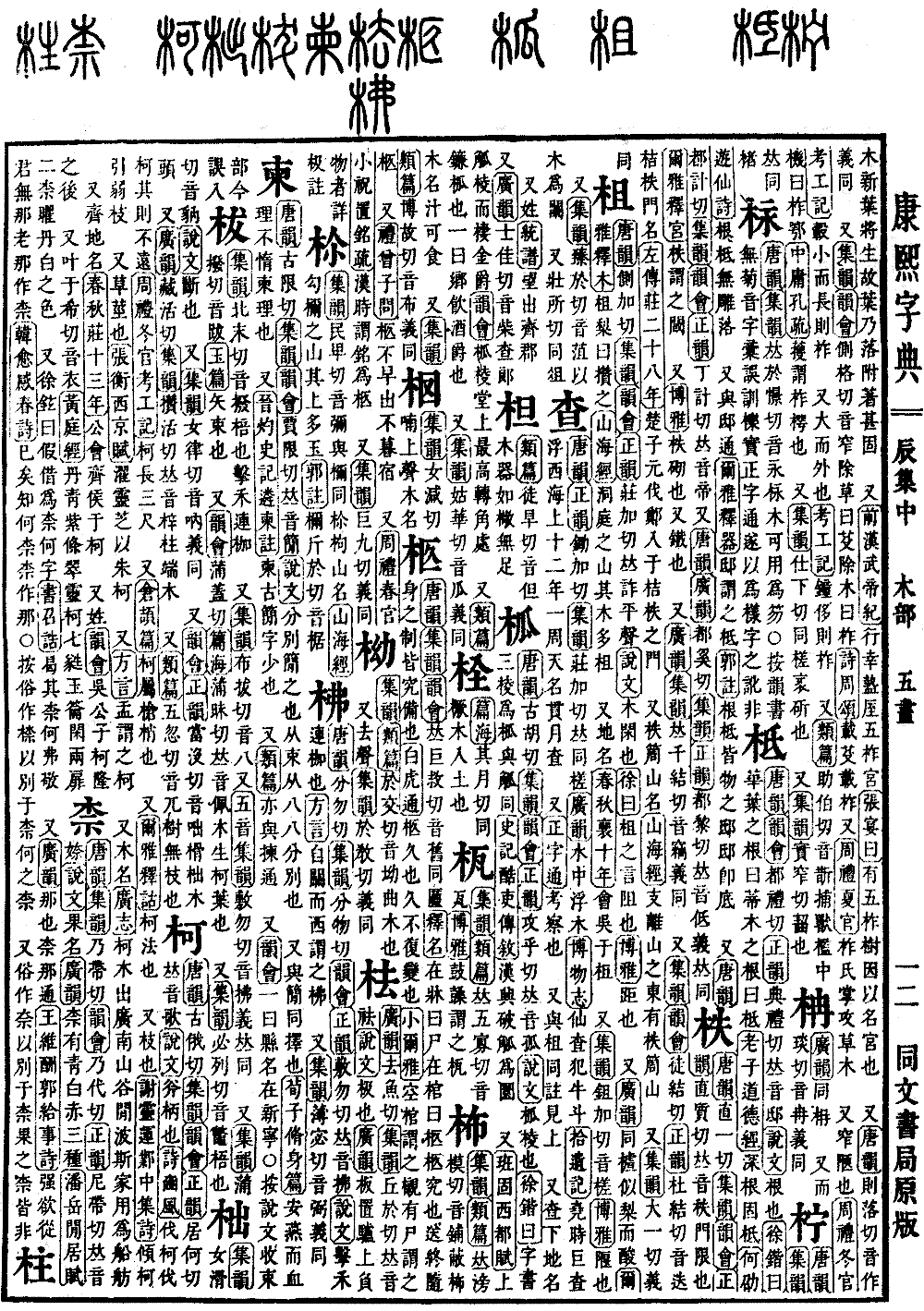
Chen Collection, Middle Volume. Radical: Tree (mù). Kangxi strokes: 9. Page 520, Entry 14.
Tang Rhyme (Tangyun), Collection Rhyme (Jiyun), and Rhyme Meeting (Yunhui): Pronounced jiu (falling tone). Same as the variant form jiu.
Explanation of Names (Shiming): When on a bed, it is called a corpse; when in a coffin, it is called a jiu. Jiu means to reach the end; at the time of the funeral, the rituals accompanying the deceased are all completed.
Comprehensive Discussions in the White Tiger Hall (Baihu tong): Jiu means long-lasting; it signifies that the body will remain unchanged for a long time.
Small Er Ya (Xiao Erya): An empty coffin is called a chen, and one containing a corpse is called a jiu.
Also, Book of Rites (Liji), Zizeng wen: A coffin should not be moved early, nor should it be brought to a halt at dusk.
Also, Rites of Zhou (Zhouli), Spring Offices, Minor Invocation, Commentary on the Inscription: In the Han dynasty, the inscription was called a jiu.
Also, Collection Rhyme (Jiyun): Pronounced jiu (rising tone). The meaning is the same.