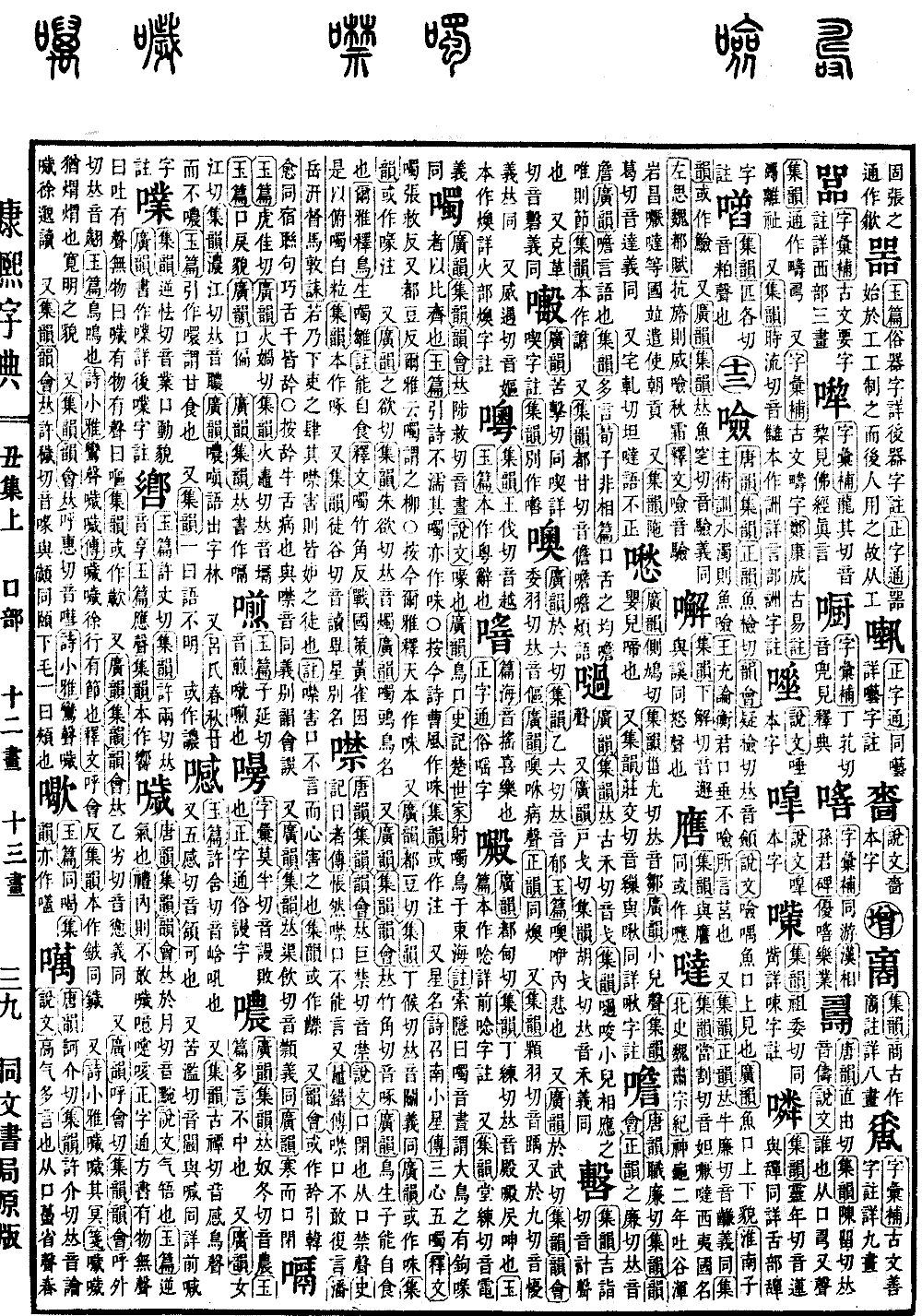
Chou Collection, Upper Volume
Radical: Mouth (kǒu)
噤
Kangxi strokes: 16
Page 209, Entry 30
Tang Rhyme (Tangyun), Collected Rhymes (Jiyun), Rhyme Meetings (Yunhui): Pronounced jin (falling tone).
Shuowen Jiezi (Shuowen): The closing of the mouth. Formed from Mouth (radical) and Jin (phonetic).
Records of the Grand Historian (Shiji), Biography of the Diviner: Dejected, one keeps the mouth shut and cannot speak.
Records of the Grand Historian (Shiji), Biography of Chao Cuo: Keeping the mouth shut and not daring to speak again.
Pan Yue, Eulogy for the Administrator of Qian, Ma Dun: As for the subordinate officials indulging in their silenced harms, they are all of the jealous sort.
Annotation: Jin means to restrain the mouth from speaking while harboring harm in the heart.
Collected Rhymes (Jiyun): Sometimes written in a variant form (jìn).
Rhyme Meetings (Yunhui): Sometimes written in a variant form. Cited in the collected verses of Han Yu: Skillful tongues all kept silent. Note: This refers to a disease of a cow's tongue; it shares the pronunciation with Jin but differs in meaning. The Rhyme Meetings (Yunhui) is incorrect on this point.
Broad Rhymes (Guangyun), Collected Rhymes (Jiyun): Pronounced yin (falling tone). Meaning is the same.
Broad Rhymes (Guangyun): To have the mouth closed due to cold.