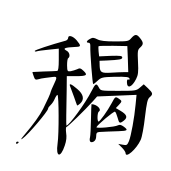
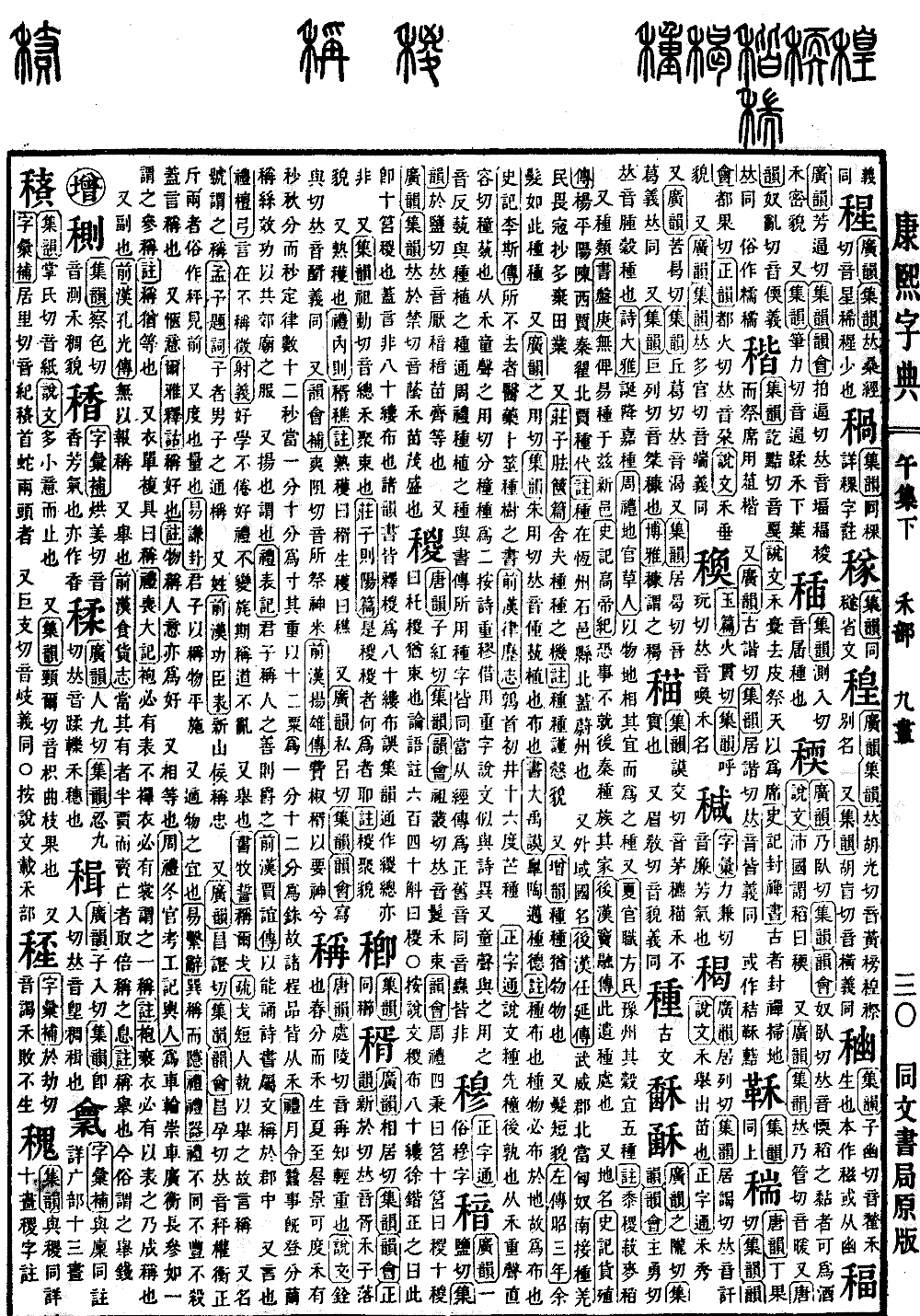
Pronounced ju lie (entering tone) in the Guangyun (Guangyun) and ju ye (entering tone) in the Jiyun (Jiyun), with the same pronunciation as "jie" (jié). The Shuowen Jiezi (Shuowen Jiezi) explains it as grain seedlings emerging and heading. The Zhengzitong (Zhengzitong) explains it as grain ears emerging and flowering.
Additionally, pronounced ku he (entering tone) in the Guangyun (Guangyun) and qiu ge (entering tone) in the Jiyun (Jiyun), with the same pronunciation as "ke" (kě).
Furthermore, in the Jiyun (Jiyun), it is pronounced ju he (entering tone), with the same pronunciation as "ge" (gé). The meaning is the same as previously described.
Additionally, in the Jiyun (Jiyun), it is pronounced ju lie (entering tone), with the same pronunciation as "jie" (jié). The meaning is chaff. The Boya (Boya) records: chaff is called "ge" (gé).