Xu Collection, Upper Volume
Radical: Gate (mén)
Hong
Kangxi Strokes: 14
Page 1335, Entry 03
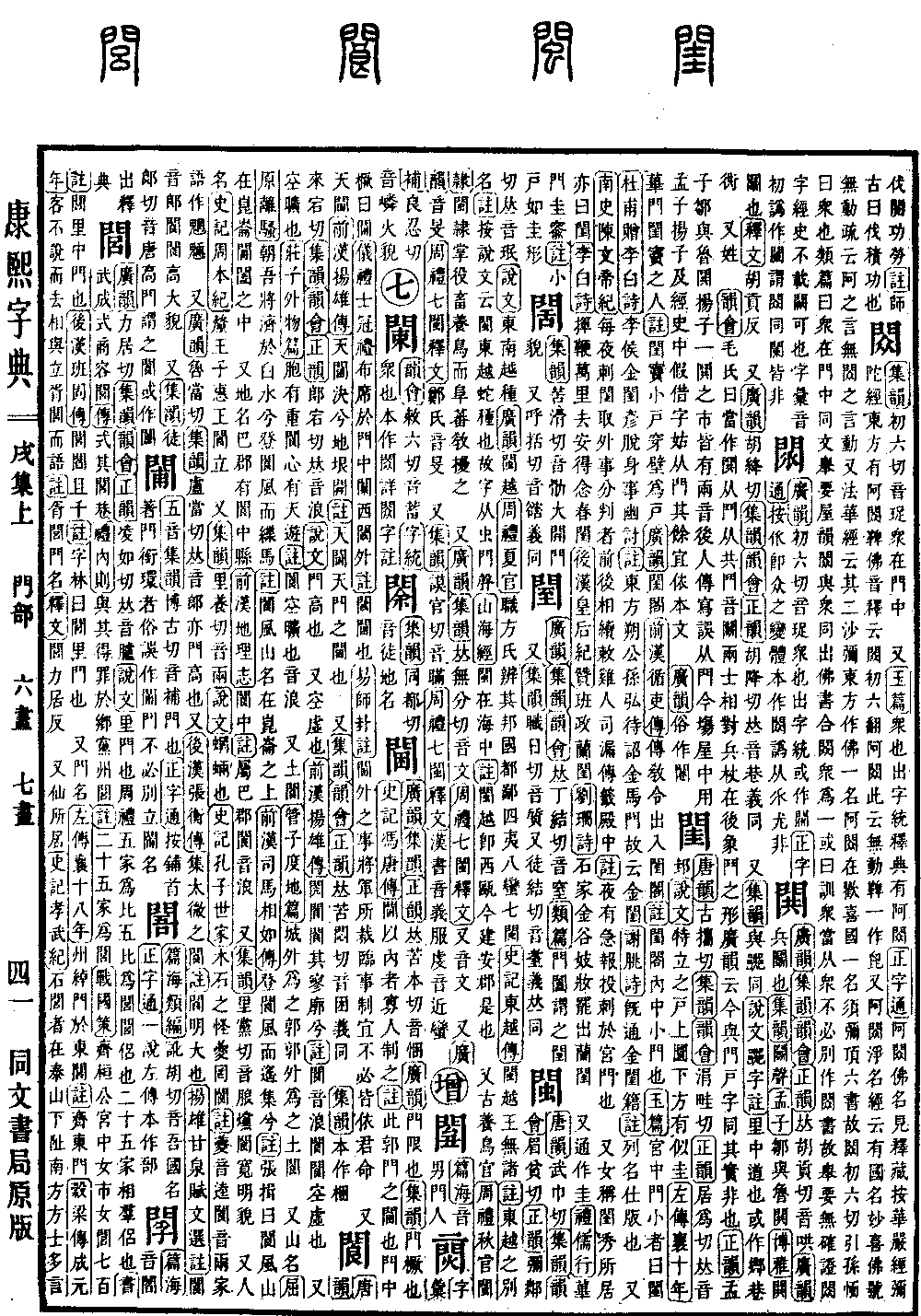
Broad Rhymes (Guangyun), Collection Rhymes (Jiyun), Rhyme Meetings (Yunhui), and Orthodox Rhymes (Zhengyun) state it is pronounced hong.
Broad Rhymes: To fight or engage in battle.
Collection Rhymes: The sound of battle.
Mencius (Mengzi): The state of Zou and the state of Lu were engaged in conflict.
Erudite Elegant (Boya): Hong means to struggle or fight.
Explication of Texts (Shiwen): Pronounced hong.
Additionally, according to Broad Rhymes it is pronounced xiang; Collection Rhymes, Rhyme Meetings, and Orthodox Rhymes state it is also pronounced xiang. The meaning is the same.
Collection Rhymes: Identical to the character for alley (xiang).
Explanation of Writing and Analysis of Characters (Shuowen Jiezi) Notes: Refers to paths within neighborhood alleys. Sometimes written as (xiang) or (hong). Also used as a surname.
Rhyme Meetings: Master Mao says: It should be written as (hong), consisting of the characters for fight (dou) and together (gong). The character for fight (dou) is pronounced dou, and resembles two people facing each other with weapons behind them, symbolizing the form of a struggle. Broad Rhymes states that the current form with the gate radical is incorrect.
Orthodox Rhymes: In the Mencius, the passage concerning Zou and Lu, and in Yang Xiong's Model Sayings (Fayan), the phrase regarding a chaotic city market, both contain these two pronunciations. Later copyists mistakenly added the gate radical. Currently, in imperial examination contexts, when citing the Mencius, Model Sayings, or phonetic loans in the Classics and Histories, one may temporarily follow the form with the gate radical, but in all other instances, one should follow the original character form.
Broad Rhymes: The common variant is written as (hong).