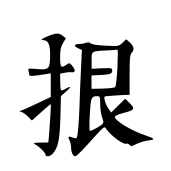
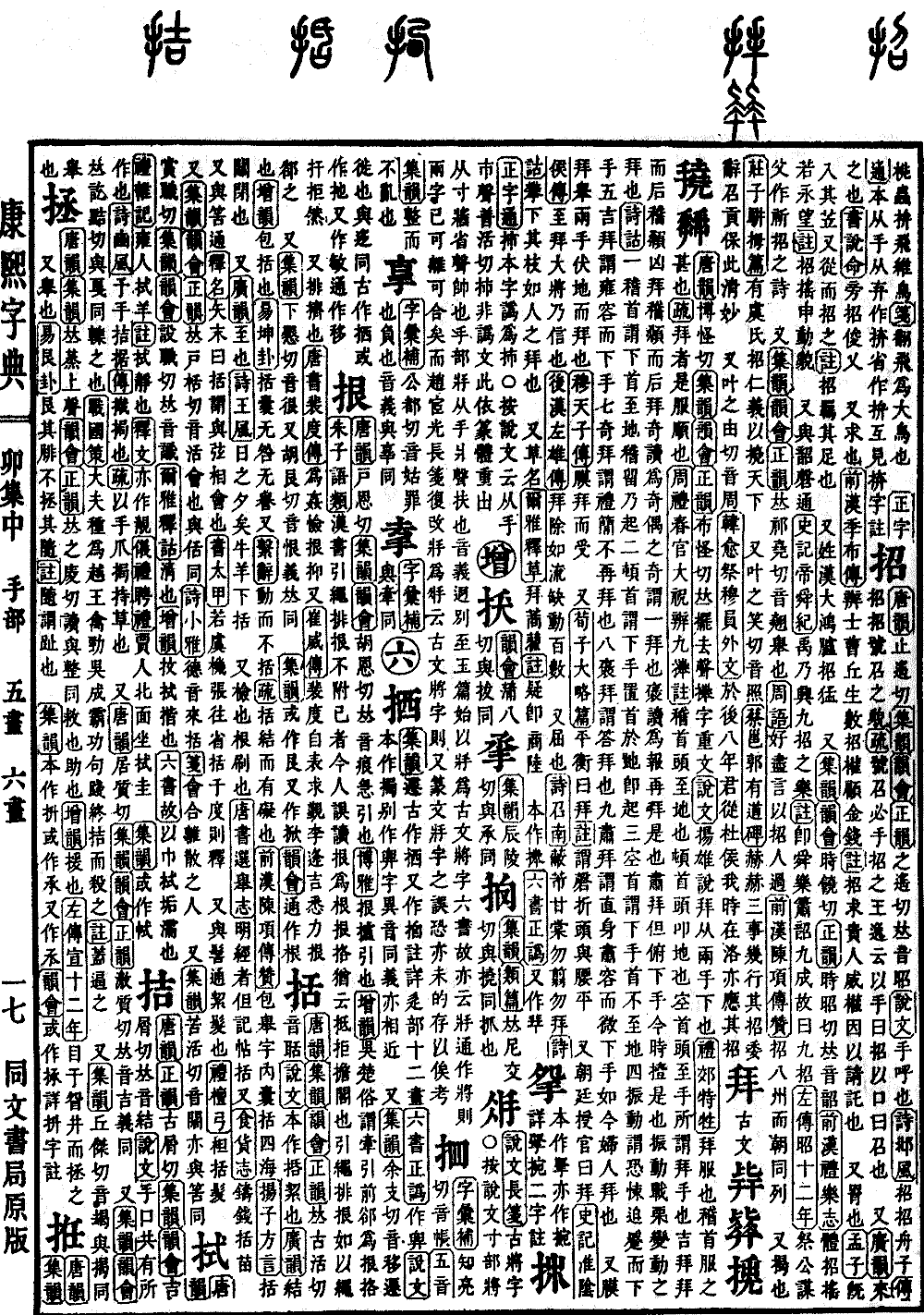
Mao Collection, Radical: Hand (shǒu)
Strokes: 10
Page 427, Entry 18
Pronunciation:
From Tang Yun: hu ēn qiè. From Jiyun and Yunhui: hú ēn qiè, pronounced hén.
Definitions:
To pull and drag with force.
From Boya: "拫攎 (hé lüè) means to pull and lead."
From Zengyun: In the Wu and Chu regions, pulling back and forth is called "拫挌 (hé gé)".
From Zhu Zi's Classified Sayings: In the "Book of Han (Hanshu)", "引绳排拫不附己者" (yǐn shéng pái hé bù fù jǐ zhě) is mistakenly pronounced "gēn" by people today. "拫挌 (hé gé)" is like resisting or blocking; "引绳排拫 (yǐn shéng pái hé)" is like using a rope to block.
It also means to push aside or suppress.
From History of the Tang Dynasty (Tangshu), Biography of Pei Du: "Suppressed and pushed aside by treacherous and wicked people."
From Biography of Cui Xian: Pei Du himself submitted a memorial requesting an audience, but Li Fengji tried his best to block him.
Pronunciation:
From Jiyun: xià kěn qiè, pronounced hěn.
From Jiyun: hú gèn qiè, pronounced hèn. The meaning is the same.
Variant Forms:
Sometimes written as "艮 (gèn)".
Sometimes written as "掀 (xiān)".
From Yunhui: Interchangeable with "根 (gēn)".