Shen Collection, Lower Volume
Radical: Clothing (yī)
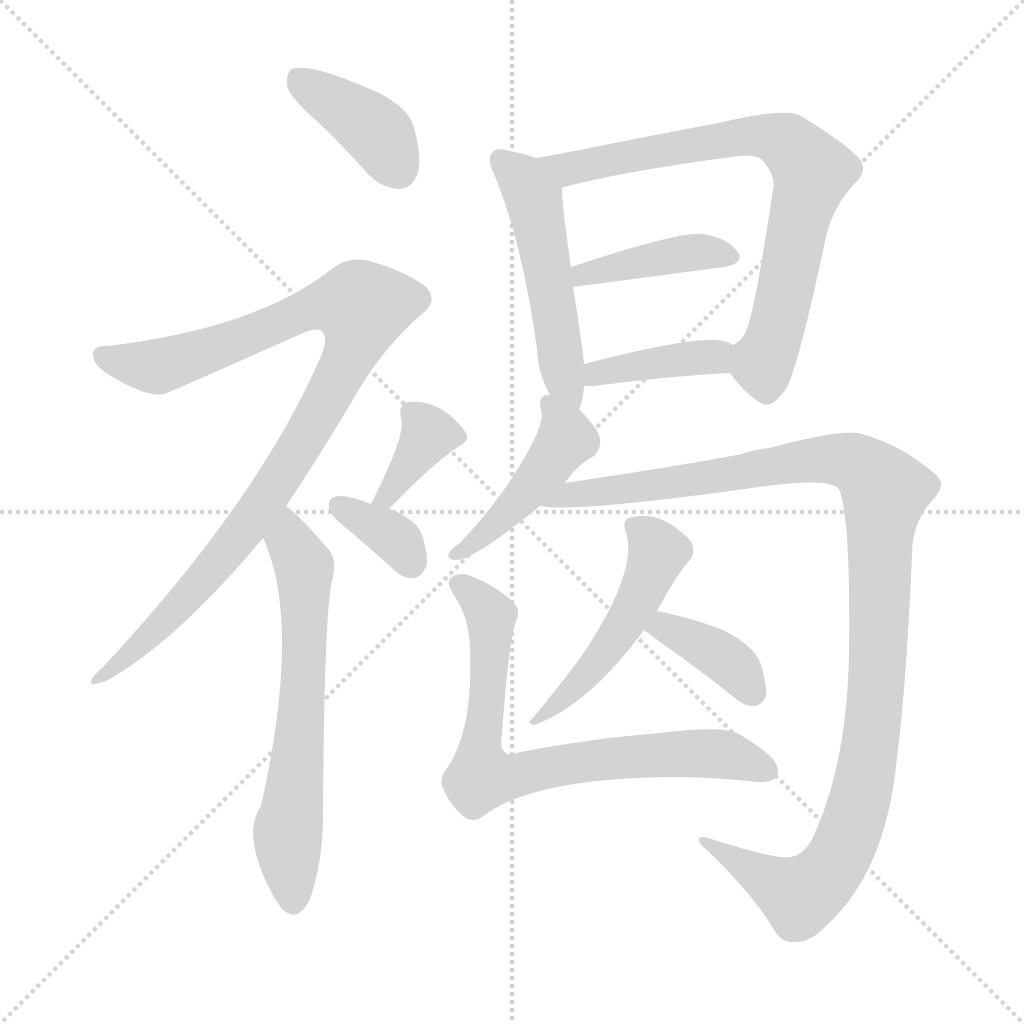
Character: he
Kangxi Stroke Count: 15
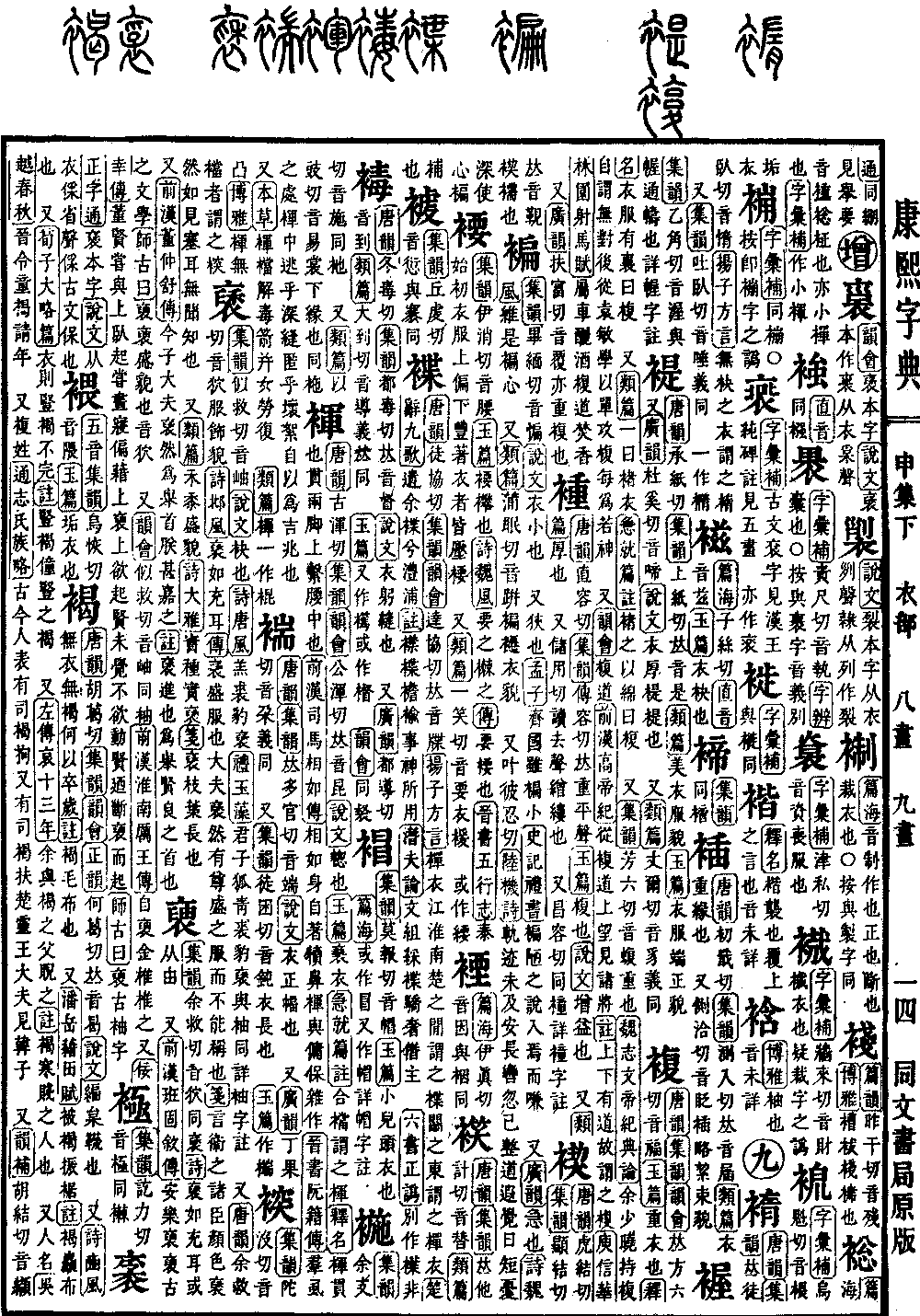
Page 1120, Entry 42
Pronounced he.
As defined in the Analytical Dictionary of Chinese Characters (Shuowen Jiezi): woven hemp socks.
Also, from the Book of Odes (Shijing), in the Odes of Bin: Without clothes, without coarse wool, how can I finish the year? The commentary states: he refers to coarse woolen cloth.
Also, from the Rhapsody on Plowing the Imperial Fields (Jitian Fu) by Pan Yue: Wearing coarse cloth and shaking out the hem. The commentary states: he refers to coarse cloth.
Also, from the Book of Master Xun (Xunzi), in the General Strategy chapter: For clothing, one wears a tattered servant tunic. The commentary states: shuhe is the coarse cloth garment worn by young servants.
Also, from the Zuo Commentary (Zuo Zhuan), in the thirteenth year of Duke Ai: I and the father of the low-born man glared at him. The commentary states: he refers to a poor and lowly person.
Also, used in names. From the History of the States of Wu and Yue (Wuyue Chunqiu): The Jin state ordered Tong He to request troops.
Also, a compound surname. From the Comprehensive Treatises (Tongzhi), in the Treatise on Clans and Lineages: The Table of Ancient and Modern People includes Sihe Ju. There is also Sihe Fu, a grand master of King Ling of Chu, appearing in the Book of Master Han (Han Feizi).
Also, pronounced xie. From the poetry of Bai Juyi: Leisurely I take my wine pot out, and returning drunk, I rest at a person's home. Eating wild food or cooking fresh catch, sleeping while wrapped in coarse cloth.
Also, pronounced ge. According to the Collected Rhymes (Jiyun): same as the character for coarse clothing. According to the Category Compendium (Leipian): sometimes written as a variant form.
Textual research: The History of the States of Wu and Yue states: The Jin state ordered Tong He to request troops. Based on the original text, the word year has been corrected to troops.