Si Collection, Upper Volume
Radical: Water (shuǐ)
Kangxi Strokes: 8
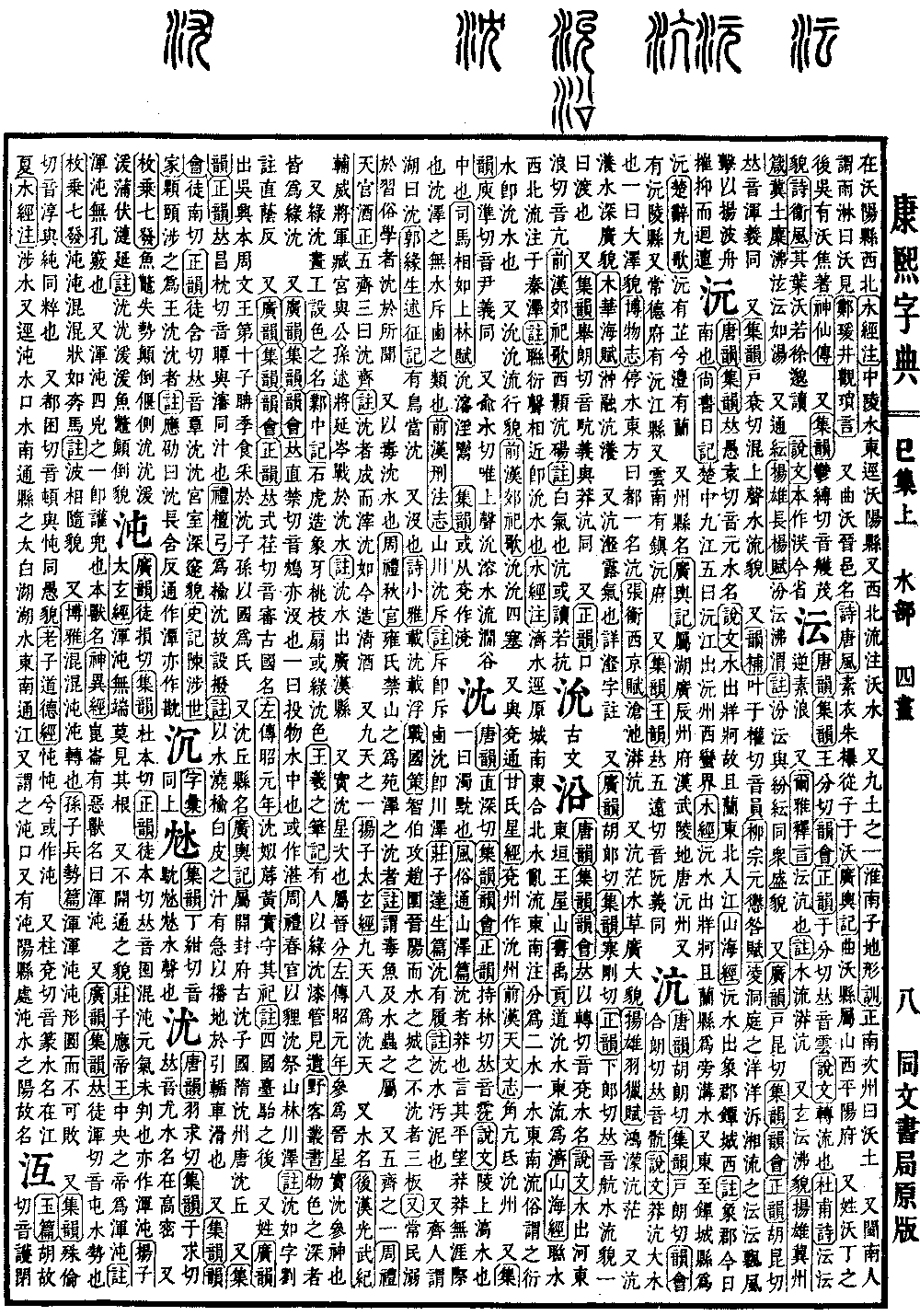
Page 610, Entry 03
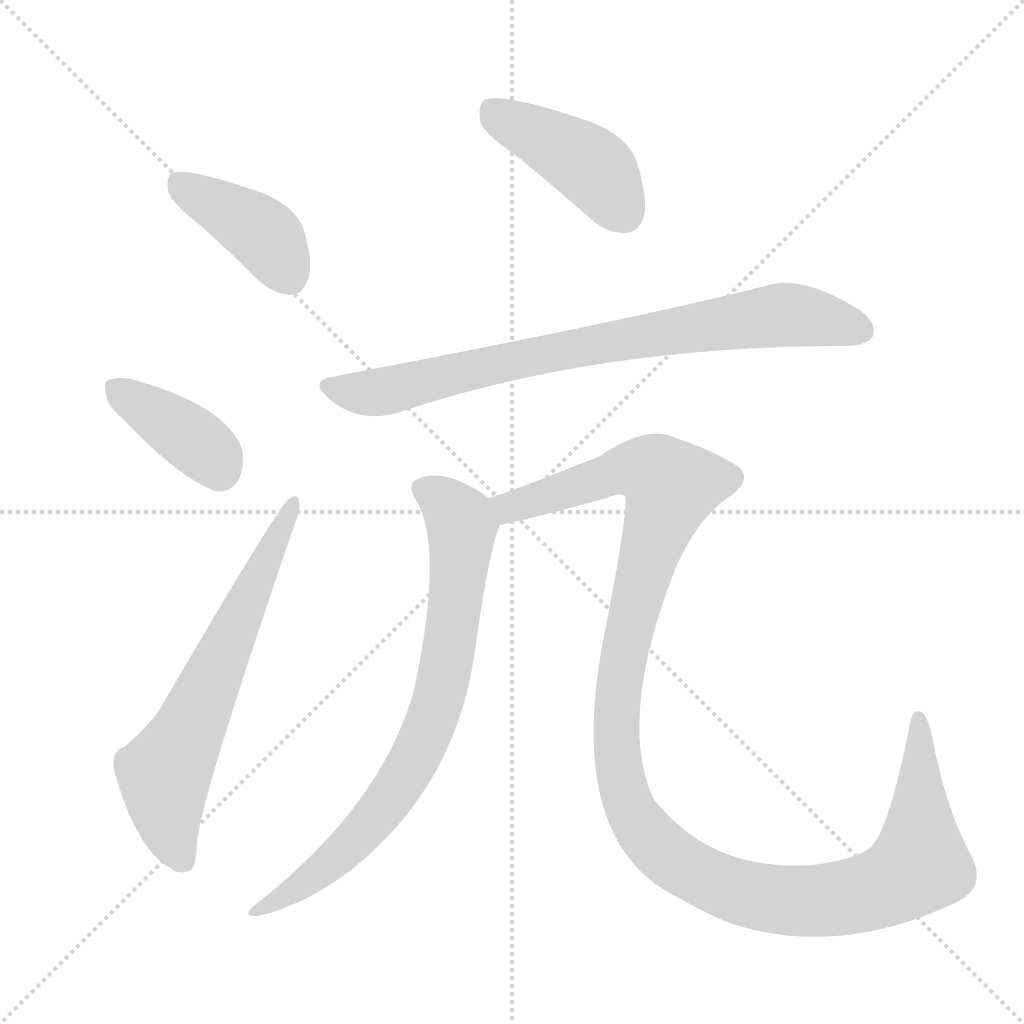
Pronounced hang.
As stated in the Analytical Dictionary of Characters (Shuowen Jiezi), the term mang-hang refers to a great expanse of water. Another interpretation describes it as the appearance of a large lake. According to the Record of Extensive Observations (Bowuzhi), stagnant water in the east is called du, also known as hang. In the Western Capital Rhapsody (Xijing Fu) by Zhang Heng, the term is used to describe the vastness of Cangchi pool.
It also appears as hang-mang, describing the appearance of vast water and vegetation. In the Feather Hunt Rhapsody (Yulie Fu) by Yang Xiong, the phrase is used as hongmeng hang-mang. It also appears as hang-yang, describing deep and expansive water, as seen in the Sea Rhapsody (Hai Fu) by Mu Hua, where it is written as chongrong hang-yang.
It further appears as hang-xie, which refers to nocturnal dew. For a detailed explanation, see the entry for xie.
Additionally, pronounced hang. This describes the appearance of flowing water. Another interpretation refers to crossing a river.
Also pronounced lang. The meaning is the same as mang-hang.
Additionally, pronounced kang. In the Sacrificial Hymns of the Former Han (Qianhan Jiaosi Ge), the phrase xi-hao hang-dang appears. The commentary notes that this refers to white clouds or vapor. Hang is sometimes read as kang.