Shen Collection, Upper Volume
Radical: Grass (cǎo)
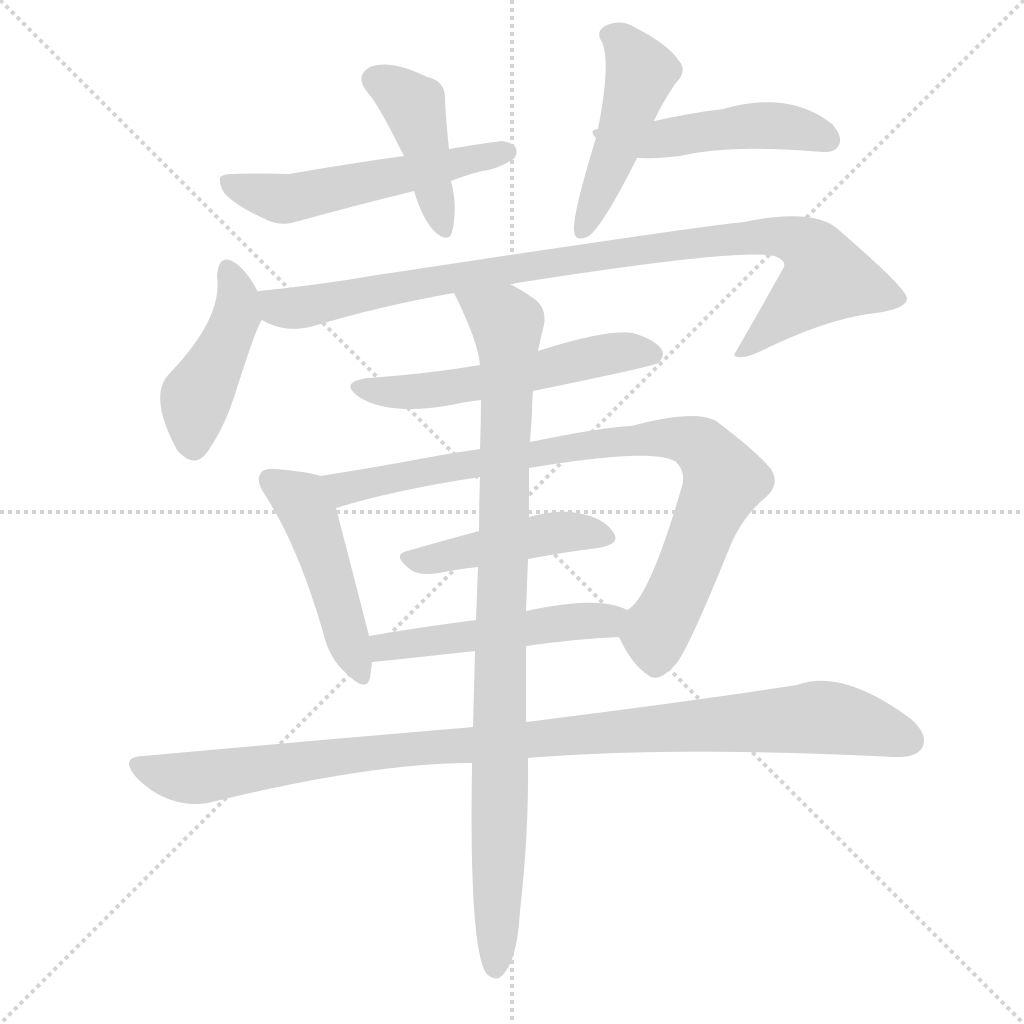
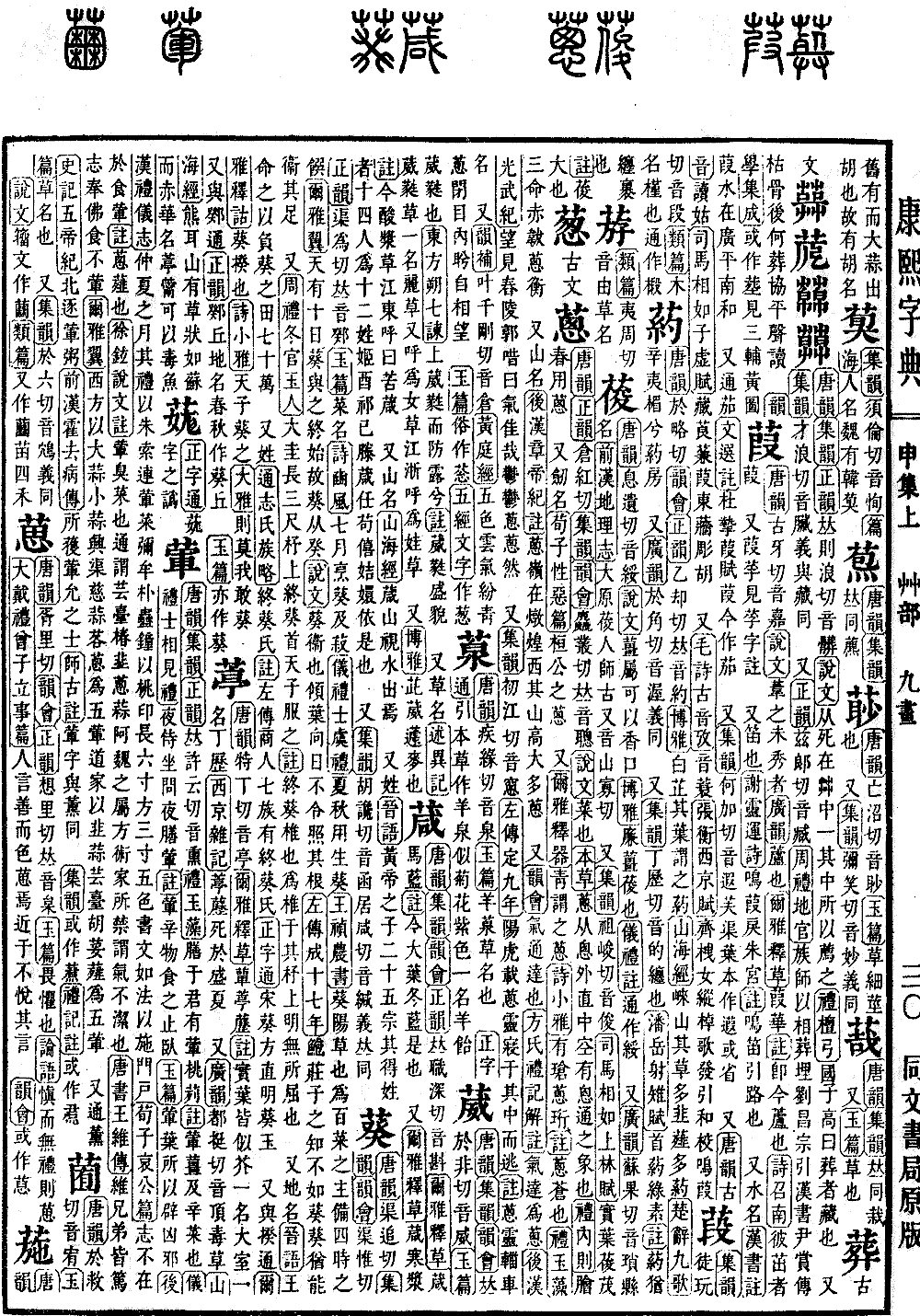
Hun (葷); Kangxi strokes: 15; Page 1046, Entry 23
Pronounced xūn.
Book of Rites (Liji): When providing meals for the ruler, use hun peaches and rush mats.
Commentary: Hun refers to ginger and pungent vegetables.
Book of Etiquette and Ceremonial (Yili): When serving at night, inquire about the night meal's hun.
Commentary: Hun refers to pungent and spicy substances; eating them can prevent drowsiness.
Jade Chapter (Yupian): Hun leaves are used to ward off evil and malicious spirits.
Book of the Later Han (Hou Hanshu): During the mid-summer month, the ritual involves using red ropes to tie hun vegetables, striking bells to dispel ghosts, and using peach-wood seals six inches long and three inches square, inscribed with five-colored patterns according to the law, to be applied to doors and windows.
Xunzi: One's ambition should not lie in eating hun.
Commentary: This refers to scallions and rakkyo.
Xu Xuan's Annotations to the Shuowen: Hun refers to vegetables with strong odors, generally including rapeseed, toon, chives, scallions, garlic, and asafoetida. Practitioners of occult arts forbid them, believing their odor is impure.
Book of Tang (Tangshu): Wang Wei and his brothers were all devout Buddhists and did not consume hun or meat.
Wings to the Erya (Erya Yi): In the West, the five hun are large garlic, small garlic, asafoetida, mountain garlic, and wild onions. Taoists consider chives, garlic, rapeseed, coriander, and rakkyo to be the five hun.
Also used interchangeably with xūn.
Records of the Grand Historian (Shiji): In the north, pursued the Hunyu.
Book of the Former Han (Hanshu): Personally led the captured Hunyun soldiers.
Commentary by Shigu: The character hun is the same as xūn.
Collected Rhymes (Jiyun): Sometimes written as a variant form (xūn).
Commentary to the Book of Rites (Liji): Sometimes written as a variant form (xūn).
Textual Research: In the Book of the Former Han, regarding the passage on the captured Hunyun soldiers, according to the original text, the words personally led have been added before the captured.