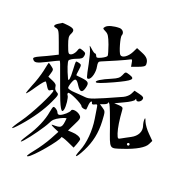
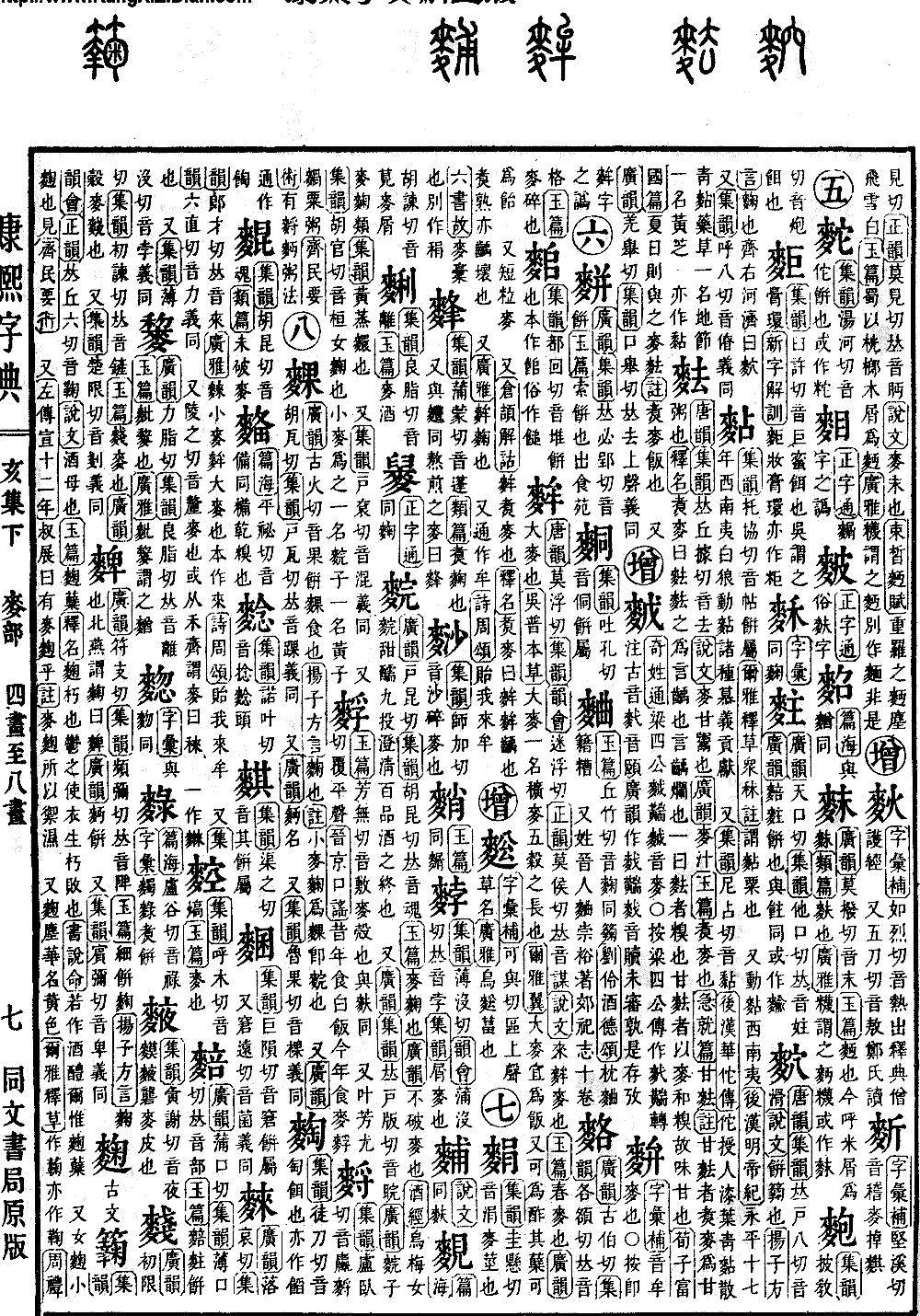
Pronounced hù kūn qiè in the "Guangyun" and hú kūn qiè in the "Jiyun", with the same pronunciation as "hún". The "Yupian" explains it as malt residue. The "Guangyun" explains it as unbroken wheat grains. The "Jiujing" records: "Using black plums and nǚ tún, after multiple additions of ingredients, fermentation, and clarification, a sweet wine is produced. This is the final step in the winemaking process."
Additionally, pronounced hù bǎn qiè in the "Guangyun" and "Jiyun", with the same pronunciation as "huǎn". The "Guangyun" explains nǚ tún as something similar to malt residue. The "Jiyun" explains it as yellow steamed grain.
Furthermore, pronounced hù gǔn qiè in the "Jiyun", with the same pronunciation as "hùn", meaning the same.
Also, pronounced hú guān qiè in the "Jiyun", with the same pronunciation as "huán", referring to female yeast. Made from wheat. Also known as tún zi. Also known as huáng zi.